Good ol' HBO - they do tackle some interesting topics once in a while. I don't subscribe to the channel(we are basic cable cheapskates), and I regret it now. HBO is broadcsting what sounds like a marvelous show - "The Music In Me," a documetary about children that are passionate about music. Here is the the Wall Street Journal article on the show:
Television networks battle for our attention with an assortment of attractions, but classical music and any other kind of music beyond the commercial mainstream are hard to find outside of public television and the Ovation cable network. A rare exception: HBO Family's documentary, "The Music in Me," which debuts this Saturday (7-7:30 p.m. EDT/6:30-7 p.m. PDT; check listings for other air dates this month).
This compelling film, which maintains the high caliber of HBO's previous "Classical Baby" series of music, dance and art programs for toddlers (now on DVD), focuses welcome light on young amateur musicians around the country who march, as it were, to many different drummers. Ranging in age from 7 to 11, they represent a broad array of musical and cultural traditions -- from classical and jazz to Latin, zydeco, klezmer, good ol' country pickin' and a remarkable diversity in between. Moreover, in a time when it seems that playing CDs and iPods has replaced the invaluable tradition of amateur music-making, this film reassures us that the joy and satisfaction of actually playing and singing music are still important elements of childhood -- at least for these kids.
HBO Family's new documentary introduces us to 7-year-old Guyland, who at 2 could already play the accordion. "The Music in Me" is the brain child of its executive producer, Leslie Stifelman, a pianist and conductor who is currently the music director of the Broadway show "Chicago." She is also the creative intelligence behind her company, Symfunny Toons Inc., which develops television and interactive products for children to learn about music. "It started with a demonstration piece for HBO, for which I went around the country filming musical kids," notes Ms. Stifelman, who has been developing educational and in-school music projects for more than a decade. She says that when she embarked on the actual documentary, "We had 500 applicants from 40 states, and it was breathtaking to discover the range of musical activity going on in this country." She compares these children to blades of grass. "Some of them are nurtured by a parent, neighbor, teacher or friend. Others flourish on their own, like a weed punching through concrete."
And what's noteworthy about this film is that it documents not conservatory prodigies or "professional children" but ordinary kids in neighborhoods around the country. Some, but not all, reveal exceptional abilities. But all of them play their music because it is necessary to their existence: "I even get up extra early just so I can touch my guitar," says 11-year-old TJ of Omaha, Neb. Like many others in this show, TJ is attracted to music much older than he is: His room is plastered with photos of his idols -- Hank Williams, Chuck Berry, the Beatles -- and his own performance hearkens back two and three generations.
Alternating with fascinating vignettes selected from the 500 home-performance videos sent by applicants, the film spotlights six children, each drawn to a distinctive musical genre: First up is Nathan, 11, a classical cellist who looks uncannily like a young Yo-Yo Ma. "I think a good cellist has to feel the music and feel the true meaning," he says. And as good as his word, he not only gives an elegant performance of "The Swan," from Camille Saint-Saëns's "Carnival of the Animals," but with remarkable acuity he discusses melodic phrases and harmonic progressions that suggest to him dramatic turns in the music's unfolding narrative.
We see tow-headed trumpeter Tyler, 10, playing George M. Cohan chestnuts with his parents, brother and sister at the family band's assorted daytime gigs around their hometown of Virginia Beach, Va. "But most of all," he says with an engaging smile, I love playing jazz, because I can improvise." And he struts his stuff jamming with a jazz combo, heating the nighttime air with some truly stylish riffs. Similarly Elena, 10, is a Puerto Rican-American flutist whose affinity for Latin jazz has made her a celebrity in the Latin music clubs around Berkeley, Calif., where she and her family live. "Jazz is not a little kid's music at all," she says against a backdrop of applause during one of her performances. "My parents say they want me just to be a kid and not play music all the time," she says. "But I am very serious about music."
"I can make music with anything," declares percussionist Qaasim, 8, of Brooklyn, N.Y. He revels in his favorite West African djembe, proudly lugging the heavy drum up a long flight of stairs to play it at the monument in Fort Greene Park with his drummer father and brother. Later, with a set of drumsticks, he sets off through his neighborhood, improvising an infectious solo concerto on everything along his way, from mailboxes and fire hydrants to park benches and storefront security gates.
In a segment in the style of a music video, Una, an 11-year-old rock guitarist from Portland, Ore., embraces the legacy of '60s protest songs with her composition "Global Warming," using minimalist melodic repetition to underscore the serious message of her text: "Global warming, it's not just a prediction anymore. It's real."
Then there is Guyland, 7, of Frilot Cove, La. He received a toy accordion for his first Christmas -- by his second birthday he was able to play it. Now he continues the legacy of his great-grandfather Delton Broussard, a celebrated accordionist. Broussard died before Guyland was born, but Guyland says Broussard taught him in his dreams. Like any little kid, Guyland enjoys fishing and playing with his friends. But the moment he puts the accordion strap around his neck he is transformed into a musical firebrand. "Running with the big dogs" at a Louisiana club where his great-grandfather played in the 1940s, Guyland is all over the stage, his face deadpan, his body pulsing and swaying to his music. Playing in his own unique way -- accordion held upside down, treble and bass keyboards reversed -- he weaves between the adult players towering over him and brings down the house.
What's profoundly heartening about this material is how vividly it reveals what Sheila Nevins, president of HBO Documentaries and Films, calls a neglected area in television -- namely, "stimulating children's capacity to respond to music, both actively, through their own abilities, and emotionally by hearing it, enjoying it and dancing to it."
Thus, "The Music in Me" illuminates the passion a lot of kids have about making music today. At the same time, it shows those kids who actually play often inspiring their own peers -- if not to play themselves, then at least to admire and value what their talented friends are doing for sheer pleasure. As Qaasim observes, "You gotta find the music inside yourself; it could just come out of you without you knowing it was in you all that time."
Young people playing and singing music give hope for the eventual salvation of the human race.
Wednesday, October 04, 2006


Monday, October 02, 2006
Sleep Deprivation
I am a pretty good sleeper - generally crash fast and hard at night. I have also taken to using earplugs to block out noises (especially the sound of traffic - I live on a moderately busy street). I was busy last night and didn't hit the sack until 11:30 PM or so. I was heading out to O'Hare to catch a 6:10 AM flight to Atlanta in the morning, so I set the clock for 3:30 AM. I spent 30 minutes trying to forget about the short ration of sleep I was allocating to myself and finally drifted off. It seems like my alarm screamed 10 seconds later. I yanked out my earplugs and made it to O'Hare, caught my flight and sat in fairly intense business meetings all day. I have the classic symptoms of sleep deprivation - headache, cotton mouth, concentration difficulties, etc. It is a lot like being hungover without the fun misbehavior of excessive alcohol consumption during the preceding evening.
I have a pile of documents to read, but it looks too tough to tackle right now. I have to rack out now and try again tomorrow. I can function reasonably well on six hours of sleep, but I fall apart on less than 4 hours.
I have a pile of documents to read, but it looks too tough to tackle right now. I have to rack out now and try again tomorrow. I can function reasonably well on six hours of sleep, but I fall apart on less than 4 hours.
Saturday, September 30, 2006
Quote of the Day - Nando Parrado
"I think life is simpler than we tend to think. We look for answers and more answers. But there are no answers. Things happen in life, good things and bad. People say, 'Why did it happen to me?' Well, why not? Some people win the lottery, and others die in a car crash. It happens, and there is nothing we can do about it. The universe doesn't care what happens to you."
Nando Parrado, one of the 16 survivors of the crash of an Uruguayan Air Force plane in the Andes Mountains in October 1972
Here is the link to the complete New York Times story.
I find this to be a far more reasonable philosophy than the "Everything happens for a reason" school of thought. Extremely religous people see Parrado's philosophy as blasphemous. It resonates within me as "Truth." And the Truth usually isn't about warm and fuzzy platitudes, or absolute certainty handed down from God/Allah/Buddha/Vishnu.
Nando Parrado, one of the 16 survivors of the crash of an Uruguayan Air Force plane in the Andes Mountains in October 1972
Here is the link to the complete New York Times story.
I find this to be a far more reasonable philosophy than the "Everything happens for a reason" school of thought. Extremely religous people see Parrado's philosophy as blasphemous. It resonates within me as "Truth." And the Truth usually isn't about warm and fuzzy platitudes, or absolute certainty handed down from God/Allah/Buddha/Vishnu.
Wednesday, September 27, 2006
Caleb Dube - Rest In Peace

Caleb Dube was an unsung hero of the blues in Chicago. He died on Thursday, September 21. Caleb is in the middle in this picture, between blues harmonica player Billy Branch and the late, great jazz musician, Malachi Thompson.
Caleb was the husband of Katherine Davis, a superb blues singer. I have jammed with Katherine many times. She is a major pillar of the Chicago blues community - a big participant in the "Blues in the Schools" program and a fine performer that has lit up many a stage in Chicago and around the world. Caleb was a member of the Chicago Blues Festival committee. He was a brilliant man - PhD in Anthropology from Northwestern University in Evanston IL, an M. Phil degree in folklore, and a B.A. Honors degree in History and African Languages. He taught at DePaul University in the Department of Anthropology, and in the Department of Sociology since Fall 2002. Previously he taught at the University of Zimbabwe for eight years in the Department of African Languages and Literature. His areas of research were the production and political economy of African American and African popular culture. Caleb was in the middle of writing a new book about Chicago blues artists when he died. He taught courses in Chicago jazz and blues at DePaul University; his PhD dissertation at Northwestern was focused on the Chicago jazz and blues culture. He had a passion for the music. He was a published academic reseacher on a number of topics and was involved in many community and charitable organizations.
Caleb was politically active, too. Here is a snapshot of Caleb and Katherine with Barack Obama from a fundraiser at Rosa's Lounge on the West Side of Chicago (from 2003).

Caleb also was a member of the Zimbabwe Parliament in the mid-1980's.
Caleb came from Zimbabwe and many of his family members still live there. His funeral has been delayed to allow Caleb's Zimbabwe relatives to make the trip to Chicago. His funeral will be at 10:00 am on Saturday October 14 at Johnson's Funeral Home at 236 W. Division in Chicago. Johnson's is behind Sammy's Hot Dog stand.
This was a good man who died too soon. Hearts are broken.
Monday, September 11, 2006
These Last Five Years
"These last five years have been horrendous," said Kathy Maloney, widow of Joseph E. Maloney. Joseph was a firefighter with Ladder Company 3 in Manhattan and he died during the attacks on the World Trade Center.
Kathy was speaking about her personal reality since she lost her husband, but the statement feels like it fits for all of Western civilization. But what is really interesting about the last five years is how little daily life in the United States has changed. The economy has been pretty strong, New York is booming, our prolific consumption of goods and services proceeds apace. The largest attack of the war on civilization didn't put the U.S. on war footing. There is no rationing, no war bond rallies, no calls for sacrifice. How deeply have we felt the pain of our fellow citizens who lost loved ones on that day?
The fine young people that are fighting and dying in Iraq and Afganistan are volunteers. There is no conscription so the majority of us don't have a direct connection to our fellow citizens who are fighting. The Iraq war looks like a massive mistake; Afganistan is suffering from inattention and is backsliding. And I am beginning to wonder if the terrorist threat is being pumped up, hyped for some reason. There were no deaths from terrorist attacks in the United States in 2005. There were 43,443 people killed in U.S. automobile accidents in 2005. Why should I be more afraid of terrorists than I am of automobiles?
Kathy was speaking about her personal reality since she lost her husband, but the statement feels like it fits for all of Western civilization. But what is really interesting about the last five years is how little daily life in the United States has changed. The economy has been pretty strong, New York is booming, our prolific consumption of goods and services proceeds apace. The largest attack of the war on civilization didn't put the U.S. on war footing. There is no rationing, no war bond rallies, no calls for sacrifice. How deeply have we felt the pain of our fellow citizens who lost loved ones on that day?
The fine young people that are fighting and dying in Iraq and Afganistan are volunteers. There is no conscription so the majority of us don't have a direct connection to our fellow citizens who are fighting. The Iraq war looks like a massive mistake; Afganistan is suffering from inattention and is backsliding. And I am beginning to wonder if the terrorist threat is being pumped up, hyped for some reason. There were no deaths from terrorist attacks in the United States in 2005. There were 43,443 people killed in U.S. automobile accidents in 2005. Why should I be more afraid of terrorists than I am of automobiles?
Thursday, September 07, 2006
What if Coltrane Had Lived?
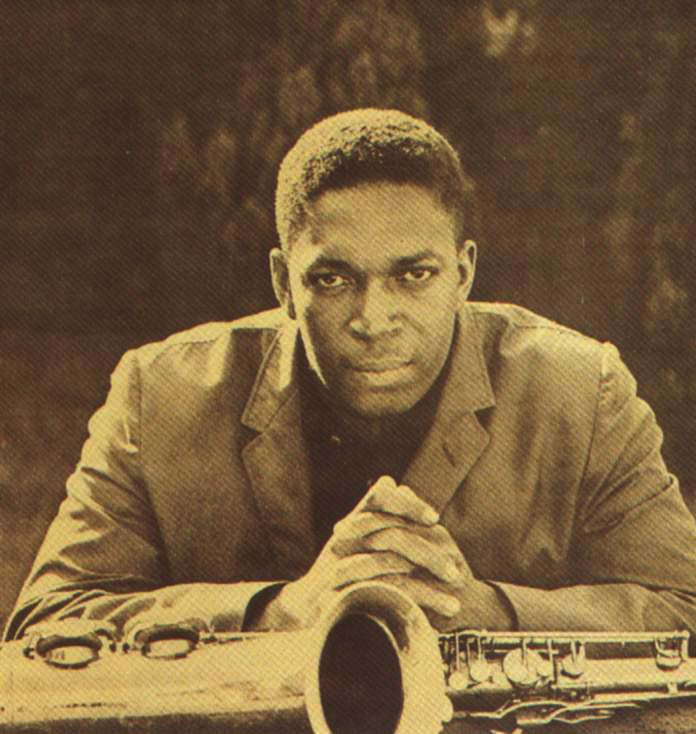
John Coltrane's birthday is coming up - September 23 was his birth date. I am spending quite a bit of time listening to Coltrane's music, and realizing that I don't have enough Coltrane music in my collection.
So If 'Trane was still alive, he would be 80 years old. He would be about as old as Oscar Peterson, Von Freeman, Tony Bennett, B.B. King, and a host of active musical octogenarians. Would he be mining the nostalgia circuit or still pushing the envelope?
John Coltrane struggled in his life, with heroin addiction, with racism, with the technical demands of the music he heard in his head. He was 40 years old when he passed - died of liver cancer, very suddenly (he checked into a hopsital one Sunday evening in 1967 and was dead the next day). His greatness had been visible since his early 20's, and I think it ould have grown if he had not been snatched away. If 'Trane had lived, I am sure the musical universe would sound different than it does today.
Monday, September 04, 2006
Hypnotic Brass Ensemble Featured in the New York Times
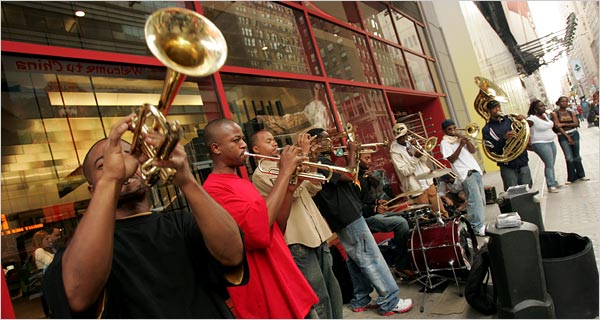
Back on May 18, 2005, I posted a message on this blog about the Hypnotic Brass Ensemble. These intrepid Chicagoans have relocated to New York - the group is based in Queens now. The reporters at the NY Times have noticed, and the Hypnotic boyz hit the first page of the Labor Day arts section of the paper. Here is a link to the article.
All of these young brass players are the sons of Kelan Phil Cochran, a Chicago brass player who had a massive number of kids. I love the Hypnotic Brass Ensemble and was sorry to hear that they have left their home town. Chicago's loss is New York's gain...
Saturday, September 02, 2006
Don't Forget Curtis Salgado
Of course, this assumes that you know about Curtis Salgado. Unfortunately, many people do not, in spite of the role he played in creating one of the enduring pop culture icons of the late 20th Century, the Blues Brothers (more about this later).
I was visiting my brother in Portland, Oregon in early August. Portland is a fantastic city on many levels, but one thing that amazes me about the place is the depth and quality of its local blues scene. Robert Cray spent some time in Portland (he was from Spokane, I just learned). The great, unsung harmonica player and vocalist Paul deLay lives there. Stu Kinzel, Mel Solomon, Peter Dammon - the list is quite long. Most of these folks are not well-known outside of the Northwest. And perhaps at the top of the list is Curtis Salgado.
I have known about Curtis for a number of years. He inspired John Belushi to invent the Blues Brothers. Back in 1977 when Belushi was filming "Animal House" in Eugene, Oregon, he caught the 25-year old Salgado's act at some local clubs. Belushi became a fan, hung out with Curtis, and received a blues/R&B education. Many of the mannerisms and stage banter used by Belushi in the Blues Brothers schtick were lifted verbatim from Curtis. Belushi and Ackroyd made the money while Curtis toiled on in obscurity.
So I bought Curtis' most recent CD and thought it was pretty good. He has a fine, soulful voice and a great sense of phrasing. But to be honest, the CD didn't floor me. And he didn't play much harmonica - I had alway heard that he is a hot harmonica guy. But when I went out to Portland, I discovered he had a gig at the Trail's End Saloon in Oregon City (the bar is located at the end of the Lewis and Clark Trail). My brother and I decided to check him out.
Well. His live show blew the top of my head off. He sings with passion and spontaneity that is not captured on his CD's. And he played a ton of harmonica. As a harp player, I can assure you - this cat is very good. The bar was full of long-time fans (it looked a bit like a meeting of the Grey Ponytail Club). They howled and cheered and danced. Curtis knew many of them by name. It was a helluva scene, a great performance. Salgado laid it all down that night.
Now here is the kicker - Curtis has liver cancer. He announced it earlier this year. Generally speaking, the prognosis for individuals with liver cancer is not good. The best path toward survival involves a liver transplant. That is the path Curtis is trying to travel. Of course, this being the United States and Curtis being an independent musician, he is without health insurance. The cost of treatment for liver cancer (including the cost of a liver transplant) exceeds $1,000,000. So Salgado is touring while he is undergoing treatment to make money to pay for his treatment. Think about that! And I am a witness - this man is not performing like someone fighting a potentially fatal disease - he is roaring with energy and musical power. His musicial friends put on a fund-raising benefit for him, but the need is still great. If you love the blues and R&B music, buy this man's CD's, or even better, send a donation. Here is the info if you want to contribute: Mail contributions to the "Curtis Salgado Fund" US Bancorp, 2550 NW 188th Avenue, Hillsboro, OR 97124.
I'm pulling for this guy.
I was visiting my brother in Portland, Oregon in early August. Portland is a fantastic city on many levels, but one thing that amazes me about the place is the depth and quality of its local blues scene. Robert Cray spent some time in Portland (he was from Spokane, I just learned). The great, unsung harmonica player and vocalist Paul deLay lives there. Stu Kinzel, Mel Solomon, Peter Dammon - the list is quite long. Most of these folks are not well-known outside of the Northwest. And perhaps at the top of the list is Curtis Salgado.
I have known about Curtis for a number of years. He inspired John Belushi to invent the Blues Brothers. Back in 1977 when Belushi was filming "Animal House" in Eugene, Oregon, he caught the 25-year old Salgado's act at some local clubs. Belushi became a fan, hung out with Curtis, and received a blues/R&B education. Many of the mannerisms and stage banter used by Belushi in the Blues Brothers schtick were lifted verbatim from Curtis. Belushi and Ackroyd made the money while Curtis toiled on in obscurity.
So I bought Curtis' most recent CD and thought it was pretty good. He has a fine, soulful voice and a great sense of phrasing. But to be honest, the CD didn't floor me. And he didn't play much harmonica - I had alway heard that he is a hot harmonica guy. But when I went out to Portland, I discovered he had a gig at the Trail's End Saloon in Oregon City (the bar is located at the end of the Lewis and Clark Trail). My brother and I decided to check him out.
Well. His live show blew the top of my head off. He sings with passion and spontaneity that is not captured on his CD's. And he played a ton of harmonica. As a harp player, I can assure you - this cat is very good. The bar was full of long-time fans (it looked a bit like a meeting of the Grey Ponytail Club). They howled and cheered and danced. Curtis knew many of them by name. It was a helluva scene, a great performance. Salgado laid it all down that night.
Now here is the kicker - Curtis has liver cancer. He announced it earlier this year. Generally speaking, the prognosis for individuals with liver cancer is not good. The best path toward survival involves a liver transplant. That is the path Curtis is trying to travel. Of course, this being the United States and Curtis being an independent musician, he is without health insurance. The cost of treatment for liver cancer (including the cost of a liver transplant) exceeds $1,000,000. So Salgado is touring while he is undergoing treatment to make money to pay for his treatment. Think about that! And I am a witness - this man is not performing like someone fighting a potentially fatal disease - he is roaring with energy and musical power. His musicial friends put on a fund-raising benefit for him, but the need is still great. If you love the blues and R&B music, buy this man's CD's, or even better, send a donation. Here is the info if you want to contribute: Mail contributions to the "Curtis Salgado Fund" US Bancorp, 2550 NW 188th Avenue, Hillsboro, OR 97124.
I'm pulling for this guy.
Monday, August 28, 2006
Good-Bye, Maynard
Maynard Ferguson is dead. Yes, he was 78 years old, which is a pretty ripe old age. But it still seems wrong for him to die. I have seen Maynard perform many times - including a few years ago when he had broken the 70-year mark. The life-force of this man was so strong. I thought he would still be blowin' those double high C's for another decade or so.
I was one of the MF Horn knuckleheads back in the '70's. I was a trombone guy, not a trumpet player, but Maynard's wild, flamboyent approach to screech trumpet haunted my musical dreams and filled me full of animal spirits. Here is a great article from the Washington Post that explains this feeling. And Maynard played a wild trombone, also (he invented an instrument with valves and a slide, dubbed the "Superbone." Snicker). I think he took up the trombone to give his trumpet chops a rest.
Maynard was the ultimate trooper. He dragged his big band to countless high school gymnasiums. He played tiny little nightclubs that didn't have a stage large enough for his band. He pumped out an amazing number of albums. During the 1970's and 1980's, he kept big band jazz alive. His sheer stamina boggled the mind. Maynard's music may not have pleased every jazz critic in the world, but every brass player understood his greatness. It is rumored that one of Maynard's fans was the famously judgemental Miles Davis. One night many years ago, Miles had a night off in New York. His piano player said, "Hey Miles - what are you going to do on your night off?" Miles replied, "I'm going down to the Vanguard to listen to Maynard blow those f---ing high notes, man."
He always staffed his band with young people. Some became relatively famous - Bobby Shew on trumpet and Don Menza on tenor sax come to mind. Many faded away, perhaps ending up as high school music teachers or lawyers that played trombone on weekends. Here is a great blog entry from "Powerline" that includes a YouTube clip of Maynard Ferguson Band from the 1970's, full of hairy young people, playing Elton John's "Don't Let the Sun Go Down on Me."
Yeah, Maynard loved to grab those mega-hit pop songs and play the shit out of them. His biggest hit might have been his version of "Gonna Fly Now," the theme from the Rocky movie. He loved to get an audience screaming. He was a fantastic showman. AND he was Canadian! Yes, Maynard was one of Canada's biggest contribution to jazz, along with Oscar Peterson.
Maynard was unique and now he is gone. The masters all fall eventually, and some of us are bereft.
I was one of the MF Horn knuckleheads back in the '70's. I was a trombone guy, not a trumpet player, but Maynard's wild, flamboyent approach to screech trumpet haunted my musical dreams and filled me full of animal spirits. Here is a great article from the Washington Post that explains this feeling. And Maynard played a wild trombone, also (he invented an instrument with valves and a slide, dubbed the "Superbone." Snicker). I think he took up the trombone to give his trumpet chops a rest.
Maynard was the ultimate trooper. He dragged his big band to countless high school gymnasiums. He played tiny little nightclubs that didn't have a stage large enough for his band. He pumped out an amazing number of albums. During the 1970's and 1980's, he kept big band jazz alive. His sheer stamina boggled the mind. Maynard's music may not have pleased every jazz critic in the world, but every brass player understood his greatness. It is rumored that one of Maynard's fans was the famously judgemental Miles Davis. One night many years ago, Miles had a night off in New York. His piano player said, "Hey Miles - what are you going to do on your night off?" Miles replied, "I'm going down to the Vanguard to listen to Maynard blow those f---ing high notes, man."
He always staffed his band with young people. Some became relatively famous - Bobby Shew on trumpet and Don Menza on tenor sax come to mind. Many faded away, perhaps ending up as high school music teachers or lawyers that played trombone on weekends. Here is a great blog entry from "Powerline" that includes a YouTube clip of Maynard Ferguson Band from the 1970's, full of hairy young people, playing Elton John's "Don't Let the Sun Go Down on Me."
Yeah, Maynard loved to grab those mega-hit pop songs and play the shit out of them. His biggest hit might have been his version of "Gonna Fly Now," the theme from the Rocky movie. He loved to get an audience screaming. He was a fantastic showman. AND he was Canadian! Yes, Maynard was one of Canada's biggest contribution to jazz, along with Oscar Peterson.
Maynard was unique and now he is gone. The masters all fall eventually, and some of us are bereft.
Monday, June 26, 2006
Overload
I haven't added to this blog in over two months. It is due to overload.
Overload isn't necessarily a bad thing. I have had many joyful overloads in the past 75 days. My First-Born Son came home and we celebrated his 25th birthday. My partners and I closed a deal we have been working on for almost a year and we harvested a nice success fee.
The bad side of overload - Israel is at war. Hezbollah is hiding successfully. Civilians in Lebanon and Northern Israel are dying. Iraq is a screaming catastrophe. The Bush Administration is saying "Pay no attention to that man behind the curtain." Interest rates are up, and so are gas prices. And gas prices are going to go a lot higher. Remenber - gas prices quadrupaled in a very short period during he 1973 oil embargo. OPEC can do it again.
It's a Mystery. Why do we do the things we do?
Overload isn't necessarily a bad thing. I have had many joyful overloads in the past 75 days. My First-Born Son came home and we celebrated his 25th birthday. My partners and I closed a deal we have been working on for almost a year and we harvested a nice success fee.
The bad side of overload - Israel is at war. Hezbollah is hiding successfully. Civilians in Lebanon and Northern Israel are dying. Iraq is a screaming catastrophe. The Bush Administration is saying "Pay no attention to that man behind the curtain." Interest rates are up, and so are gas prices. And gas prices are going to go a lot higher. Remenber - gas prices quadrupaled in a very short period during he 1973 oil embargo. OPEC can do it again.
It's a Mystery. Why do we do the things we do?
Saturday, May 27, 2006
O-Town Schmoozing
Well, I was in Orlando a few weeks ago - good ol' O-Town. Orlando is an extremely unnatural environment. It is a family-friendly version of Vegas. Both cities are over the top and strange. Not surprisingly, both cities are major convention venues. And, not surprisingly, I was in O-Town for a convention - the Association for Corporate Growth Intergrowth Conference. The Association of Corporate Growth is the trade association for people that are in the mergers and acquisition business. The Intergrowth Conference is huge - about 5,000 attendees, all frantically networking and schmoozing over cocktails, golf, meals, and during scheduled chitchat sessions. It was speed-dating for deal guys. I passed out a couple hundred business cards and collected an equal amount in return. I am now getting spammed by all the knuckleheads that got their mitts on my business cards.
While these events are chaotic, there is a certain efficiency to the mosh-pit approach to schmoozing. It would have taken a year to meet all of these people via one-on-one visits. I met one person who might be able to help me on a deal. I built out my Roladex a little.
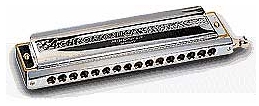
I also sat in with the band that was hired to entertain at one of the evening events. There is a group called the Alabama Blues Brothers, based in Huntsville, that travels the southern and eastern U.S. doing a Blues Brothers tribute schtiick (the two lead guys bear a passing resemblance to Akroyd and Belushi as Jake and Elwood Blues). The Alabama Blues Brothers band is a classic loud bar band. It was late in the evening, the crowd had thinned out, so I whipped out my CX-12 Chromatic and blew some harmonica with the band. They were expecting a lame conventioneer, so they were surprised to hear me play and sing the blues. I do admire these 'Bama guys - they are out there, fighting to make a living and seem to be keeping there heads above water.
The Blues Brothers - two white guys in suits, fedoras and shades - is the mass market image of the blues in middle class America. It isn't the "real thing," but I still like it. Akroyd and Belushi did a lot to raise awareness of this music. I wish John Belushi hadn't killed himself - we could use his nuttiness right about now...
While these events are chaotic, there is a certain efficiency to the mosh-pit approach to schmoozing. It would have taken a year to meet all of these people via one-on-one visits. I met one person who might be able to help me on a deal. I built out my Roladex a little.
I also sat in with the band that was hired to entertain at one of the evening events. There is a group called the Alabama Blues Brothers, based in Huntsville, that travels the southern and eastern U.S. doing a Blues Brothers tribute schtiick (the two lead guys bear a passing resemblance to Akroyd and Belushi as Jake and Elwood Blues). The Alabama Blues Brothers band is a classic loud bar band. It was late in the evening, the crowd had thinned out, so I whipped out my CX-12 Chromatic and blew some harmonica with the band. They were expecting a lame conventioneer, so they were surprised to hear me play and sing the blues. I do admire these 'Bama guys - they are out there, fighting to make a living and seem to be keeping there heads above water.
The Blues Brothers - two white guys in suits, fedoras and shades - is the mass market image of the blues in middle class America. It isn't the "real thing," but I still like it. Akroyd and Belushi did a lot to raise awareness of this music. I wish John Belushi hadn't killed himself - we could use his nuttiness right about now...
Tuesday, April 18, 2006
Public Radio In Chicago Sells Out
This is a long post, because I am pretty ticked about the end of jazz and blues music on the radio in Chicago.
Here is some more evidence of bad decisionmaking on the part of people who have a responsibility to the public. WBEZ Radio in Chicago, the flagship NPR station, announced recently a change in plans. They are virtually eliminating all music from their airwaves in favor of insipid talk radio shows. WBEZ is the primary source of jazz and blues music in Chicago. There is a college radio station that broadcasts a significant amount of jazz, but its signal doesn't reach all of Chicago. It is disgusting to see this station abandon its legacy and its mission to attract the "American Idol/Reality Show" crowd with a bunch of blather from kinuckleheads that love the sound of their own voice. BAH!
I had an exchange of emails with Torey Malatia, General Manager of WBEZ. I am posting them here for everyone's enjoyment. Torey is a good guy, I think, but this decision is incredibly wrong.
Message One From Me:
Dear Mr. Jones and Mr. Malatia:
I have just received confirmation from a reliable source that you announced to your staff last week that you are eliminating jazz and blues programming. Apparently, this decision was made without the input from the on-air staff that present the fine jazz and blues shows at WBEZ. This strikes me as being a very high-handed and imperious management approach, certainly not something one expects from an "enlightened" institution such as public radio.
I am outraged that you would reach this decision - WBEZ's contribution to Chicago's musical culture has been built largely on jazz and blues and you are turning your back on your mission and your legacy. Now, I must also wonder how on earth you make decisions at WBEZ? You didn't seem to involve your professional staff. You haven't mentioned this to your listeners. Is this about money? Is this about pursuit of the
mass market? I have been sending money to your station for years - don't I get a vote? Isn't public radio supposed to broadcast material that is not presented by commercial outlets? There is plenty of news and talk shows available on the Chicago radio dial. There is very little jazz and blues. You plan to eliminate this fine music is a violation of public trust.
I hope you will reverse this terrible decision. Chicago needs more good music and less quirky chit-chat from egotistical knuckleheads.
Reply #1 From Torey:
Thanks for voicing your concerns about our evolving future plans for two public service radio outlets here in our region. Here's a summary that may help you follow the progression of our annoucements about our planning. These changes are somewhat misunderstood as an elimination of music. This is untrue, although, to be fair, we are planning a major departure from the "music format" radio style with which many are familiar in commercial and non-commercial music stations. And again, I should stress that changes will not go into effect until 2007.
In November 2004 we announced that a seminal change that would take place in the fall 2006 or winter 2007, some 24 months after that initial announcement. It was this: All music would leave 91.5 FM and the WBEZ signal would become all news and information. Meanwhile 89.5 FM would cease being a repeater of 91.5 FM and broadcast a unique stream of music, arts, culture, and public affairs. This was in the press both locally and nationally and we discussed it at our December, 2004 Community Advisory meeting/Annual Board meeting and just about every meeting ever since. The music staff heard the decision first in a private session in November 2004 before staff or board or advisory council were informed. As is true today, they were the first to be invited to participate in new designs.
Since then we have been working toward this goal, openly and agressively. Over time, and with much struggling, we've weighed two designs for 89.5. One is what is called in our industry a "needle drop" music service (a mostly ninterrupted succession of CDs played in sets throuhout the day)and the second is a highly localized mixed cultural service--always including a broad range of music (but not stressing music over other kinds of arts and culture and public affairs). Finally, a couple of weeks ago, we decided the composition of 89.5, when it splits off in winter 2007 will be a mix that leans to public affairs with music, rather than the other way around, as we had initially announced. Our orignal idea announced for 91.5 in November 2004 is still viable and will still happen as scheduled.
Again, the music staff was privy to this decision first, before any other staff or board or advisory council or the general public were informed. We have involved staff in decisions, and informed them of progress as soon as a strategic change was made, and continue to work closely with staff as they proceed with their planning for these services. We announced this change immediately, even though we are talking about a change that won't be heard on the air for a little under a year.
Our process is quite public, often a difficult posture when one knows strong public opinion is likely to be heard immediately.
I hope to hear from you and many members of the community as we continue to plan a unique local service on 89.5, a mixture of public affairs and a celebration of arts and culture throughout our region including, of course, music of every style and type. We certainly are aware that music speaks cross-culturally in ways that discussion cannot. Our goal is to bring us closer together as a community, attempting to build a better place for ourselves and our children. Change is difficult--but shaped with the community and its needs first, this is a change that will yield a major advancement in independent media for our region.
Stay well,
Torey Malatia
President and General Manager
Chicago Public Radio
WBEZ, Chicago, 91.5 FM
WBEW, Chesterton, 89.5 FM
WBEQ, Morris, 90.7 FM
Message # 2 From Me to Torey:
Dear Mr. Malatia:
Thank you for your response. It is kind of you to take the time to deal with an irate WBEZ member like me, and I am sure you are a terrific guy. Unfortunately, I remain irate.
It appears that I was not paying enough attention to the developments at WBEZ. That was a mistake on my part, and I regret the error. The first announcement of your action came to my attention on April 11, 2006 when the news hit some Internet news services that I monitor (specifically www.radioand records.com and and Eric Zorn's blog). Those sources (and other inside sources) claimed that the programming change was news to your staff as of April 5, 2006. I would respectfully suggest that your decision was not publicized adequately last year.
I also remember clearly the promo efforts of your staff during recent pledge drives. Jazz and blues programming was cited as one of the major reasons for supporting WBEZ. I agreed wholeheartedly and sent in my check. I guess that those statements weren't true. In the commercial sector, we call this "false advertising." The FTC takes a dim view of such behavior.
Your decision to move music to 89.5FM is no replacement for the music programming at WBEZ. Chesterton is far away - it is the Indiana Dunes State Park's home town if I remember correctly. I do not receive a signal from 89.5 on my radio dial in Evanston - it is static and noise. So for those of us on the north part of Chicago and in the suburbs, your decision to move jazz and blues to the boonies is the
same as taking it off the air completely. WBEZ has the FM signal that covers the largest swath of the Chicagoland area. Your use of 89.5 as the music station is a clear attempt at heading off public outcry over the radical make-over at WBEZ. I am not taken in by this. In addition, the Chesterton and Morris stations will continue to broadcast lots of public affairs, news, and NPR syndicated stuff. So you are marginalizing jazz and blues programming on marginal stations. Even if I could get 89.5 in Evanston, I am not terribly interested in localized public affairs programming from the Indiana Dunes.
I am sad and disappointed. It sounds like this will happen as you have planned it. Congratulations to you and your staff. I am sure the majority of your listeners won't care much - talk radio is popular with most folks, I guess. I can only vote with my wallet - I am going to take the $500-1000 a year I contribute to WBEZ to another organization that supports American music. And I always have my iPod and I guess I can sign up for satellite radio. It is a shame that WBEZ is dumping its wonderful heritage in the garbage can.
I will be switching off your station for good once you make this change.
You said that "change is difficult." That is true. Sometimes, change is also wrong. I hope your new programming initiative fails and you bring jazz and blues back to the WBEZ flagship.
Here is Torey's response:
Here are some responses woven in, if that's okay. It's just a little easier. I'm out out town, doing this on dial-up, so there is no spell check and my text is going to be somewhat messy. Please bear with me.
Dear Mr. Malatia:
Thank you for your response. It is kind of you to
take the time to deal with an irate WBEZ member like
me, and I am sure you are a terrific guy.
Unfortunately, I remain irate.
It appears that I was not paying enough attention to
the developments at WBEZ. That was a mistake on my
part, and I regret the error. The first announcement
of your action came to my attention on April 11, 2006
when the news hit some Internet news services that I
monitor (specifically www.radioand records.com and and
Eric Zorn's blog). Those sources (and other inside
sources) claimed that the programming change was news
to your staff as of April 5, 2006.
Eric's reporting is excellent, but all reporting by nature must assume a lot. Here's the story: The staff had been part of planning of the new service since November of 2004. Therefore, they were hardly surprised by the splitting of the signals issue. They WERE surprised that we had decided that a pure music format (it was nevr to be only jazz, by the way) was now off the table, and that we would be looking for a public affairs, culture, music mix.
I would respectfully suggest that your decision was not
publicized adequately last year.
Well, that may be (it was in Sun-Times, Tribune; and national press), but it could also be that as any event moves closer to its inception date, interest on behalf of readers grows. It may be just the natural scheme of things that folks are noticing more now.
I also remember clearly the promo efforts of your
staff during recent pledge drives. Jazz and blues
programming was cited as one of the major reasons for
supporting WBEZ. I agreed wholeheartedly and sent in
my check. I guess that those statements weren't true.
In the commercial sector, we call this "false
advertising." The FTC takes a dim view of such
behavior.
Jazz and blues will remain on both 91.5 (in the form of specials and feature production on talk vehicles like Eight Forty-Eight) and on 89.5 FM, as segments within the array of segments. 89.5 will also feature music of styles well beyond jazz, blues, and world music--the current 91.5 FM set of stylistic offerings. Besides, our current sedrvice remains as is until just shy of a year from now (so, even if you pprefer to see your membership as only applied to music--which it isn't, of course-- if your memebrship was for what's there now, you'll certainly get your money's worth). Our announcement was an attempt to signal ahead so that folks had yet another advance warning. Clarity is something we are attempting to provide all along this process.
Your decision to move music to 89.5FM is no
replacement for the music programming at WBEZ.
Chesterton is far away - it is the Indiana Dunes State
Park's home town if I remember correctly. I do not
receive a signal from 89.5 on my radio dial in
Evanston - it is static and noise. So for those of us
on the north part of Chicago and in the suburbs, your
decision to move jazz and blues to the boonies is the
same as taking it off the air completely. WBEZ has the
FM signal that covers the largest swath of the
Chicagoland area.
This may indeed be a valid concern to which I have no satisfactory answer. But before I melt away, here are some details. First, the signal that is currently on the air at 89.5 FM in Chesterton is a non-directional 7,000 watt signal (presently, it merely repeats the signal on 91.5 FM0. By the time the new service is launched on 89.5, we will have increased its power to 50,000 watts directional (to the northwest). This will increase the population covered by the pattern from the present 400,000 listeners who can hear 89.5, to approximately 4.4 million listeners who can get it clearly--including all of the city of Chicago. Evanston may indeed still prove to be a problematic area. The signal obviously loseds energy as it heads north, so our theoreticals on this give a rather uncertain picture for Evanston. It can tell you it will NOT reach Winnetka, Glencoe, Kennilworth, Lake Forest, and up the coastline to Wisconsin.
Your use of 89.5 as the musicstation is a clear attempt at heading off public
outcry over the radical make-over at WBEZ. I am not taken in by this.
Well, if I was trying to head off outcry, the best thing would have been to stick with the original announcement that 89.5 would be a music format. By changing that, I'm certainly worthy of your derision, but I would suggest unworthy of your description of my public relations wizardry.
In addition, the Chesterton and
Morris stations will continue to broadcast lots of
public affairs, news, and NPR syndicated stuff. So
you are marginalizing jazz and blues programming on
marginal stations. Even if I could get 89.5 in
Evanston, I am not terribly interested in localized
public affairs programming from the Indiana Dunes.
Well, this would have been a problem even before. In the music format plans we had expected a good many public service aspects to the region, much of it localized, because that's what one does when one is granted the privaledge of occupying spectrum space in the non-commercial educational band. But you are correct in that now the public service component has been elevated substantially over the music element in the original design.
I am sad and disappointed. It sounds like this will
happen as you have planned it. Congratulations to you
and your staff. I am sure the majority of your
listeners won't care much - talk radio is popular with
most folks, I guess. I can only vote with my wallet -
I am going to take the $500-1000 a year I contribute
to WBEZ to another organization that supports American
music. And I always have my iPod and I guess I can
sign up for satellite radio. It is a shame that WBEZ
is dumping its wonderful heritage in the garbage can.
Chris, if not playing sets of jazz is dumping respect for the art form into the trash, then you and I have a very different view of the possiblities of broadcasting to entice, enlighten, and enrich listeners musically. Yours is certainly valid--music formats are one way to do this. Tried, true, tested. But there are many others, sometimes more alluring to listeners who would otherwise tune away from a music station that they knew wasn't offering their avowed preference. To the non-jazz fan, the thought that she/he might be captured by the embroidery in a Duke Ellington improvised solo verse of Sophisticated Lady might seem impossible in the abstract until it happens, but by accident, because the station is trying other things of interest to that listener. Perhaps we should leave it at that, that we disagree on radio's best methods to do this.
I will be switching off your station for good once you
make this change.
You said that "change is difficult." That is true.
Sometimes, change is also wrong.
Agreed. Change can be terribly wrong. Or it can be transformative in the best way. No one has a crystal.
I hope your new programming initiative fails and you
bring jazz and blues back to the WBEZ flagship.
Fair enough. We'll see how it goes. Mostly, I thank you for caring this much. I respect that, and I hope you sense that in these responses. Stay well, and please keep in touch.
Whew! You can see that Mr. Malatia has answers. I feel that this is a bad mistake, but I will never win this argument.
Here is some more evidence of bad decisionmaking on the part of people who have a responsibility to the public. WBEZ Radio in Chicago, the flagship NPR station, announced recently a change in plans. They are virtually eliminating all music from their airwaves in favor of insipid talk radio shows. WBEZ is the primary source of jazz and blues music in Chicago. There is a college radio station that broadcasts a significant amount of jazz, but its signal doesn't reach all of Chicago. It is disgusting to see this station abandon its legacy and its mission to attract the "American Idol/Reality Show" crowd with a bunch of blather from kinuckleheads that love the sound of their own voice. BAH!
I had an exchange of emails with Torey Malatia, General Manager of WBEZ. I am posting them here for everyone's enjoyment. Torey is a good guy, I think, but this decision is incredibly wrong.
Message One From Me:
Dear Mr. Jones and Mr. Malatia:
I have just received confirmation from a reliable source that you announced to your staff last week that you are eliminating jazz and blues programming. Apparently, this decision was made without the input from the on-air staff that present the fine jazz and blues shows at WBEZ. This strikes me as being a very high-handed and imperious management approach, certainly not something one expects from an "enlightened" institution such as public radio.
I am outraged that you would reach this decision - WBEZ's contribution to Chicago's musical culture has been built largely on jazz and blues and you are turning your back on your mission and your legacy. Now, I must also wonder how on earth you make decisions at WBEZ? You didn't seem to involve your professional staff. You haven't mentioned this to your listeners. Is this about money? Is this about pursuit of the
mass market? I have been sending money to your station for years - don't I get a vote? Isn't public radio supposed to broadcast material that is not presented by commercial outlets? There is plenty of news and talk shows available on the Chicago radio dial. There is very little jazz and blues. You plan to eliminate this fine music is a violation of public trust.
I hope you will reverse this terrible decision. Chicago needs more good music and less quirky chit-chat from egotistical knuckleheads.
Reply #1 From Torey:
Thanks for voicing your concerns about our evolving future plans for two public service radio outlets here in our region. Here's a summary that may help you follow the progression of our annoucements about our planning. These changes are somewhat misunderstood as an elimination of music. This is untrue, although, to be fair, we are planning a major departure from the "music format" radio style with which many are familiar in commercial and non-commercial music stations. And again, I should stress that changes will not go into effect until 2007.
In November 2004 we announced that a seminal change that would take place in the fall 2006 or winter 2007, some 24 months after that initial announcement. It was this: All music would leave 91.5 FM and the WBEZ signal would become all news and information. Meanwhile 89.5 FM would cease being a repeater of 91.5 FM and broadcast a unique stream of music, arts, culture, and public affairs. This was in the press both locally and nationally and we discussed it at our December, 2004 Community Advisory meeting/Annual Board meeting and just about every meeting ever since. The music staff heard the decision first in a private session in November 2004 before staff or board or advisory council were informed. As is true today, they were the first to be invited to participate in new designs.
Since then we have been working toward this goal, openly and agressively. Over time, and with much struggling, we've weighed two designs for 89.5. One is what is called in our industry a "needle drop" music service (a mostly ninterrupted succession of CDs played in sets throuhout the day)and the second is a highly localized mixed cultural service--always including a broad range of music (but not stressing music over other kinds of arts and culture and public affairs). Finally, a couple of weeks ago, we decided the composition of 89.5, when it splits off in winter 2007 will be a mix that leans to public affairs with music, rather than the other way around, as we had initially announced. Our orignal idea announced for 91.5 in November 2004 is still viable and will still happen as scheduled.
Again, the music staff was privy to this decision first, before any other staff or board or advisory council or the general public were informed. We have involved staff in decisions, and informed them of progress as soon as a strategic change was made, and continue to work closely with staff as they proceed with their planning for these services. We announced this change immediately, even though we are talking about a change that won't be heard on the air for a little under a year.
Our process is quite public, often a difficult posture when one knows strong public opinion is likely to be heard immediately.
I hope to hear from you and many members of the community as we continue to plan a unique local service on 89.5, a mixture of public affairs and a celebration of arts and culture throughout our region including, of course, music of every style and type. We certainly are aware that music speaks cross-culturally in ways that discussion cannot. Our goal is to bring us closer together as a community, attempting to build a better place for ourselves and our children. Change is difficult--but shaped with the community and its needs first, this is a change that will yield a major advancement in independent media for our region.
Stay well,
Torey Malatia
President and General Manager
Chicago Public Radio
WBEZ, Chicago, 91.5 FM
WBEW, Chesterton, 89.5 FM
WBEQ, Morris, 90.7 FM
Message # 2 From Me to Torey:
Dear Mr. Malatia:
Thank you for your response. It is kind of you to take the time to deal with an irate WBEZ member like me, and I am sure you are a terrific guy. Unfortunately, I remain irate.
It appears that I was not paying enough attention to the developments at WBEZ. That was a mistake on my part, and I regret the error. The first announcement of your action came to my attention on April 11, 2006 when the news hit some Internet news services that I monitor (specifically www.radioand records.com and and Eric Zorn's blog). Those sources (and other inside sources) claimed that the programming change was news to your staff as of April 5, 2006. I would respectfully suggest that your decision was not publicized adequately last year.
I also remember clearly the promo efforts of your staff during recent pledge drives. Jazz and blues programming was cited as one of the major reasons for supporting WBEZ. I agreed wholeheartedly and sent in my check. I guess that those statements weren't true. In the commercial sector, we call this "false advertising." The FTC takes a dim view of such behavior.
Your decision to move music to 89.5FM is no replacement for the music programming at WBEZ. Chesterton is far away - it is the Indiana Dunes State Park's home town if I remember correctly. I do not receive a signal from 89.5 on my radio dial in Evanston - it is static and noise. So for those of us on the north part of Chicago and in the suburbs, your decision to move jazz and blues to the boonies is the
same as taking it off the air completely. WBEZ has the FM signal that covers the largest swath of the Chicagoland area. Your use of 89.5 as the music station is a clear attempt at heading off public outcry over the radical make-over at WBEZ. I am not taken in by this. In addition, the Chesterton and Morris stations will continue to broadcast lots of public affairs, news, and NPR syndicated stuff. So you are marginalizing jazz and blues programming on marginal stations. Even if I could get 89.5 in Evanston, I am not terribly interested in localized public affairs programming from the Indiana Dunes.
I am sad and disappointed. It sounds like this will happen as you have planned it. Congratulations to you and your staff. I am sure the majority of your listeners won't care much - talk radio is popular with most folks, I guess. I can only vote with my wallet - I am going to take the $500-1000 a year I contribute to WBEZ to another organization that supports American music. And I always have my iPod and I guess I can sign up for satellite radio. It is a shame that WBEZ is dumping its wonderful heritage in the garbage can.
I will be switching off your station for good once you make this change.
You said that "change is difficult." That is true. Sometimes, change is also wrong. I hope your new programming initiative fails and you bring jazz and blues back to the WBEZ flagship.
Here is Torey's response:
Here are some responses woven in, if that's okay. It's just a little easier. I'm out out town, doing this on dial-up, so there is no spell check and my text is going to be somewhat messy. Please bear with me.
Dear Mr. Malatia:
Thank you for your response. It is kind of you to
take the time to deal with an irate WBEZ member like
me, and I am sure you are a terrific guy.
Unfortunately, I remain irate.
It appears that I was not paying enough attention to
the developments at WBEZ. That was a mistake on my
part, and I regret the error. The first announcement
of your action came to my attention on April 11, 2006
when the news hit some Internet news services that I
monitor (specifically www.radioand records.com and and
Eric Zorn's blog). Those sources (and other inside
sources) claimed that the programming change was news
to your staff as of April 5, 2006.
Eric's reporting is excellent, but all reporting by nature must assume a lot. Here's the story: The staff had been part of planning of the new service since November of 2004. Therefore, they were hardly surprised by the splitting of the signals issue. They WERE surprised that we had decided that a pure music format (it was nevr to be only jazz, by the way) was now off the table, and that we would be looking for a public affairs, culture, music mix.
I would respectfully suggest that your decision was not
publicized adequately last year.
Well, that may be (it was in Sun-Times, Tribune; and national press), but it could also be that as any event moves closer to its inception date, interest on behalf of readers grows. It may be just the natural scheme of things that folks are noticing more now.
I also remember clearly the promo efforts of your
staff during recent pledge drives. Jazz and blues
programming was cited as one of the major reasons for
supporting WBEZ. I agreed wholeheartedly and sent in
my check. I guess that those statements weren't true.
In the commercial sector, we call this "false
advertising." The FTC takes a dim view of such
behavior.
Jazz and blues will remain on both 91.5 (in the form of specials and feature production on talk vehicles like Eight Forty-Eight) and on 89.5 FM, as segments within the array of segments. 89.5 will also feature music of styles well beyond jazz, blues, and world music--the current 91.5 FM set of stylistic offerings. Besides, our current sedrvice remains as is until just shy of a year from now (so, even if you pprefer to see your membership as only applied to music--which it isn't, of course-- if your memebrship was for what's there now, you'll certainly get your money's worth). Our announcement was an attempt to signal ahead so that folks had yet another advance warning. Clarity is something we are attempting to provide all along this process.
Your decision to move music to 89.5FM is no
replacement for the music programming at WBEZ.
Chesterton is far away - it is the Indiana Dunes State
Park's home town if I remember correctly. I do not
receive a signal from 89.5 on my radio dial in
Evanston - it is static and noise. So for those of us
on the north part of Chicago and in the suburbs, your
decision to move jazz and blues to the boonies is the
same as taking it off the air completely. WBEZ has the
FM signal that covers the largest swath of the
Chicagoland area.
This may indeed be a valid concern to which I have no satisfactory answer. But before I melt away, here are some details. First, the signal that is currently on the air at 89.5 FM in Chesterton is a non-directional 7,000 watt signal (presently, it merely repeats the signal on 91.5 FM0. By the time the new service is launched on 89.5, we will have increased its power to 50,000 watts directional (to the northwest). This will increase the population covered by the pattern from the present 400,000 listeners who can hear 89.5, to approximately 4.4 million listeners who can get it clearly--including all of the city of Chicago. Evanston may indeed still prove to be a problematic area. The signal obviously loseds energy as it heads north, so our theoreticals on this give a rather uncertain picture for Evanston. It can tell you it will NOT reach Winnetka, Glencoe, Kennilworth, Lake Forest, and up the coastline to Wisconsin.
Your use of 89.5 as the musicstation is a clear attempt at heading off public
outcry over the radical make-over at WBEZ. I am not taken in by this.
Well, if I was trying to head off outcry, the best thing would have been to stick with the original announcement that 89.5 would be a music format. By changing that, I'm certainly worthy of your derision, but I would suggest unworthy of your description of my public relations wizardry.
In addition, the Chesterton and
Morris stations will continue to broadcast lots of
public affairs, news, and NPR syndicated stuff. So
you are marginalizing jazz and blues programming on
marginal stations. Even if I could get 89.5 in
Evanston, I am not terribly interested in localized
public affairs programming from the Indiana Dunes.
Well, this would have been a problem even before. In the music format plans we had expected a good many public service aspects to the region, much of it localized, because that's what one does when one is granted the privaledge of occupying spectrum space in the non-commercial educational band. But you are correct in that now the public service component has been elevated substantially over the music element in the original design.
I am sad and disappointed. It sounds like this will
happen as you have planned it. Congratulations to you
and your staff. I am sure the majority of your
listeners won't care much - talk radio is popular with
most folks, I guess. I can only vote with my wallet -
I am going to take the $500-1000 a year I contribute
to WBEZ to another organization that supports American
music. And I always have my iPod and I guess I can
sign up for satellite radio. It is a shame that WBEZ
is dumping its wonderful heritage in the garbage can.
Chris, if not playing sets of jazz is dumping respect for the art form into the trash, then you and I have a very different view of the possiblities of broadcasting to entice, enlighten, and enrich listeners musically. Yours is certainly valid--music formats are one way to do this. Tried, true, tested. But there are many others, sometimes more alluring to listeners who would otherwise tune away from a music station that they knew wasn't offering their avowed preference. To the non-jazz fan, the thought that she/he might be captured by the embroidery in a Duke Ellington improvised solo verse of Sophisticated Lady might seem impossible in the abstract until it happens, but by accident, because the station is trying other things of interest to that listener. Perhaps we should leave it at that, that we disagree on radio's best methods to do this.
I will be switching off your station for good once you
make this change.
You said that "change is difficult." That is true.
Sometimes, change is also wrong.
Agreed. Change can be terribly wrong. Or it can be transformative in the best way. No one has a crystal.
I hope your new programming initiative fails and you
bring jazz and blues back to the WBEZ flagship.
Fair enough. We'll see how it goes. Mostly, I thank you for caring this much. I respect that, and I hope you sense that in these responses. Stay well, and please keep in touch.
Whew! You can see that Mr. Malatia has answers. I feel that this is a bad mistake, but I will never win this argument.
Sunday, April 16, 2006
More Thoughts about San Luis Potosi and Chicago

This picture was taken at the intersection of Adams and Wells in Chicago on March 18. Over 100,000 folks paraded peacefully past my office. It was the first large demonstration against HR 4437, the severe immigration bill that mandates the construction of a 700 mile wall on our southern border and converts all illegal immigrants into felons (11 million felons, to be deported - that will be an impossible task, but I am sure that our government will flush several billion dollars down the toilet trying to enforce this nutty idea if it becomes law). This law will also punish anyone that helps an illegal immigrant stay in the U.S. - presumably this targets employers, but what about schools? Doctors? Banks? This is incredibly weird and unAmerican, in my view. And this proposed legislation would be utterly unenforceable in a free society.
Many of my fellow Americans seem to be caught up in a nasty mix of insecurity, xenophobia and subtle racism. I understand the insecurity part of the mix - and our national security is compromised by the shadowy world of illegal immigrants. But making these folks more illegal won't help - it will just drive them further underground. As long as Mexico and the US retain their current contrasting economic circumstances, the people will come north.
When I was in San Luis Potosi last week, I was one of the few Caucasians in town. The graciousness of the average Mexican was startling. It was also surprising how many folks accosted me in English, telling me of there time spent in El Norte. I met one happy retired gent in a dive bar who said he spent 34 productive years in the Logan Square neighborhood in Chicago. There appears to be a fairly strong San Luis Potosi/Chicago connection. Many SLP-ians have lived in Chicago or have family there. This one example of how the US and Mexico are connected at the grassroots level. Draconian laws designed to cut these connections won't work. We need laws that allow people to come north and be completely legal, and we have to face the fact that the 11 million folks that are here will not leave.
Saturday, April 15, 2006
San Luis Potosi
I have not blogged in a week because I have been on the road. My three womenfolk and I just returned from a week-long visit to San Luis Potosi ("SLP") in Mexico. SLP is a large city that is not well-known to gringos. It is the capital of the state (also called San Luis Potosi) and it is a land-locked city in roughly in the center of Mexico. The state of San Luis Potosi has a population of about 2.3 million; over 500,000 these folks are in the capital city . We spent most of the week in the city, but we did head out to el campo for a couple of days to visit family that lives on a ranch in the mountains.
SLP City is old, man. It was founded in the late 16th century by Catholic missionaries from Spain; gold and silver was discovered, so the small village ballooned into a sprawling metropolis very quickly. The main city retains a Spanish colonial feel, with plazas and parks a major factor in the urban environment. Many of the streets are made of old stone blocks. The average city building looks to be over 100 years old. Any fan of classic architecture will find SLP to be delightful.
Catholicism is everywhere in SLP - our hotel was near the Carmen Cathedral, a huge, ornate structure that was built in the 19th century; we were within walking distance of at least 5 other major cathedrals and a dozen humbler churches. Since we were in SLP during Holy Week, there were constant processions and celebrations. We saw a large, yet casual, procession of folks carrying a statue of Jesus on a pedestal several miles to a major cathedral - it was a festive event, complete with drums, bugles and fireworks. In San Luis, Catholicism is the organizing force in the lives of the people.
I might write a bit more about San Luis Potosi later.
SLP City is old, man. It was founded in the late 16th century by Catholic missionaries from Spain; gold and silver was discovered, so the small village ballooned into a sprawling metropolis very quickly. The main city retains a Spanish colonial feel, with plazas and parks a major factor in the urban environment. Many of the streets are made of old stone blocks. The average city building looks to be over 100 years old. Any fan of classic architecture will find SLP to be delightful.
Catholicism is everywhere in SLP - our hotel was near the Carmen Cathedral, a huge, ornate structure that was built in the 19th century; we were within walking distance of at least 5 other major cathedrals and a dozen humbler churches. Since we were in SLP during Holy Week, there were constant processions and celebrations. We saw a large, yet casual, procession of folks carrying a statue of Jesus on a pedestal several miles to a major cathedral - it was a festive event, complete with drums, bugles and fireworks. In San Luis, Catholicism is the organizing force in the lives of the people.
I might write a bit more about San Luis Potosi later.
Friday, April 07, 2006
Numbered Days
I have come to know a man that knows the approximate time of his death. He is trying to stretch the number of days that he has left - to attend his son's wedding in England, to reach 55 years of age so his pension will vest, to enjoy his wife and family for a few more weeks/months/years. D is a senior executive, working for one of the major clients of my investment banking firm. We were in New York recently, trying to generate some acquistion activity for D's employer. It was a very unusual business trip. D was very open about his impending doom ("All care that I am receiving is pallitive; a cure is just not going to happen. I am a dead man walking."). He had to leave one of our meetings to rest in his room. He said that living with cancer treatment is like waking up with a severe hangover every damn day. We had a long conversation over dinner; D told me a lot about his disease, his surgeries, his plans to put his affairs in order. I was pretty speechless - the enormity of his situation, the energy he has managed to retain in the face of this cancer was quite stunning.
I also received word that one of my ex-wife's siblings has just been diagnosed with an advanced form of cancer that is usually fatal. My two older (adult) children from my first marriage will be dealing with this.
Well, every individual is in the process of dying; everyone has numbered days. But most of us don't know how large or small that number is. My client and my former in-law have a pretty good idea of how much life they have left. I would think that many people that face this situation end up in a race against time - trying to clear all of those important matters that we defer when we think we have lots of time left (estate planning, reconciliations with estranged friends and family, etc.). I find myself hoping for a disease that will give me time to prepare for death.
I also received word that one of my ex-wife's siblings has just been diagnosed with an advanced form of cancer that is usually fatal. My two older (adult) children from my first marriage will be dealing with this.
Well, every individual is in the process of dying; everyone has numbered days. But most of us don't know how large or small that number is. My client and my former in-law have a pretty good idea of how much life they have left. I would think that many people that face this situation end up in a race against time - trying to clear all of those important matters that we defer when we think we have lots of time left (estate planning, reconciliations with estranged friends and family, etc.). I find myself hoping for a disease that will give me time to prepare for death.
Saturday, April 01, 2006
James Wheeler/Piano C. Red - Shot and Paralyzed
Damn!
These young predators do things that are beyond my comprehension. James Wheeler/ Piano C. Red was attacked last week. Red is one of the real good guys. I wrote to Dawn Trice, a "human interest" columnist at the Chicago Tribune, trying to get her to take up Red's cause. I have received no response from her at all. Fortuately, our local ABC news affiliate took up Red's story. Here is my letter to Dawn Trice:
"Dear Ms. Trice:
I am writing to you because I don't know who else at the Tribune to contact about the terrible crime that was committed against James Wheeler, aka Piano C. Red, on Thursday March 23. Red is one of the top members of the senior generation of blues musicians in Chicago. Red has played for years, never making enough money to support himself through music (he has been a cab driver for a long time to pay the bills). Here is the news I received from my friends in Chicago's blues community:
Maxwell Street Blues musician and singer, Piano C. Red (real name James Wheeler), was shot Thursday evening, March 23, in a robbery on the South Side of Chicago. While he was at a filling station inside the cashier building paying for gas, two men approached him for money and wanted the keys to his car to steal it. One of men shot him in the back. Then they took his money and the keys to the car and hijacked it.
As soon as he was shot, he felt his legs go numb and then he fell to the ground. The bullet lodged in his spine and paralyzed him from the waist down. He is at St. James Hospital, 20201 South Crawford Avenue, Olympia Fields, IL 60461; phone: (708)747-4000.
Piano C. Red said, "I am in my 70s and young bullies took advantage of me. You just never know day to day what is going to happen. I have to be thankful I am still alive." Paramount on his mind is what is going to happen with his band which plays every Sunday at the New Maxwell Street Market in good weather. "I want to keep that
tradition going. Maxwell Street is where the great blues musicians played. There was a feeling there I found no place else and we want to keep that feeling at the new market. I have asked Elmore James Jr. (son of blues legend Elmore James) and our joint band members to keep the band playing at the market. Maybe with some rehab, I can get better and play again there too."
Jim Roxworthy, Red's bass player, said, "He has an indomitable spirit. When I visited him in the hospital he spoke only a little of his tragedy. He wanted to make sure the music and his band continued."
Roosevelt University Professor Steve Balkin says, "Red was one of the few Maxwell Street old timers who still played. He is a great keyboardist, singer, and dancer-strutter. He loves Maxwell Street, the old place and the new, especially to watch people dance in the street to his music. The gig at the new market is a grand jam session and folksy front porch. A lot of people from old Maxwell Street come by either to sit in or just to sit down on homemade benches to socialize and tell stories of musicians andthe characters from the market. I think it would boost Red's spirits if he got cards and letters from Blues fans. The biggest fear the old Blues guys have is that they will be forgotten. One of his dreams is to play at the Chicago Blues Festival in Grant Park."
I am one of Red's many fans. He will obviously have a rough time with medical bills, not to mention rehab. I am hoping that the Tribune might bring Red's situation to the public's attention. He is going to need support to get through this. Of course, this random act of violence by young men against an elderly man is unfathonable to most of us. Here is a link to some more biographical information on Piano C. Red.
Thanks for your help."
I am disappointed that the Tribune isn't covering this story.
Another blogger in the area is following Red's stuation. Check this out: http://todayschicagoblues.blogspot.com/
These young predators do things that are beyond my comprehension. James Wheeler/ Piano C. Red was attacked last week. Red is one of the real good guys. I wrote to Dawn Trice, a "human interest" columnist at the Chicago Tribune, trying to get her to take up Red's cause. I have received no response from her at all. Fortuately, our local ABC news affiliate took up Red's story. Here is my letter to Dawn Trice:
"Dear Ms. Trice:
I am writing to you because I don't know who else at the Tribune to contact about the terrible crime that was committed against James Wheeler, aka Piano C. Red, on Thursday March 23. Red is one of the top members of the senior generation of blues musicians in Chicago. Red has played for years, never making enough money to support himself through music (he has been a cab driver for a long time to pay the bills). Here is the news I received from my friends in Chicago's blues community:
Maxwell Street Blues musician and singer, Piano C. Red (real name James Wheeler), was shot Thursday evening, March 23, in a robbery on the South Side of Chicago. While he was at a filling station inside the cashier building paying for gas, two men approached him for money and wanted the keys to his car to steal it. One of men shot him in the back. Then they took his money and the keys to the car and hijacked it.
As soon as he was shot, he felt his legs go numb and then he fell to the ground. The bullet lodged in his spine and paralyzed him from the waist down. He is at St. James Hospital, 20201 South Crawford Avenue, Olympia Fields, IL 60461; phone: (708)747-4000.
Piano C. Red said, "I am in my 70s and young bullies took advantage of me. You just never know day to day what is going to happen. I have to be thankful I am still alive." Paramount on his mind is what is going to happen with his band which plays every Sunday at the New Maxwell Street Market in good weather. "I want to keep that
tradition going. Maxwell Street is where the great blues musicians played. There was a feeling there I found no place else and we want to keep that feeling at the new market. I have asked Elmore James Jr. (son of blues legend Elmore James) and our joint band members to keep the band playing at the market. Maybe with some rehab, I can get better and play again there too."
Jim Roxworthy, Red's bass player, said, "He has an indomitable spirit. When I visited him in the hospital he spoke only a little of his tragedy. He wanted to make sure the music and his band continued."
Roosevelt University Professor Steve Balkin says, "Red was one of the few Maxwell Street old timers who still played. He is a great keyboardist, singer, and dancer-strutter. He loves Maxwell Street, the old place and the new, especially to watch people dance in the street to his music. The gig at the new market is a grand jam session and folksy front porch. A lot of people from old Maxwell Street come by either to sit in or just to sit down on homemade benches to socialize and tell stories of musicians andthe characters from the market. I think it would boost Red's spirits if he got cards and letters from Blues fans. The biggest fear the old Blues guys have is that they will be forgotten. One of his dreams is to play at the Chicago Blues Festival in Grant Park."
I am one of Red's many fans. He will obviously have a rough time with medical bills, not to mention rehab. I am hoping that the Tribune might bring Red's situation to the public's attention. He is going to need support to get through this. Of course, this random act of violence by young men against an elderly man is unfathonable to most of us. Here is a link to some more biographical information on Piano C. Red.
Thanks for your help."
I am disappointed that the Tribune isn't covering this story.
Another blogger in the area is following Red's stuation. Check this out: http://todayschicagoblues.blogspot.com/
Saturday, March 25, 2006
Gorging on the blues.
I have been absent from the blogosphere for several weeks. There are many reasons for this. Real life is cutting into my time for blabbing about real life.
My two youngest daughters were on a school break in February (their school has a mid-winter vacation, which is a nice idea). My beautiful wife took the girlies to Los Angeles to visit a friend – I stayed back due to work obligations. So I was alone in the house (except for two dogs, one cat, one goldfish and a dozen hamsters). This allowed me to indulge myself and gorge on the blues.
One Saturday night, I caught Eddy “The Chief” Clearwater at Bill’s Blues Bar in Evanston IL. The Chief is 71, but his energy and enthusiasm is still high. He is an excellent singer – relaxed, musical, no fireworks, all substance. And he has a signature guitar sound. It is a tremolo that he achieves with his fingers up on the frets. He also has a very interesting custom amplifier, which I am sure adds to his sound. Eddy’s band is a crack trio – Mark Wydra on guitar, Merle (the Perkolater) Perkins on drums and my good friend Shoji Naito on bass. Eddy did several tunes from his latest CD, Rock and Roll City (he is backed by Los Straitjackets on that record ). He also did some older blues and R&B classics like “Messin’ with the Kid.”
The following Sunday evening Sunday, I got in the car and drove for over an hour to St. Charles IL, the location of Chord On Blues (“COB”). COB is a fairly large supper club. I am amazed that it survives out in the “super boonies,” but it apparently does a robust business, especially on weekends. COB books blues acts, and often will book visiting artists that don’t get much attention within the Chicago city limits. The reason for my long trip to St. Charles was Kim Wilson. This talented harmonicist and vocalist passes through Chicagoland very infrequently. Kim has a money machine called the Fabulous Thunderbirds (he is a founder and still leads this blues-y rock band). He also has “Kim Wilson’s Blues Revue” which is all old-school blues with Kim as front man. He plays a ton of harmonica with the Blues Revue – he writes songs and sings for the Fab T-birds and only plays a bit of harp. Kim’s appearance at COB was a last minute thing – a fill-in gig for his Midwest tour. A significant number of my fellow blues harp cult members attended, including our cult leader, Joe Filisko. The show was solid – Wilson is the top Chicago-style blues harmonica player/vocalist working today.
On the following Monday evening, I went to the Filisko Blues Harp Cult session at Chicago’s Old Town School of Folk Music. Our special guest was – KIM WILSON!!!! He spoke to the harmonica geeks, told some stories and played some outstanding harmonica. He had an interesting take on “white people playing the blues,” which some feel is a form of cultural thievery, another case of the white majority ripping off the African American originators of an art form. He said the white people do not have the cultural claim on the blues that black folks have as their birthright – BUT if the music is approached with the proper respect and the intent is to represent the art form to the world, white people can feel OK about performing the blues. Hey – Wynton Marsallis has played Bach. In the end, music is music.
The next February evening, I hosted a bachelor party for my friend, Shoji Naito who celebrated his marriage to fellow harmonicist “Little Laura” in early March. It was a pretty tame bachelor party. We drank beer, ate pizza and played music until 2 a.m. I also went to a new blues jam on Wednesday, at a club called the Kitty Moon. So I did musical things for five consecutive evenings. I was pooped and very glad to see my womenfolk return to Evanston.
The musical feast continued on into March. Steve Guyger, another fabulous blues harmonica guy, came to town. He played with Billy Flynn (the unsung multi-instrumentalist/vocalist from Green Bay WI) at The Smoke Daddy in Chicago. Steve and Billy also showed up at the Filisko harmonica class at the Old Town School of Folk Music the following Monday. Guyger and Flynn put on an unreal exhibition of late 1940’s through early 1960’s Chicago blues. Guyger cares passionately about the blues and he produced the fattest harmonica tone I have ever heard. He doesn’t have Kim Wilson’s voice (or his financial success), but he is the real deal. He was Jimmy Rogers harmonica player for many years, and he soaked up Jimmy’s vibe. Billy Flynn plays guitar, harmonica, bass, mandolin and he sings – awesome musician. He is known to insiders and has played with the greats – Kim Wilson, Otis Rush, Pinetop Perkins, Sunnyland Slim, Luther Allison and many others.
Also in March, Shoji Naito and Little Laura celebrated their "blues wedding" - lots of fun and lots of music. I also checked out the Thursday night jam at Zachary's on the Northwest Side of Chicago - a very eclectic session covering everything from Johnny Cash to Muddy Waters.
I am cranking up the Mystery Band again. We have two gigs in late April. All this listening has inspired me to try again.
I talk too much about music. It is sort of pointless. I agree with Steve Martin - he said, "Talking about music is like dancing about architecture."
My two youngest daughters were on a school break in February (their school has a mid-winter vacation, which is a nice idea). My beautiful wife took the girlies to Los Angeles to visit a friend – I stayed back due to work obligations. So I was alone in the house (except for two dogs, one cat, one goldfish and a dozen hamsters). This allowed me to indulge myself and gorge on the blues.
One Saturday night, I caught Eddy “The Chief” Clearwater at Bill’s Blues Bar in Evanston IL. The Chief is 71, but his energy and enthusiasm is still high. He is an excellent singer – relaxed, musical, no fireworks, all substance. And he has a signature guitar sound. It is a tremolo that he achieves with his fingers up on the frets. He also has a very interesting custom amplifier, which I am sure adds to his sound. Eddy’s band is a crack trio – Mark Wydra on guitar, Merle (the Perkolater) Perkins on drums and my good friend Shoji Naito on bass. Eddy did several tunes from his latest CD, Rock and Roll City (he is backed by Los Straitjackets on that record ). He also did some older blues and R&B classics like “Messin’ with the Kid.”
The following Sunday evening Sunday, I got in the car and drove for over an hour to St. Charles IL, the location of Chord On Blues (“COB”). COB is a fairly large supper club. I am amazed that it survives out in the “super boonies,” but it apparently does a robust business, especially on weekends. COB books blues acts, and often will book visiting artists that don’t get much attention within the Chicago city limits. The reason for my long trip to St. Charles was Kim Wilson. This talented harmonicist and vocalist passes through Chicagoland very infrequently. Kim has a money machine called the Fabulous Thunderbirds (he is a founder and still leads this blues-y rock band). He also has “Kim Wilson’s Blues Revue” which is all old-school blues with Kim as front man. He plays a ton of harmonica with the Blues Revue – he writes songs and sings for the Fab T-birds and only plays a bit of harp. Kim’s appearance at COB was a last minute thing – a fill-in gig for his Midwest tour. A significant number of my fellow blues harp cult members attended, including our cult leader, Joe Filisko. The show was solid – Wilson is the top Chicago-style blues harmonica player/vocalist working today.
On the following Monday evening, I went to the Filisko Blues Harp Cult session at Chicago’s Old Town School of Folk Music. Our special guest was – KIM WILSON!!!! He spoke to the harmonica geeks, told some stories and played some outstanding harmonica. He had an interesting take on “white people playing the blues,” which some feel is a form of cultural thievery, another case of the white majority ripping off the African American originators of an art form. He said the white people do not have the cultural claim on the blues that black folks have as their birthright – BUT if the music is approached with the proper respect and the intent is to represent the art form to the world, white people can feel OK about performing the blues. Hey – Wynton Marsallis has played Bach. In the end, music is music.
The next February evening, I hosted a bachelor party for my friend, Shoji Naito who celebrated his marriage to fellow harmonicist “Little Laura” in early March. It was a pretty tame bachelor party. We drank beer, ate pizza and played music until 2 a.m. I also went to a new blues jam on Wednesday, at a club called the Kitty Moon. So I did musical things for five consecutive evenings. I was pooped and very glad to see my womenfolk return to Evanston.
The musical feast continued on into March. Steve Guyger, another fabulous blues harmonica guy, came to town. He played with Billy Flynn (the unsung multi-instrumentalist/vocalist from Green Bay WI) at The Smoke Daddy in Chicago. Steve and Billy also showed up at the Filisko harmonica class at the Old Town School of Folk Music the following Monday. Guyger and Flynn put on an unreal exhibition of late 1940’s through early 1960’s Chicago blues. Guyger cares passionately about the blues and he produced the fattest harmonica tone I have ever heard. He doesn’t have Kim Wilson’s voice (or his financial success), but he is the real deal. He was Jimmy Rogers harmonica player for many years, and he soaked up Jimmy’s vibe. Billy Flynn plays guitar, harmonica, bass, mandolin and he sings – awesome musician. He is known to insiders and has played with the greats – Kim Wilson, Otis Rush, Pinetop Perkins, Sunnyland Slim, Luther Allison and many others.
Also in March, Shoji Naito and Little Laura celebrated their "blues wedding" - lots of fun and lots of music. I also checked out the Thursday night jam at Zachary's on the Northwest Side of Chicago - a very eclectic session covering everything from Johnny Cash to Muddy Waters.
I am cranking up the Mystery Band again. We have two gigs in late April. All this listening has inspired me to try again.
I talk too much about music. It is sort of pointless. I agree with Steve Martin - he said, "Talking about music is like dancing about architecture."
Saturday, February 18, 2006
Blues Hell/Blues Heaven
The Mystery Band's recent gig at C.J. Arthur's was "blues hell." The place was nearly empty. More than half of the patrons sat at the bar with their backs to the band. There was no stage - we set up at the front of the restaurant on the floor. The sound system did not include a vocal monitor, so Mr. G could not hear himself very well. Most of the regulars in the Mystery Band had other commitments, so I back-filled with other great musicians that I know, but this version of the Mystery Band had never played together before. We were playing with a new bass player - he had never played with ol' Mr. G. He was a good player, but he was a little timid, so our time was a little bit squishy. But we didn't sound awful. Our comp was tied to C.J. Arthur's revenue during our sets, so we got paid $70 for over 3 hours of effort - I came out of pocket to make sure the guys got a decent payday. There were a few redeeming aspects of the gig - my lovely 13-year old daughter could come to the smoke-free, family-friendly venue. My business partner and his wife live in the neighborhood, so they showed up. A nice couple that I know from the Evanston Quaker Meeting also stopped by. So it wasn't a total loss, but it's not going to make the highlight reel of the Mystery Band's history.
Then I had a "blues heaven" experience last Monday night. Joe Filisko convinced the great blues harmonica pioneer, Billy Boy Arnold, to come to the blues harp class at the Old Town School of Folk Music. Billy Boy learned from Sonny Boy Williamson I (the original, John Lee Williamson, who wrote "Good Morning Little Schoolgirl" and dozens of other blues classics). Billy Boy also was in Bo Diddley's band in the 1950's. He is a great songwriter and penned a few classics himself ("I Wish You Would" is probably his most famous hit). He shared memories and stories with us for an hour, played a tune for us, and went out for beers with us afterward. I was in starry-eyed hero worship mode. Billy Boy must be well into his 70's now, but he is still full of energy and doesn't look a day over 50. For us blues harp nuts, hanging with Billy Boy is like a bunch of dedicated weekend golfers getting a chance to hang out with Jack Nicklaus. Or a bunch of ex-high school hoops players having beers with Kareem Abdul Jabar. For members of the blues harp cult, Billy Boy Arnold is huge.
Joe Filisko is one of the "hub people." A large group of cool folks are directly connected to Joe - he is the hub of the harmonica world. When you know Joe, you are one degree of separation from every important harmonica player on the planet. Some people might say that the phrase "important harmonica player" is an oxymoron, but I would never say that....
Then I had a "blues heaven" experience last Monday night. Joe Filisko convinced the great blues harmonica pioneer, Billy Boy Arnold, to come to the blues harp class at the Old Town School of Folk Music. Billy Boy learned from Sonny Boy Williamson I (the original, John Lee Williamson, who wrote "Good Morning Little Schoolgirl" and dozens of other blues classics). Billy Boy also was in Bo Diddley's band in the 1950's. He is a great songwriter and penned a few classics himself ("I Wish You Would" is probably his most famous hit). He shared memories and stories with us for an hour, played a tune for us, and went out for beers with us afterward. I was in starry-eyed hero worship mode. Billy Boy must be well into his 70's now, but he is still full of energy and doesn't look a day over 50. For us blues harp nuts, hanging with Billy Boy is like a bunch of dedicated weekend golfers getting a chance to hang out with Jack Nicklaus. Or a bunch of ex-high school hoops players having beers with Kareem Abdul Jabar. For members of the blues harp cult, Billy Boy Arnold is huge.
Joe Filisko is one of the "hub people." A large group of cool folks are directly connected to Joe - he is the hub of the harmonica world. When you know Joe, you are one degree of separation from every important harmonica player on the planet. Some people might say that the phrase "important harmonica player" is an oxymoron, but I would never say that....
Friday, February 10, 2006
Running the Blues Jam
Mr. G and the Mystery Band was the house band for the blues jam at Bill's Blues Bar on Tuesday, January 31. This correspondent was the host, which means I collected the names and performance capabilities of the jammers, called them up, and set them down after their time on stage was through. We had a managable number of musicians - some folks even got to play twice. There were a number of observers, and some of them were drinking hard for a Tuesday night.
The reason to run a jam is to assist in the creation of a few magical musical moments. I have been to jams where there was no magic; the combination of inadequate talent and lack of jam leadership turned the proceedings into the aural equivalent of the dry heaves - painful and unproductive. But we caught some breaks last Tuesday. There were some fine musicians in the house (including the members of the Mystery Band) and we even were graced by the presence of a minor blues celebrity - Mr. Sammy Fender.
Sammy Fender has been on the Chicago blues scene for years, one of the raucous West Side guitar monsters. His hair is grey now, but his energy level is still high. The volume knob on his amp and guitar are also set on "high" - he is an ear-breaking player. Sammy has carries a lot of music in his head and he can get a band of jammers into a hellacious groove.
We were also lucky to have Steve Hart in the house - a bass player, tuba player and drummer of prodigious skill. Steve has a six-string electric bass (not the typical four-string instrument). He settled in with the three other players and laid down the nastiest funk bass line you ever heard in your life. The entire club snapped into the groove, and Steve's bandmates scrambled to give him the support he needed. It worked. Steve loooks like an old lefty with his greying pony tail and wire frame glasses, but the man is way too funky.
Bill's Blues Bar is beginning to feel like a true blues dive now. It is in its third year of existence and it doesn't look new anymore. Evanston still lets folks smoke in the bars (two neighboring suburbs banned smoking, thus sending the nicotine fiends to Evanston establishments like Bill's Blues). The smell of old cigarette smoke and stale beer is beginning to permeate Bill's Blues - it isn't an unpleasant aroma, really, and it sure does fit with the down and dirty blues vibe.
The Mystery Band will play at C.J. Arthur's in Wilmette IL tonight, February 10th. C.J. Arthur's is the antithesis of Bill's Blues. It is clean, no smoking allowed, family friendly, etc. Wilmette is a pretty tony suburb - the Mystery Band has never been booked in a town like this. We might flop. Guess I will have to tone down some of my XXX-rated blues songs.......
The reason to run a jam is to assist in the creation of a few magical musical moments. I have been to jams where there was no magic; the combination of inadequate talent and lack of jam leadership turned the proceedings into the aural equivalent of the dry heaves - painful and unproductive. But we caught some breaks last Tuesday. There were some fine musicians in the house (including the members of the Mystery Band) and we even were graced by the presence of a minor blues celebrity - Mr. Sammy Fender.
Sammy Fender has been on the Chicago blues scene for years, one of the raucous West Side guitar monsters. His hair is grey now, but his energy level is still high. The volume knob on his amp and guitar are also set on "high" - he is an ear-breaking player. Sammy has carries a lot of music in his head and he can get a band of jammers into a hellacious groove.
We were also lucky to have Steve Hart in the house - a bass player, tuba player and drummer of prodigious skill. Steve has a six-string electric bass (not the typical four-string instrument). He settled in with the three other players and laid down the nastiest funk bass line you ever heard in your life. The entire club snapped into the groove, and Steve's bandmates scrambled to give him the support he needed. It worked. Steve loooks like an old lefty with his greying pony tail and wire frame glasses, but the man is way too funky.
Bill's Blues Bar is beginning to feel like a true blues dive now. It is in its third year of existence and it doesn't look new anymore. Evanston still lets folks smoke in the bars (two neighboring suburbs banned smoking, thus sending the nicotine fiends to Evanston establishments like Bill's Blues). The smell of old cigarette smoke and stale beer is beginning to permeate Bill's Blues - it isn't an unpleasant aroma, really, and it sure does fit with the down and dirty blues vibe.
The Mystery Band will play at C.J. Arthur's in Wilmette IL tonight, February 10th. C.J. Arthur's is the antithesis of Bill's Blues. It is clean, no smoking allowed, family friendly, etc. Wilmette is a pretty tony suburb - the Mystery Band has never been booked in a town like this. We might flop. Guess I will have to tone down some of my XXX-rated blues songs.......
Saturday, January 28, 2006
What to Remember and What to Forget
My business partner hung up the telephone and began to curse, but without a lot of heat behind the words. He had just chatted with a business acquaintence that had said one thing, but did something different. My partner ended his relatively calm string of epithets by saying "I have a long memory."
Is it good to have a long memory? I am notoriously forgetful - you can ask my wife if you don't believe me. I forget where I left my car keys. I forget my cousin's wife's name. I forget that my eldest daughter once suggested that I engage in an anatomically impossible sexual act. I forget that I have screwed up countless songs as a singer and harmonica player. I forget that one of my fellow officers at a major corporation saw to it that I got fired so he could continue to be employed. Sometimes I am a happier person because I have forgotten certain things.
But I remember things, too. I remember the lyrics to "Mustang Sally" (yo Wicked Pickett, I miss you, man). I remember the Christmas morning when my parents gave me a puppy. I remember when my junior high school jazz band won the grand trophy at the Reno High School Jazz Festival many, many years ago. I remember the center field bleachers at Comisky Park in the late 1970's when Harry Carey would set up his broadcast booth in the 15th row surrounded by happy (and inebriated) White Sox fans. I remember the horse-and-buggy ride with my brand new bride from the church to the reception on our wedding day. I remember crossing the finish line at the Chicago Marathon in 1992. I thank God for these, and other blessed memories that I hold somewhere in my soggy brain.
Here's a theory - when people remember bad stuff, nurture their righteous rage, vow revenge - that is when wars are born. Better to focus on remembering the lyrics of your favorite song, the sweetness of that first kiss, anything that makes you smile and calms you down. Better to forget the insults and injuries.
Is it good to have a long memory? I am notoriously forgetful - you can ask my wife if you don't believe me. I forget where I left my car keys. I forget my cousin's wife's name. I forget that my eldest daughter once suggested that I engage in an anatomically impossible sexual act. I forget that I have screwed up countless songs as a singer and harmonica player. I forget that one of my fellow officers at a major corporation saw to it that I got fired so he could continue to be employed. Sometimes I am a happier person because I have forgotten certain things.
But I remember things, too. I remember the lyrics to "Mustang Sally" (yo Wicked Pickett, I miss you, man). I remember the Christmas morning when my parents gave me a puppy. I remember when my junior high school jazz band won the grand trophy at the Reno High School Jazz Festival many, many years ago. I remember the center field bleachers at Comisky Park in the late 1970's when Harry Carey would set up his broadcast booth in the 15th row surrounded by happy (and inebriated) White Sox fans. I remember the horse-and-buggy ride with my brand new bride from the church to the reception on our wedding day. I remember crossing the finish line at the Chicago Marathon in 1992. I thank God for these, and other blessed memories that I hold somewhere in my soggy brain.
Here's a theory - when people remember bad stuff, nurture their righteous rage, vow revenge - that is when wars are born. Better to focus on remembering the lyrics of your favorite song, the sweetness of that first kiss, anything that makes you smile and calms you down. Better to forget the insults and injuries.
Tuesday, January 17, 2006
A Harmonica Love Story
A harmonica is easy to carry. Take it out of your hip pocket, knock it against your palm to shake out the dirt and pocket fuzz and bits of tobacco. Now it's ready. You can do anything with a harmonica's thin reedy single tone, or chords, or melody with rhythm chords. You can mold the music with curved hands, making it wail and cry like bagpipes, making it full and round like an organ, making it as sharp and bitter as the reed pipes of the hills.. And you play and put it back into your pocket. It's always with you...
From “The Grapes Of Wrath,” John Steinbeck.
Several years ago, a young Japanese man came to Chicago. He was pulled to the city because he loved American blues music - the traditional, "old school" blues of Jimmy Rogers, Muddy Waters, Little Walter Jacobs, Bobby Blue Bland and the rest. He was a quiet young man blessed with serious talent and great focus. He plays searing harmonica; he plays rock-steady bass guitar, his blues guitar chops are formidable. Harmonica was his first instrument, and he has a deep love for that little horn. When he arrived in Chicago, his English language skills were weak. I would think that he struggled with culture shock - Chicago is not much like Japan. He took private English lessons (often paying by giving harmonica and guitar lessons to his tutors); soon, he became fluent. He enrolled in Columbia College, the Chicago institution that has excellent programs in music, visual arts and creative writing. He was a stellar student and became a serious jazz guitarist during his student days. But he wanted to be a true bluesman. He stayed out late, drank alcohol, chain smoked Marlboros and played with every blues band that would let him sit in. He also explored the blues harmonica classes at the Old Town School of Folk Music led by Joe Filisko. Soon, he was the star harmonica student in the advanced blues harp class, and also served as the "house guitarist" for Joe Filisko's classes. He has been supporting Joe's harmonica teaching efforts for over 5 years now. A few years ago, the Japanese bluesman turned 30 years old. He quit smoking and drinking and quickly dropped some weight. He went from a slightly overweight, partying blues guy to a lean, fit, intense music machine. He gained a reputation. He now plays bass with the world-famous Eddy "The Chief" Clearwater. He supports many other blues bands around Chicago with his bass, guitar and harmonica.
.................................................................................................................
About three years ago, an unusual student signed up for Joe Filisko's Chicago Blues Harp class. The gang of students in Joe's class varied in many ways - age, economic status, ethnic background - but they were all the same on one dimension. All the students were male. The new student was unusual -- a young, petite "non-male." She is a nurse at Children Memorial Hospital in Chicago. She spends her working hours looking after desperately ill children, many suffering from terminal diseases. She often shows up to class in her nursing gear (stethoscope still in place). On some evenings, the sadness and horror of her work is visible in her eyes. She was a quiet young woman with musical talent. And she had the blues, big time. Her work a source of deep distress at times, and she had no "significant other" to turn to for comfort. She plays lovely harmonica, and she sings in a soft, keening voice that often causes her raucous harmonica classmates to fall into silence. As a young woman in a group of predominantly middle-aged (and married) men, Filisko’s blues harp class was not the best place for her to find her soulmate.
..............................................................................................................
In hindsight, it was inevitable. In spite of the differences in culture, the Japanese bluesman and harmonica-playing nurse slowly moved toward each other. The two young people kept their relationship quiet, but their harmonica classmates picked up on it quickly. They finally came out from under their cloak of secrecy. The ring is on the nurse’s finger now, and the wedding date has been set. The members of Joe Filisko's harmonica cult shouted, "Hooray!" It is a wonderful romance, and now we know our Japanese friend won't be heading back to Japan - a very good outcome for his blues harp cronies.
This is a true story of two people that found each other through their love of the harmonica, the Mississippi Saxophone, the Tin Sandwich. Love can bloom in the strangest places....
From “The Grapes Of Wrath,” John Steinbeck.
Several years ago, a young Japanese man came to Chicago. He was pulled to the city because he loved American blues music - the traditional, "old school" blues of Jimmy Rogers, Muddy Waters, Little Walter Jacobs, Bobby Blue Bland and the rest. He was a quiet young man blessed with serious talent and great focus. He plays searing harmonica; he plays rock-steady bass guitar, his blues guitar chops are formidable. Harmonica was his first instrument, and he has a deep love for that little horn. When he arrived in Chicago, his English language skills were weak. I would think that he struggled with culture shock - Chicago is not much like Japan. He took private English lessons (often paying by giving harmonica and guitar lessons to his tutors); soon, he became fluent. He enrolled in Columbia College, the Chicago institution that has excellent programs in music, visual arts and creative writing. He was a stellar student and became a serious jazz guitarist during his student days. But he wanted to be a true bluesman. He stayed out late, drank alcohol, chain smoked Marlboros and played with every blues band that would let him sit in. He also explored the blues harmonica classes at the Old Town School of Folk Music led by Joe Filisko. Soon, he was the star harmonica student in the advanced blues harp class, and also served as the "house guitarist" for Joe Filisko's classes. He has been supporting Joe's harmonica teaching efforts for over 5 years now. A few years ago, the Japanese bluesman turned 30 years old. He quit smoking and drinking and quickly dropped some weight. He went from a slightly overweight, partying blues guy to a lean, fit, intense music machine. He gained a reputation. He now plays bass with the world-famous Eddy "The Chief" Clearwater. He supports many other blues bands around Chicago with his bass, guitar and harmonica.
.................................................................................................................
About three years ago, an unusual student signed up for Joe Filisko's Chicago Blues Harp class. The gang of students in Joe's class varied in many ways - age, economic status, ethnic background - but they were all the same on one dimension. All the students were male. The new student was unusual -- a young, petite "non-male." She is a nurse at Children Memorial Hospital in Chicago. She spends her working hours looking after desperately ill children, many suffering from terminal diseases. She often shows up to class in her nursing gear (stethoscope still in place). On some evenings, the sadness and horror of her work is visible in her eyes. She was a quiet young woman with musical talent. And she had the blues, big time. Her work a source of deep distress at times, and she had no "significant other" to turn to for comfort. She plays lovely harmonica, and she sings in a soft, keening voice that often causes her raucous harmonica classmates to fall into silence. As a young woman in a group of predominantly middle-aged (and married) men, Filisko’s blues harp class was not the best place for her to find her soulmate.
..............................................................................................................
In hindsight, it was inevitable. In spite of the differences in culture, the Japanese bluesman and harmonica-playing nurse slowly moved toward each other. The two young people kept their relationship quiet, but their harmonica classmates picked up on it quickly. They finally came out from under their cloak of secrecy. The ring is on the nurse’s finger now, and the wedding date has been set. The members of Joe Filisko's harmonica cult shouted, "Hooray!" It is a wonderful romance, and now we know our Japanese friend won't be heading back to Japan - a very good outcome for his blues harp cronies.
This is a true story of two people that found each other through their love of the harmonica, the Mississippi Saxophone, the Tin Sandwich. Love can bloom in the strangest places....
Monday, January 16, 2006
Dead Scene in January
January is known as a wasteland in the entertainment business. After New Year's Eve, the attendance at bars and music venues drops off - the Christmas bills hit in January and inhibit the impulse to party, I guess. Mr. G and the Mystery Band tried to break through these doldrums on Friday the 13th with our first gig as headliner at the Morseland Cafe. It was a dead scene.
The Morseland is a hipster joint in the Rogers Park neighborhood in Chicago. It is a nice room with a large stage and a huge sound system/DJ booth. The food they serve is outstanding and the servers/bartenders are all young and friendly. We hit the stage at about 10p.m.; the crowd was pretty small. It didn't get much bigger as the night progressed. We played our hearts out, but the crowd didn't respond much. It is a little deflating to play a high-energy piece through to a big finish and hear no response from the house. I guess this counts as a lesson in humility for me. We still had fun, but we could have had as much fun playing in my basement.
A night like last Friday reminds me that it is a good thing that blues harp is my hobby, not my vocation. I ended up paying the band with my own money - another night of losing money on a gig. It is close to impossible to make a living as a blues harmonica player - there might be 100 guys in the world that survive on a blues harmonica player's wages. There is an old joke - "Q: What is the difference between a blues harp player and a large pizza? A: A large pizza can feed a family of four."
Ha.
The Morseland is a hipster joint in the Rogers Park neighborhood in Chicago. It is a nice room with a large stage and a huge sound system/DJ booth. The food they serve is outstanding and the servers/bartenders are all young and friendly. We hit the stage at about 10p.m.; the crowd was pretty small. It didn't get much bigger as the night progressed. We played our hearts out, but the crowd didn't respond much. It is a little deflating to play a high-energy piece through to a big finish and hear no response from the house. I guess this counts as a lesson in humility for me. We still had fun, but we could have had as much fun playing in my basement.
A night like last Friday reminds me that it is a good thing that blues harp is my hobby, not my vocation. I ended up paying the band with my own money - another night of losing money on a gig. It is close to impossible to make a living as a blues harmonica player - there might be 100 guys in the world that survive on a blues harmonica player's wages. There is an old joke - "Q: What is the difference between a blues harp player and a large pizza? A: A large pizza can feed a family of four."
Ha.
Monday, January 02, 2006
Hitting the Reset Button
Yes, we have survived another year. Oh-Five was a bumpy ride; it feels good to have that section of road in the rearview mirror. Now we hit the reset button and start over.
It is the "deferred New Years Holiday," Monday January 2. Schools, government offices and the financial markets are all closed. And outside my window in E-Town Illinois, it is over forty degrees and a thunderstorm is in progress. All of the snow and cold we had in early-to-mid December has been blown away by a wet, warm system from the south. The lawns are visible again - not a good thing since all of the gross stuff that was covered by snow is now visible.
Many of the folks that read this blog may have made New Years resolutions, as have I. Here is one of my favorite pieces on resolutions, written by Mother Teresa.
People are often unreasonable and self-centered.
Forgive them anyway.
If you are kind, people may accuse you of ulterior motives.
Be kind anyway.
If you are honest, people may cheat you.
Be honest anyway.
If you find happiness, people may be jealous.
Be happy anyway.
The good you do may be forgotten tomorrow.
Do good anyway.
Give the world the best you have and it may never be enough.
Do your best anyway.
For in the end, it is between you and God.
It was never about you and them anyway.
It is the "deferred New Years Holiday," Monday January 2. Schools, government offices and the financial markets are all closed. And outside my window in E-Town Illinois, it is over forty degrees and a thunderstorm is in progress. All of the snow and cold we had in early-to-mid December has been blown away by a wet, warm system from the south. The lawns are visible again - not a good thing since all of the gross stuff that was covered by snow is now visible.
Many of the folks that read this blog may have made New Years resolutions, as have I. Here is one of my favorite pieces on resolutions, written by Mother Teresa.
People are often unreasonable and self-centered.
Forgive them anyway.
If you are kind, people may accuse you of ulterior motives.
Be kind anyway.
If you are honest, people may cheat you.
Be honest anyway.
If you find happiness, people may be jealous.
Be happy anyway.
The good you do may be forgotten tomorrow.
Do good anyway.
Give the world the best you have and it may never be enough.
Do your best anyway.
For in the end, it is between you and God.
It was never about you and them anyway.
Wednesday, December 28, 2005
End of the Berghoff Era
I got an e-mail notice today that tore me apart - The Berghoff Restaurant is closing! Chicago is losing a century-long tradition. Here is a link to the story.
This is a huge loss for Chicago, especially for those of us that earn our living in the Loop. Berghoff's has been a major business lunch venue for over a century. It was famous for cranky waiters (although their demeanor became more pleasant about 10 or 15 years ago). The Berghoff is famous for wiener schnitzel, creamed spinach, apple strudel and other German dishes. It is also famous for its 18th century vibe and tasty "home-brewed" beer. Losing the Berghoff is like losing the Sears Tower. Our city won't be the same.
It is impossible to guess how many deals were sealed over lunch at this grand old establishment. Until the early 1980's, the Berghoff had a classic "men's bar" full of beer-drinking, sandwich-eating male executives and blue collar workers. This side business fell victim to political correctness - women were allowed in, the business adjusted, and the bar continued to thrive as a co-ed establishment.
I had lunches and dinners with my wife at the Berghoff when we were dating in the late 1980's. I took my brother to the Berghoff during the Christmas season to show him why the holidays in Chicago were superior to the weak effort put on by Portland Oregon. Every fall, the Octoberfest party thrown by The Berghoff became more entertaining and elaborate.
Some businesses transiton from simple commercial enterprises to civic institutions. The Berghoff is one of Chicago's leading civic institutions. I am praying that someone will convince the family to pass the business on to someone who will honor its heritage.
This is a huge loss for Chicago, especially for those of us that earn our living in the Loop. Berghoff's has been a major business lunch venue for over a century. It was famous for cranky waiters (although their demeanor became more pleasant about 10 or 15 years ago). The Berghoff is famous for wiener schnitzel, creamed spinach, apple strudel and other German dishes. It is also famous for its 18th century vibe and tasty "home-brewed" beer. Losing the Berghoff is like losing the Sears Tower. Our city won't be the same.
It is impossible to guess how many deals were sealed over lunch at this grand old establishment. Until the early 1980's, the Berghoff had a classic "men's bar" full of beer-drinking, sandwich-eating male executives and blue collar workers. This side business fell victim to political correctness - women were allowed in, the business adjusted, and the bar continued to thrive as a co-ed establishment.
I had lunches and dinners with my wife at the Berghoff when we were dating in the late 1980's. I took my brother to the Berghoff during the Christmas season to show him why the holidays in Chicago were superior to the weak effort put on by Portland Oregon. Every fall, the Octoberfest party thrown by The Berghoff became more entertaining and elaborate.
Some businesses transiton from simple commercial enterprises to civic institutions. The Berghoff is one of Chicago's leading civic institutions. I am praying that someone will convince the family to pass the business on to someone who will honor its heritage.
Tuesday, December 27, 2005
Prisoners of Hope
I spoke to some friends that expressed bitterness regarding the recently completed family holiday. Seems that it didn't quite meet their expectations - family members late to the Christmas dinner, Uncle Bob got drunk, Grandma tripped on Junior's new X-box and broke her hip, etc.
Have you ever discovered that your fervent desire for a particular outcome was wrecking your entire life?
I saw a good quote today:
As we survey Jewish history as a whole from the vantage
point of the late twentieth century, Judah Halevi's phrase
"prisoner of hope" seems entirely apposite. The prisoner of
hope is sustained and encouraged by his hope, even as he is
confined by it.
--Jane S. Gerber (Editor), [1]The Illustrated History of
the Jewish People
This quote relates to Jewish history, but really applies to the human condition in general. To break out of our "prisons," we sometimes need to lose hope first. But the misery caused by abandoning hope is so agonizing, we hang on to our hope – and stay in our prison. A woman hopes for love, so she stays in the prison of a bad relationship. The Palestinians hope for nationhood so they stay in the prison of suicide bombings and self-destructive behavior. And so on.
OK, I am over-working this simple phrase.
Does "hope" fall in the same category as "faith?" Does it require belief without proof? Does it require willful disregard of facts? Is it a blessing or a curse? Or is it both?
Have you ever discovered that your fervent desire for a particular outcome was wrecking your entire life?
I saw a good quote today:
As we survey Jewish history as a whole from the vantage
point of the late twentieth century, Judah Halevi's phrase
"prisoner of hope" seems entirely apposite. The prisoner of
hope is sustained and encouraged by his hope, even as he is
confined by it.
--Jane S. Gerber (Editor), [1]The Illustrated History of
the Jewish People
This quote relates to Jewish history, but really applies to the human condition in general. To break out of our "prisons," we sometimes need to lose hope first. But the misery caused by abandoning hope is so agonizing, we hang on to our hope – and stay in our prison. A woman hopes for love, so she stays in the prison of a bad relationship. The Palestinians hope for nationhood so they stay in the prison of suicide bombings and self-destructive behavior. And so on.
OK, I am over-working this simple phrase.
Does "hope" fall in the same category as "faith?" Does it require belief without proof? Does it require willful disregard of facts? Is it a blessing or a curse? Or is it both?
Wednesday, December 21, 2005
Letter from a New Orleanian
I had the pleasure of meeting Allison Plyer, a New Orleans resident, shortly after the Katrina disaster. Allison is a member of New Orleans' inter-racial gospel choir, Shades of Praise. She also works for the Greater New Orleans Community Data Center - Allison knows a heckuva lot about NOLA. She sent this letter to her friends and acquaintances and asked us to pass it along. This is her personal reflection, and it is heart-felt.
Letter to America 12-16-05
Since my exile from my home late in August 2005, I’ve been adrift on dry land. Bunking up with family and friends -- near and far from New Orleans. Relying more than I ever thought I would on the kindness and generosity of people across the country. And in that process I’ve talked to a lot of people about New Orleans. People in stores, people in restaurants, people everywhere. And I’m rather disturbed by what I hear from Americans.
It’s true; Americans have been very compassionate about the terrible trauma I’ve experienced. You empathize with the horror of my losing my house, most of what I own, and so many aspects of my life all at once. And you want me to know that your doors are open to me any time I might need a place to stay. You are generous to a fault when it comes to providing relief from this disaster. And speaking on behalf of all New Orleanians, we are grateful more than words can express for your generosity in the face of this disaster. Really and truly we are.
But the mood notably changes when we start talking about rebuilding. I get the distinct impression you’re not interested in rebuilding New Orleans. Some folks say it gently and others are more direct. But I get the overwhelming sense that Americans think New Orleans should not be rebuilt. That New Orleanians were just foolish to build a city on a flood plane. That we should stop fighting nature and learn to live with nature. That Louisiana politicians are corrupt and can’t be trusted with large sums of money. That the country can’t afford to “bail us out.” That we’re inappropriately looking for a handout.
So tonight I write this letter to America. Many of the direct recipients of this letter may not have thought these thoughts, but you’ve probably talked to someone who has. So I hope you will share this letter far and wide.
You see rebuilding is not just in the interest of New Orleans. It’s in the interest of America. First, and perhaps most persuasively, it’s in America’s own economic self-interest to rebuild New Orleans.
The cost to America of not rebuilding New Orleans will be gigantic. The Port of New Orleans has always been key to the nation’s economy and for that reason to its security. This is the largest port in the nation by tonnage and the fifth largest in the world. Essentially all of the agricultural commodities from the Alleghenies to the Rockies are shipped on barges through the Mississippi’s tributaries, down the Mississippi itself and eventually loaded onto seagoing ships at the port of New Orleans. And an even greater tonnage of raw materials from around the world is shipped up the Mississippi to support our industrial sector. Think coal and steel, not to mention crude oil.
There is no cheaper way to ship these products. If the port of New Orleans stops functioning or even reduces its capacity, our exports become less competitive and our imports become more expensive. How much are you willing to pay for your heating oil, gasoline and groceries? Feel free to do a cost-benefit analysis on that one. [To learn more about the economic repercussions to America of not rebuilding New Orleans read this article by Dr. George Friedman, geopolitical expert.]
New Orleans has to be situated exactly where it is to be a viable port. If it were farther downstream it would be more flood prone. And if it were farther upstream (and, therefore, less flood prone), then seagoing ships would not be able to reach it. So yes, New Orleans is on a flood plane. But such is the nature of the beast. And such, by the way, is the nature of modern civilization. Which one of you “lives with nature?” You live in houses with heating and air-conditioning, do you not? And, in fact, did you know that FEMA spends more on snow-related emergencies than on any other kind of disaster? Now what are you people doing living up there in sub-freezing temperatures? And why did Chicago reverse the course of the Chicago River? Look it up.
Clearly none of us are “living with nature.”
But, you think, New Orleans is not just flood prone. It below sea level. This is craziness. Well, to clarify, not all of New Orleans is below sea level. Only roughly 2/3 of New Orleans is below sea level. The oldest portions of the city (for example, the French Quarter and the Garden District) are above sea level. And not surprisingly these did not flood when the levees broke. But even some parts of New Orleans that are at or above sea level did flood when Katrina struck. (For what it’s worth, my neighborhood is at sea level and it got 5 feet of water because of storm surge up a canal. The difference between my neighborhood and others is that the water did not stand for weeks in my neighborhood. But this is small consolation. If you’ve ever had a house flood, you know its very destructive even if the water doesn’t stand very long.)
So those parts of New Orleans that are at or above sea level are going to be prone to flooding and are going to need levee and wetland protection. But hopefully its clear by now that this port city is essential to our economy and worth some investment in flood protection in order to benefit our entire country.
Now, its true we could reduce the size of New Orleans, and all start to live more densely on what’s now often referred to as “high ground” so as to reduce the cost of protecting New Orleans. And in the end, I suspect that will happen whether we like it or not. But I think that Americans should recognize that if we do this we are making a sacrifice that most Americans are not willing to make, and one that we will quite naturally go down bitching about.
You see New Orleans grew beyond its original high ground area through a process of urban sprawl that all Americans have become quite accustomed to. It was highways as much as levees that drew New Orleanians to build homes in areas below sea level. Areas that afforded them larger lots and room to breathe. Imagine if you would that one day a tornado or earthquake were to wipe out the highway that you use each day to drive from your suburban home to your work place. And then the government tells you they’re not going to rebuild that highway. They suggest that you just move into a condo closer to work and live more densely as all of us should to reduce urban sprawl. You’d probably start screaming for the highway to be rebuilt. Well, that’s what New Orleanians are doing right now. As I say, in the end I think the city will shrink due to some natural attrition and most of us will end up living on high ground. But remember, when that happens, that those of us who are staying are giving up something that most Americans consider their birth right. And even still, we’re gonna need some levees and restored marshlands.
Now let’s talk about culture for just a second. New Orleans must be rebuilt (in some form or fashion) because it is the seat of the vast majority of indigenous American music and culture and the only place where this culture is fostered and cultivated. Its true that the Diaspora of New Orleanians around the country cannot be entirely reversed. New Orleanians have now gone forth and are teaching people all around the nation how to cook, and dance, and make music, and enjoy themselves. But New Orleans culture needs New Orleanians en mass and New Orleans institutions to foster it. Ever since African slaves were first brought to America, New Orleans was the only place where they were allowed to congregate. And thus, they maintained their African customs including drumming -- and eventually from this Jazz was born. This continues today as New Orleans musicians gather to share musical styles and techniques.
And as another example of the need for New Orleanians in New Orleans, think of the other cities that have tried to replicate Mardi Gras. As far as I can tell, all have failed as drunken crowds lapse into lawlessness and mayhem. New Orleanians model playful yet appropriate behavior for tourists. And our police know how to manage a crowd such that thousands of people can be dancing and many drinking in the streets and no one gets hurt. We do it at festivals and second line parades almost every weekend of the year. We have lots of practice at it. New Orleans en mass and New Orleans institutions are essential to the fostering of New Orleans culture.
OK. So let’s talk about corrupt politicians. Louisiana politicians may be famous for their corruption, but this by no means makes them the most corrupt politicians in the land. Anyone hear about Tom Delay being indicted for conspiracy to illegally funnel corporate money to state campaigns? Remember Dan Rostenkowski? Help me out here. Name your favorites. Don’t be shy.
Anyone hear about the no-bid contract that Haliburton got to provide hurricane relief post-Katrina? Did that one strike you as fishy? I don’t mean to defend Louisiana politicians. They are as corrupt as any. But lets face it. That’s the way of the world. So what standard has been used to determine that Louisiana politicians’ level of corruption is so bad that they cannot be trusted with funds? Is it simply the infamy standard? The reputation standard? Well, I don’t know the man personally, but I’d be willing to vouch for Mayor Ray Nagin. We might have criticisms of his leadership right now, but as far as corruption goes, or even seeming impropriety, his record is almost spotless. Its a shame that of the billions of dollars spent so far on hurricane relief only a few hundred million have made their way to the City of New Orleans and the vast majority has been squandered by federal agencies with huge administrative overheads. (Feel free to look that one up.)
And here’s my last argument for why New Orleans should be rebuilt. Because we said we would. Indulge me once again by imaging for a second that you are suddenly and unexpectedly ejected from your home by a disaster of some sort. Perhaps terrorists drop a dirty bomb on San Francisco. Or there’s a huge chemical spill on your city's water source. You are not prepared for this sudden departure so you scramble to find housing that will allow you to enroll your kids in school somewhere-- and if possible, continue your work. But likely you have to make some compromises to accomplish these disparate tasks. Maybe your kids are in school in one state with your spouse and you are in another state at a temporarily relocated job. Suddenly you are stressed to the max trying to pay rent on one or two new places along with your mortgage back home, and all sort of unexpected expenses associated with this sudden move. And imagine that every time you talk to your children, they tell you how they ache to go home and see their friends. Meanwhile you miss your friends and family, too. You’re getting a little help from the government and you’re grateful for that. Because your spouse can’t find work in the place where your kids are in school. And housing is scarce, too. But you’re thinking that this can’t go on forever and you’re wondering what your next move should be. Then the president comes on TV and he says your city will be rebuilt.
Well, there are literally hundreds of thousands of people floating around the U.S. right now in just this state of limbo. People sleeping on couches of relatives or friends. Hurricane-fractured families who can’t afford to quit the one job they have so all members can be together Parents aching to see children. And children aching to see parents. Wanna talk to a few? I know several. And they’re people just like you and me. And they’re distraught. And they can’t all just be absorbed in other cities. Heck, Texas is so eager to repatriate evacuated New Orleanians, they’re paying for one-way tickets back to New Orleans or to anywhere outside of Texas. And Louisiana has no more housing available, so FEMA is trying to ship evacuees currently in hotels to apartments in other states. There is nowhere for these hundreds of thousands of evacuees to be absorbed.
Families are hanging in there. But just barely. The mental health crisis is enormous. One city councilman said, "For everyday that we don’t rebuild the city, another person commits suicide." He’s not far off.
For those of you who don’t have a big bleeding heart like me, think dollar signs. Think port. Think cost-benefit. Let’s not cut off our nose, to spite our face.
And finally, let’s talk about inappropriate handouts. We here in Louisiana have said, we don’t need any handouts. Just give us 50% of the royalties on the oil and gas that is generated off our coast, just like you do for all the other states where oil is produced, and we’ll take care of our levees and coastline ourselves. In fact, we have been pushing to get these royalties to restore our wetlands since way before this storm. (You can check this out on Senator Mary Landrieu’s web site.)
Why don’t we get this money now? Well, some legal hairsplitting and political hanky-panky some years ago and... here we are with no royalties. And now the feds are saying they don’t want to give up the $3+billion that would be our share of our royalties. Doesn’t that strike you as odd? They would rather keep our royalties, but dole out handouts to us. Hmmm.
You say, Bush just announced $3 billion to rebuild our levees. Well, that’s just a drop in the bucket. It won’t do anything to make the levees withstand a category 4 storm like Katrina. And it won’t do anything to restore our coastal wetlands, which is arguably more important than the levees to protect the city. But with a steady stream of $3 billion in oil royalties each year, we could finance all the restoration we need. And just to put things in perspective, did you know that our defense budget is upwards of $400 billion each year? America can easily afford to rebuild New Orleans. In fact, give us equitable oil and gas royalties, and Louisiana could finance it ourselves.
So. OK I’m wiped out now.
New Orleans needs to be rebuilt for all of our sakes. And we can afford to do it.
Meanwhile there are about 100,000 of us in New Orleans. Bunking up with one another. Friends housing friends. Families taking in other families. Working harder than I’ve ever seen any group of Americans work. Trying to keep this city -- and each other -- alive. And if you come down to visit, you can count on lots of conversation about home repairs, as well as lots of great food, incredible music, and endless dancing. And we’ll make sure you have an amazingly good time. Because that’s what we do. We believe in love and giving and joy. We believe in life. That’s New Orleans.
Letter to America 12-16-05
Since my exile from my home late in August 2005, I’ve been adrift on dry land. Bunking up with family and friends -- near and far from New Orleans. Relying more than I ever thought I would on the kindness and generosity of people across the country. And in that process I’ve talked to a lot of people about New Orleans. People in stores, people in restaurants, people everywhere. And I’m rather disturbed by what I hear from Americans.
It’s true; Americans have been very compassionate about the terrible trauma I’ve experienced. You empathize with the horror of my losing my house, most of what I own, and so many aspects of my life all at once. And you want me to know that your doors are open to me any time I might need a place to stay. You are generous to a fault when it comes to providing relief from this disaster. And speaking on behalf of all New Orleanians, we are grateful more than words can express for your generosity in the face of this disaster. Really and truly we are.
But the mood notably changes when we start talking about rebuilding. I get the distinct impression you’re not interested in rebuilding New Orleans. Some folks say it gently and others are more direct. But I get the overwhelming sense that Americans think New Orleans should not be rebuilt. That New Orleanians were just foolish to build a city on a flood plane. That we should stop fighting nature and learn to live with nature. That Louisiana politicians are corrupt and can’t be trusted with large sums of money. That the country can’t afford to “bail us out.” That we’re inappropriately looking for a handout.
So tonight I write this letter to America. Many of the direct recipients of this letter may not have thought these thoughts, but you’ve probably talked to someone who has. So I hope you will share this letter far and wide.
You see rebuilding is not just in the interest of New Orleans. It’s in the interest of America. First, and perhaps most persuasively, it’s in America’s own economic self-interest to rebuild New Orleans.
The cost to America of not rebuilding New Orleans will be gigantic. The Port of New Orleans has always been key to the nation’s economy and for that reason to its security. This is the largest port in the nation by tonnage and the fifth largest in the world. Essentially all of the agricultural commodities from the Alleghenies to the Rockies are shipped on barges through the Mississippi’s tributaries, down the Mississippi itself and eventually loaded onto seagoing ships at the port of New Orleans. And an even greater tonnage of raw materials from around the world is shipped up the Mississippi to support our industrial sector. Think coal and steel, not to mention crude oil.
There is no cheaper way to ship these products. If the port of New Orleans stops functioning or even reduces its capacity, our exports become less competitive and our imports become more expensive. How much are you willing to pay for your heating oil, gasoline and groceries? Feel free to do a cost-benefit analysis on that one. [To learn more about the economic repercussions to America of not rebuilding New Orleans read this article by Dr. George Friedman, geopolitical expert.]
New Orleans has to be situated exactly where it is to be a viable port. If it were farther downstream it would be more flood prone. And if it were farther upstream (and, therefore, less flood prone), then seagoing ships would not be able to reach it. So yes, New Orleans is on a flood plane. But such is the nature of the beast. And such, by the way, is the nature of modern civilization. Which one of you “lives with nature?” You live in houses with heating and air-conditioning, do you not? And, in fact, did you know that FEMA spends more on snow-related emergencies than on any other kind of disaster? Now what are you people doing living up there in sub-freezing temperatures? And why did Chicago reverse the course of the Chicago River? Look it up.
Clearly none of us are “living with nature.”
But, you think, New Orleans is not just flood prone. It below sea level. This is craziness. Well, to clarify, not all of New Orleans is below sea level. Only roughly 2/3 of New Orleans is below sea level. The oldest portions of the city (for example, the French Quarter and the Garden District) are above sea level. And not surprisingly these did not flood when the levees broke. But even some parts of New Orleans that are at or above sea level did flood when Katrina struck. (For what it’s worth, my neighborhood is at sea level and it got 5 feet of water because of storm surge up a canal. The difference between my neighborhood and others is that the water did not stand for weeks in my neighborhood. But this is small consolation. If you’ve ever had a house flood, you know its very destructive even if the water doesn’t stand very long.)
So those parts of New Orleans that are at or above sea level are going to be prone to flooding and are going to need levee and wetland protection. But hopefully its clear by now that this port city is essential to our economy and worth some investment in flood protection in order to benefit our entire country.
Now, its true we could reduce the size of New Orleans, and all start to live more densely on what’s now often referred to as “high ground” so as to reduce the cost of protecting New Orleans. And in the end, I suspect that will happen whether we like it or not. But I think that Americans should recognize that if we do this we are making a sacrifice that most Americans are not willing to make, and one that we will quite naturally go down bitching about.
You see New Orleans grew beyond its original high ground area through a process of urban sprawl that all Americans have become quite accustomed to. It was highways as much as levees that drew New Orleanians to build homes in areas below sea level. Areas that afforded them larger lots and room to breathe. Imagine if you would that one day a tornado or earthquake were to wipe out the highway that you use each day to drive from your suburban home to your work place. And then the government tells you they’re not going to rebuild that highway. They suggest that you just move into a condo closer to work and live more densely as all of us should to reduce urban sprawl. You’d probably start screaming for the highway to be rebuilt. Well, that’s what New Orleanians are doing right now. As I say, in the end I think the city will shrink due to some natural attrition and most of us will end up living on high ground. But remember, when that happens, that those of us who are staying are giving up something that most Americans consider their birth right. And even still, we’re gonna need some levees and restored marshlands.
Now let’s talk about culture for just a second. New Orleans must be rebuilt (in some form or fashion) because it is the seat of the vast majority of indigenous American music and culture and the only place where this culture is fostered and cultivated. Its true that the Diaspora of New Orleanians around the country cannot be entirely reversed. New Orleanians have now gone forth and are teaching people all around the nation how to cook, and dance, and make music, and enjoy themselves. But New Orleans culture needs New Orleanians en mass and New Orleans institutions to foster it. Ever since African slaves were first brought to America, New Orleans was the only place where they were allowed to congregate. And thus, they maintained their African customs including drumming -- and eventually from this Jazz was born. This continues today as New Orleans musicians gather to share musical styles and techniques.
And as another example of the need for New Orleanians in New Orleans, think of the other cities that have tried to replicate Mardi Gras. As far as I can tell, all have failed as drunken crowds lapse into lawlessness and mayhem. New Orleanians model playful yet appropriate behavior for tourists. And our police know how to manage a crowd such that thousands of people can be dancing and many drinking in the streets and no one gets hurt. We do it at festivals and second line parades almost every weekend of the year. We have lots of practice at it. New Orleans en mass and New Orleans institutions are essential to the fostering of New Orleans culture.
OK. So let’s talk about corrupt politicians. Louisiana politicians may be famous for their corruption, but this by no means makes them the most corrupt politicians in the land. Anyone hear about Tom Delay being indicted for conspiracy to illegally funnel corporate money to state campaigns? Remember Dan Rostenkowski? Help me out here. Name your favorites. Don’t be shy.
Anyone hear about the no-bid contract that Haliburton got to provide hurricane relief post-Katrina? Did that one strike you as fishy? I don’t mean to defend Louisiana politicians. They are as corrupt as any. But lets face it. That’s the way of the world. So what standard has been used to determine that Louisiana politicians’ level of corruption is so bad that they cannot be trusted with funds? Is it simply the infamy standard? The reputation standard? Well, I don’t know the man personally, but I’d be willing to vouch for Mayor Ray Nagin. We might have criticisms of his leadership right now, but as far as corruption goes, or even seeming impropriety, his record is almost spotless. Its a shame that of the billions of dollars spent so far on hurricane relief only a few hundred million have made their way to the City of New Orleans and the vast majority has been squandered by federal agencies with huge administrative overheads. (Feel free to look that one up.)
And here’s my last argument for why New Orleans should be rebuilt. Because we said we would. Indulge me once again by imaging for a second that you are suddenly and unexpectedly ejected from your home by a disaster of some sort. Perhaps terrorists drop a dirty bomb on San Francisco. Or there’s a huge chemical spill on your city's water source. You are not prepared for this sudden departure so you scramble to find housing that will allow you to enroll your kids in school somewhere-- and if possible, continue your work. But likely you have to make some compromises to accomplish these disparate tasks. Maybe your kids are in school in one state with your spouse and you are in another state at a temporarily relocated job. Suddenly you are stressed to the max trying to pay rent on one or two new places along with your mortgage back home, and all sort of unexpected expenses associated with this sudden move. And imagine that every time you talk to your children, they tell you how they ache to go home and see their friends. Meanwhile you miss your friends and family, too. You’re getting a little help from the government and you’re grateful for that. Because your spouse can’t find work in the place where your kids are in school. And housing is scarce, too. But you’re thinking that this can’t go on forever and you’re wondering what your next move should be. Then the president comes on TV and he says your city will be rebuilt.
Well, there are literally hundreds of thousands of people floating around the U.S. right now in just this state of limbo. People sleeping on couches of relatives or friends. Hurricane-fractured families who can’t afford to quit the one job they have so all members can be together Parents aching to see children. And children aching to see parents. Wanna talk to a few? I know several. And they’re people just like you and me. And they’re distraught. And they can’t all just be absorbed in other cities. Heck, Texas is so eager to repatriate evacuated New Orleanians, they’re paying for one-way tickets back to New Orleans or to anywhere outside of Texas. And Louisiana has no more housing available, so FEMA is trying to ship evacuees currently in hotels to apartments in other states. There is nowhere for these hundreds of thousands of evacuees to be absorbed.
Families are hanging in there. But just barely. The mental health crisis is enormous. One city councilman said, "For everyday that we don’t rebuild the city, another person commits suicide." He’s not far off.
For those of you who don’t have a big bleeding heart like me, think dollar signs. Think port. Think cost-benefit. Let’s not cut off our nose, to spite our face.
And finally, let’s talk about inappropriate handouts. We here in Louisiana have said, we don’t need any handouts. Just give us 50% of the royalties on the oil and gas that is generated off our coast, just like you do for all the other states where oil is produced, and we’ll take care of our levees and coastline ourselves. In fact, we have been pushing to get these royalties to restore our wetlands since way before this storm. (You can check this out on Senator Mary Landrieu’s web site.)
Why don’t we get this money now? Well, some legal hairsplitting and political hanky-panky some years ago and... here we are with no royalties. And now the feds are saying they don’t want to give up the $3+billion that would be our share of our royalties. Doesn’t that strike you as odd? They would rather keep our royalties, but dole out handouts to us. Hmmm.
You say, Bush just announced $3 billion to rebuild our levees. Well, that’s just a drop in the bucket. It won’t do anything to make the levees withstand a category 4 storm like Katrina. And it won’t do anything to restore our coastal wetlands, which is arguably more important than the levees to protect the city. But with a steady stream of $3 billion in oil royalties each year, we could finance all the restoration we need. And just to put things in perspective, did you know that our defense budget is upwards of $400 billion each year? America can easily afford to rebuild New Orleans. In fact, give us equitable oil and gas royalties, and Louisiana could finance it ourselves.
So. OK I’m wiped out now.
New Orleans needs to be rebuilt for all of our sakes. And we can afford to do it.
Meanwhile there are about 100,000 of us in New Orleans. Bunking up with one another. Friends housing friends. Families taking in other families. Working harder than I’ve ever seen any group of Americans work. Trying to keep this city -- and each other -- alive. And if you come down to visit, you can count on lots of conversation about home repairs, as well as lots of great food, incredible music, and endless dancing. And we’ll make sure you have an amazingly good time. Because that’s what we do. We believe in love and giving and joy. We believe in life. That’s New Orleans.
Saturday, December 17, 2005
Frank Rosolino
I was out and about in the cold today, looking for Christmas presents for my two adult children. I have always given these two the gift of music on Christmas, usually CD's that I find at the Jazz Record Mart I didn't feel like driving to downtown Chicago, so I hit the local independent record store, 2nd Hand Tunes. The selection was good - not Jazz Record Mart quality, but not bad. I found a reissue of a Frank Rosolino record from the 1950's - I had to buy it.
Frank Rosolino is a name that means a lot to jazz trombonists. He had incredible skills and the poured his giant Italian soul into the sliphorn. His playing rippled and sang. He did things that I thought could not be done on the trombone. As a high school trombone player, he was one of my heroes, along with J.J. Johnson. Since I grew up out west and Frank was a west coast guy, I got to see him play a few times. These were hair-raising experiences for me.
Rosolino was also a famous cut-up. He loved to get people laughing, and he was a wicked practical joker, victimizing and delighting his bandmates with his crazed antics. He was a caricature of the hyper-cool bebopper.
Well, even top knotch jazz trombonists scuffle to make a living. It is not an easy career path. In the 1970's, Frank had crafted a livlihood as a recording session man in LA, most notably backing up the Charlie Parker tribute band, SuperSax. But some terrible things began to happen, and Frank began to blow a tube. Frank's third wife, mother of his two sons, went into the garage one day, slipped a hose into the exhaust pipe of her car, ran it into the passenger compartment, started the engine and sat there to be poisoned by carbon monoxide. Frank apparently blamed himself for her suicide. And in late November, 1978, he lost it - he killed one son, seriously injured his second son, then killed himself. The insanity - he shot his kids so they wouldn't have to live without parents.
They say that dysfunction and psychopathic behavior thrives among gifted musicans. I haven't seen statistical studies backing this up, but the list of addicts, suicides, and antisocial behavior among musicians is very long indeed.
Rosolino was about 52 when he killed himself. I am 51. I don't play the trombone anymore......
Frank Rosolino is a name that means a lot to jazz trombonists. He had incredible skills and the poured his giant Italian soul into the sliphorn. His playing rippled and sang. He did things that I thought could not be done on the trombone. As a high school trombone player, he was one of my heroes, along with J.J. Johnson. Since I grew up out west and Frank was a west coast guy, I got to see him play a few times. These were hair-raising experiences for me.
Rosolino was also a famous cut-up. He loved to get people laughing, and he was a wicked practical joker, victimizing and delighting his bandmates with his crazed antics. He was a caricature of the hyper-cool bebopper.
Well, even top knotch jazz trombonists scuffle to make a living. It is not an easy career path. In the 1970's, Frank had crafted a livlihood as a recording session man in LA, most notably backing up the Charlie Parker tribute band, SuperSax. But some terrible things began to happen, and Frank began to blow a tube. Frank's third wife, mother of his two sons, went into the garage one day, slipped a hose into the exhaust pipe of her car, ran it into the passenger compartment, started the engine and sat there to be poisoned by carbon monoxide. Frank apparently blamed himself for her suicide. And in late November, 1978, he lost it - he killed one son, seriously injured his second son, then killed himself. The insanity - he shot his kids so they wouldn't have to live without parents.
They say that dysfunction and psychopathic behavior thrives among gifted musicans. I haven't seen statistical studies backing this up, but the list of addicts, suicides, and antisocial behavior among musicians is very long indeed.
Rosolino was about 52 when he killed himself. I am 51. I don't play the trombone anymore......
Friday, December 16, 2005
Survivor Guilt
What a relief that 2005 is coming to an end! The disaster level was high all year, and the relentless media hype surounding each event amplified the volume and the confusion. Tsunami! War! Suicide bombing! Hurricane! Flood! Earthquake! Global Warming! Bird Flu Pandemic! The only thing missing was the plague of locusts.
In Evanston, the big disasters didn't hit us, so we made do with small disasters. The murder of Linda Twyman - stabbed to death in her own home - shook the town in early December. Who did this craven act? Why haven't they been run to ground? What was their motivaton? The police are tight-lipped; the case isn't solved and the community is edgy. My wife talked to the outreach officer (a large man with battle scars on his face). He said not to worry, and was glad to hear that we have dogs that bark at every person that steps foot on our property. He is also coming by our house to do a "security check." We are all in a kind of war zone now.
But I am not complaining! No, on the contrary, I feel like I haven't suffered enough. I am trying to fend off survivor guilt. My family has been untouched, my property has not been flooded, I have faced no insurgents. My life is one long roll in the clover. Lucky me; guilty me.
In Evanston, the big disasters didn't hit us, so we made do with small disasters. The murder of Linda Twyman - stabbed to death in her own home - shook the town in early December. Who did this craven act? Why haven't they been run to ground? What was their motivaton? The police are tight-lipped; the case isn't solved and the community is edgy. My wife talked to the outreach officer (a large man with battle scars on his face). He said not to worry, and was glad to hear that we have dogs that bark at every person that steps foot on our property. He is also coming by our house to do a "security check." We are all in a kind of war zone now.
But I am not complaining! No, on the contrary, I feel like I haven't suffered enough. I am trying to fend off survivor guilt. My family has been untouched, my property has not been flooded, I have faced no insurgents. My life is one long roll in the clover. Lucky me; guilty me.
Tuesday, December 06, 2005
Deep Freeze
The temperatures are going negative here in Chicago - deep freeze time. Exposed flesh becomes numb in about 90 seconds. It is "survival of the fittest" season. It is grey. The thin crust of snow on the ground has been ground under heels and tires and it looks nasty. The beggars at the METRA station have a Dickensian demeanor now. Folks walk fast and hunch their shoulders. Chicago is a mean-ass town when the temps drop this low.
Linda Twyman's murderer is still at large. The news flow in Evanston has stopped. My wife, Connie, is going to attend a community briefing tonight; a police detective will speak. We couldn't face Linda's funeral - I am a bit ashamed that I stayed away on Sunday. I couldn't stand the flood of grief that would wash over the mourners.
My reaction to grimness and tragedy is to play music. I did a 3-tune set at the Harlem Avenue Lounge in Berwyn last Friday. Joe Filisko hosted the Old Town School of Folk Music blues harmonica recital at the slightly seedy bar. It was a raucous affair, complete with dancing girls that jumped on the stage as we stomped through "Mustang Sally."
I went to Filisko's harmonica class at the Old Town School last night. Attendance was down a bit - the cold kept some folks home, I think. We spent quite a bit of time talking about the recital. We are back to studying Big Walter Horton's fabulous "Boogie" tunes. There is always something for a harp plyer to learn from Big Walter.
I am running the jam at Bill's Blues Bar in E-Town tonight. I don't expect a big crowd to struggle through this bone-cracking cold to play the blues. Given local events and the weather, there are lots of reasons to have the blues right now.
Linda Twyman's murderer is still at large. The news flow in Evanston has stopped. My wife, Connie, is going to attend a community briefing tonight; a police detective will speak. We couldn't face Linda's funeral - I am a bit ashamed that I stayed away on Sunday. I couldn't stand the flood of grief that would wash over the mourners.
My reaction to grimness and tragedy is to play music. I did a 3-tune set at the Harlem Avenue Lounge in Berwyn last Friday. Joe Filisko hosted the Old Town School of Folk Music blues harmonica recital at the slightly seedy bar. It was a raucous affair, complete with dancing girls that jumped on the stage as we stomped through "Mustang Sally."
I went to Filisko's harmonica class at the Old Town School last night. Attendance was down a bit - the cold kept some folks home, I think. We spent quite a bit of time talking about the recital. We are back to studying Big Walter Horton's fabulous "Boogie" tunes. There is always something for a harp plyer to learn from Big Walter.
I am running the jam at Bill's Blues Bar in E-Town tonight. I don't expect a big crowd to struggle through this bone-cracking cold to play the blues. Given local events and the weather, there are lots of reasons to have the blues right now.
Subscribe to:
Posts (Atom)