Search This Blog

Monday, August 20, 2007

Society for the Advancement and Preservation of the Harmonica


Yes, there is actually a national organization dedicated to harmonicas, once again proving that the United States is home to an infinite number of odd sub-cultures that lurk below the radar. And I attended the national convention of the Society for the Preservation and Advancement of the Harmonica (aka "SPAH") from Tuesday through Saturday. A couple hundred harmonica nuts assembled in a Sheraton in suburban Milwaukee to ponder the mysteries of the instrument - rapid tongue switching, over-blows, pros/cons of alternative tunings and dozens of other obscure topics. It was a true geek-fest, and I fit right in.

There were very many awesome harmonica players at the conference, ranging from the great jazz musician Howard Levy (he just stopped in to play at the jazz jam) to Charlie Musslewhite, the legendary bluesman (headliner for the Friday night concert). In the crowd were fantastic players like my teacher, Joe Filisko, Irish harmonica God James Conway, New York Bluesman/college professor Adam Gussow, jam band rock star Jason Ricci, elderly ass-kicking classical chromatic players like Stan Harper, the legendary Milwaukee blues harp stars Steve Cohen and Jim Liban, 13-year old harmonica phenom L.D. Miller and the larger-than-life Superman of the Blues, Buzz Krantz. I connected with one terrific player that I have heard about for years, Rosco Selley, who plays harmonica for a fabulous alternative rock band called Maybe August. Here is a picture of Rosco, rocking out:


Rosco combines blazing technique with a high level of musicianship - a combination rarely seen in a harmonica player. He lives in Bay City MI and he operates a small business to pay the bills (harmonica honking is generally not a high-paying profession). Pick up a copy of the Maybe August CD - it is great stuff.

The one really strange aspect of the SPAH convention was the lack of African American harmonica players. Some of the best players around are black, particularly blues players like James Cotton, Billy Branch, Sugar Blue and the rest of the "real deal" guys. It would be great if they would join the geeky world of SPAH - we need them.

Sunday, August 19, 2007

Mystery Band Pictures from the Harlem Avenue Lounge Gig


One of the finest blues photographers in the Chicago area, Lordy, was in attendance at the Mystery Band show at the Harlem Avenue Lounge on August 11 - he took some wonderful shots, which he has posted on his website. Here is the link. Thanks. Lordy, for your talent and genrosity.

Saturday, August 18, 2007

The Harlem Avenue Lounge


The Mystery Band played its first gig at the Harlem Avenue Lounge in Berwyn IL on Saturday, August 11. This is a great club owned and operated by a true blues afficianado, Mr. Ken Zimmerman. Ken is the captain of the HAL and he runs a tight ship - he knows what works in his club, and he helps the bands to understand the formula. He is a solid businessman and also manages a small number of Chicago area blues artists.

For this gig, the Mystery Band was a collection of great musicians that knew each other, but had never played together in this configuration before. The great Sammy Fender joined the Mystery Band for the night and added his unique and highly entertaining brand of blues to the proceedings. OSee Anderson, who played in Sammy Fender's band many years ago, held down the other guitar slot. Harland Terson, who has also played with Sammy before, was belting out the bass. And Twist Turner, who has played with Sammy occassionally for many years, was banging out the beat.

Karen Hanson, author of the recently published guide book, "Today's Chicago Blues," was in the house. I have corresponded with Karen for the past year or so, but had not met her until she showed up at the Harlem Avenue Lounge to hear the Mystery Band. Karen was kind enough to write about the show on her blog. If you are interested in the current state of the blues in the Chicago area, buy Karen's book - it is complete and full of insider tidbits on the scene.

Monday, July 30, 2007

Hash Brown's Blues Jam at the Mardi Gras - Dallas TX


Hash Brown is one of the busiest blues players in Dallas. He slings a mean guitar; he is also an outstanding harmonica player and a convincing vocalist. He served as best friend/driver/helpmate for Sam Myers, the legendary Texas bluesman, during his final years with us (Sam passed a year ago). Hash Brown is a big-hearted man who loves the blues, and whenever I am in Dallas, I try to find one of Hash Brown's jams. He runs at least two jams each week. The jam that he used to run at The Bone on Tuesday nights was unbelievable - full of great players, serious dancers and hard drinkers. The picture of Hash at the top of this entry was taken at The Bone at a jam back in 1998. The Bone was a great club - in the heart of the Deep Elum district of Dallas; a funky honky-tonk full of music-loving Texans.

Well, the Bone decided to kill its jam last year, and the other venue that hosted Hash Brown's Wednesday night jam (The Hole in the Wall) also decided that they couldn't afford to pay the band anymore. But Hash Brown never gives up - he found new venues. I attended the new Wednesday night jam venue during my last trip to Dallas in mid - July. The joint is called the "Mardi Gras," obviously a New Orleans - themed place. I have to say that this was one of the weirdest locations for a music venue I have ever seen - it is on the ground floor of a high-rise office tower located next to the I35E highway. The good news - there is lots of free parking. The bad news - it is in a nightlife desert; nothing else is open in the area because it is all office towers.

Hash kicked off the jam with a set of instrumentals, including a rousing version of "Honky Tonk" and a passable version of "Blue Bossa." Hash also threw in a number of Dick Dale-style tunes, with lots of glissandi from his guitar and jungle beats from the drummer. The drummer in Hash's band was just right - a Texas blues beat guy, well-versed in West Texas and East Texas shuffles, swing, blues rock, latin and jump blues beats. I sat in with the group and blew out a reed on my "A" harp on the first tune. I had hit the road with just two harmonicas in my bag, (A and A flat), so my ability make music was pretty limited.

The jam was sparsely attended. The bartender sat in the back at a table with some regulars since business was slow behind the bar. Two heavyset women got up and danced together, shaking their ample asses a little too hard. A couple sitting at the bar were alternating between drinking martinis and necking. They were really going at it, lots of spit-swapping and groping. They would break for a little air and more alcohol, then go right back into their clinch. I wanted to yell, "Get a room!"

I guess the lunch trade sustains the Mardi Gras; the evening business seems pretty pathetic.

I stayed to listen to one of the jammers, a young guy (teenager?) with a guitar. He was an intermediate player, not quite there yet, but his instincts were good. He sang, too. His singing was a little less successful than his guitar work. He could turn into an excellent player if he keeps working.

I rolled out and headed back to the hotel. It was great to see Hash Brown and I enjoyed sitting in with the band, but the Mardi Gras jam couldn't hold a candle to the Hash's old sessions at the Bone.

Thursday, July 19, 2007

Bill Perry, Blues Guitarist, Passes Suddenly


Very sad news. I just received this in an e-mail from Blind Pig Records:

GUITARIST BILL PERRY DIES AT AGE 49

With great sadness, Blind Pig Records announces that New York guitarist Bill Perry died on Tuesday, July 17th. According to Greg Schwark, Perry's road manager for seven years, the musician was found at his apartment in Sugar Loaf, NY. Emergency medical personnel tried to revive Perry, but he died on the way to the hospital, an apparent heart attack victim, although no official cause of death has been determined.

Perry was known as an outstanding guitarist whose go-for-broke technique combined effortless fluidity and incredible attack. Guitar One magazine called him a "six-string superman more powerful than a locomotive." He was also gifted with a distinctive, raspy voice full of grit and gravel that particularly suited the drama and emotion so essential to blues music.

Perry first made his mark in the clubs of New York City in the 1980's, where he was spotted by folk-rock singer Richie Havens. Perry spent four years on the road as the featured guitarist in Havens' band. During the same period, he also did some touring with The Band's Garth Hudson and Levon Helm. In 1995 he signed a deal with Pointblank/Virgin and released two albums for them. In 1999 he released a live album recorded at New York's blues hotspot, Manny's Car Wash. In 2001 Perry released the first of four titles for Blind Pig Records, with Jimmy Vivino, music director of "The Conan O'Brien Show" serving as producer on the first two CDs.

Good friend and labelmate Popa Chubby produced Perry's next two releases for Blind Pig, the most recent being 2006's Don't Know Nothin' About Love. Upon hearing the news while on tour in Germany, Popa said, "The best thing about Bill was that his talent was effortless. He was a natural. He could sing the phone book and draw you in. He didn't have a mean or a bad bone in him. I never heard him say a bad word about anyone. He was a brother and I'll miss him dearly."

Richie Havens issued a statement, saying, "I'm shocked and saddened to hear the news. Billy was a great friend, a truly gifted guitar player, and one of the funniest people I've ever known. Our times on the road together were some of best times I've ever had." Havens recorded a haunting acoustic duet version of the Rolling Stones' "No Expectations" with Perry that appeared on Bill's 2002 album Crazy Kind Of Life.

Buddy Fox, Perry's manager for four years and the long time booking agent for Manny's Car Wash, said, "Bill was a very singular and unique talent. He had a natural blues voice, and an uncanny ability to sing at the same time that he was playing a virtuoso guitar solo."

Blind Pig President Edward Chmelewski said, "We are indeed saddened by the loss of Bill and his incredible talent. His intensity on the guitar was frightening. He was a mesmerizing performer who played with passion and excitement, and he had that wonderful sandpapery voice that you could listen to forever. Truly a unique artist that will be missed."

Perry, age 49 at the time of his death, is survived by his only son, Aaron, 25, three brothers, and a sister. Details of a memorial and funeral have not been announced.

Wednesday, July 18, 2007

May this Texas Character Rest in Peace

I am in Dallas for a few days and saw this obituary in the local paper. I think I would have liked this guy...

Edgar "Heavy" Clayton Jr.: Junkman became a legend

08:03 AM CDT on Saturday, July 14, 2007
By JOE SIMNACHER / The Dallas Morning News
jsimnacher@dallasnews.com

Edgar "Heavy" Clayton Jr. refused to conform during his 75 years of freestyle living. The Cedar Hill junkman became a small-town legend in the process.

Seemingly oblivious to convention, Mr. Clayton lived his life without a public school education, a driver's license or insurance, among other things.

Mr. Clayton died Sunday of complications from lung cancer at a Cedar Hill nursing home. Friends plan to organize a memorial. His body was donated to MedCure Inc. for medical research.

"He was a fixture to the city," said Cedar Hill Mayor Rob Franke. "He had been here forever, and people knew him and liked him in so many ways."

Mr. Clayton picked up the nickname Heavy as he grew into his powerful 300-pound, 6-foot-3-inch frame as a teenager.

In 1989, Mr. Clayton cemented his legendary status by physically breaking up an armed robbery of P&S Foods in Cedar Hill.

Mr. Clayton was taking part in a backroom game of dominoes when two men tried to rob the convenience store.

"I told them I didn't think it was a real gun and started to fuss with them," Mr. Clayton told The Dallas Morning News at the time.

Mr. Clayton was shot while trying to wrest the gun from one of the robbers.

"The bullet went in my neck and came out in my mouth," he said. "I chewed on the bullet a bit, then spit it out. ... It didn't knock me out."

The robbers were apprehended, and life went on for Heavy after a stay in the hospital.

Mr. Clayton was the youngest of the eight children in his family.

"He was the baby; he did what he wanted to do," said his sister-in-law Dorothy Clayton of Cedar Hill.

Born in the former Florence Hill community south of Grand Prairie, Mr. Clayton moved with his family to Cedar Hill when he was 11 or 12 years old, his sister-in-law said.

He never learned to read, but he knew math for calculating scrap transactions, friends said.

Mr. Clayton held a number of jobs before settling into his role as the beloved but regulation-ignoring junkman.

Mr. Franke said conflicts with Heavy grew along with Cedar Hill.

"The sad part about it was that as the town was growing around him, having a junk business just didn't work quite the same way," he said. "The city had to become involved from time to time."

Mr. Clayton inherited a home on Hickerson Street from his mother. His property became home to his junk business, which was a problem for the city and neighbors.

The house fell into disrepair and was set afire by what friends say was an adolescent who liked to torment Mr. Clayton. He rebounded by living in a camper on the property until 2005, when he moved into a nursing home.

G.W. Gorman, a friend of more than 60 years, said Mr. Clayton was an independent person of great physical strength.

"He was always trying to help people; he was good at that," he said. "He was a great fellow."

Mr. Gorman said he once saw Mr. Clayton pick up a flathead V-8 truck engine with the transmission attached and place it in the bed of a truck. But Mr. Clayton used passive cooperation rather than brute force to deal with confrontations with civil authority.

"He was the only guy I know who pretty much had the system his way," said Jan Sorok, a longtime friend.

While many others might not want to be jailed, Mr. Clayton was always willing to do his time, Mr. Sorok said.

"'OK, when do you want me to show up?' " Mr. Clayton would say, Mr. Sorok said.

Mr. Clayton is survived by two brothers, Thomas Clayton of Cedar Creek and Alton R. "Pete" Clayton of Cedar Hill; and two sisters, Willie Mae Justin and Janie Pogue, both of Mesquite.

Monday, July 16, 2007

Nick's Beer Garden - Saturday July 14, 2007


I found out the regular guitarist for the Mystery Band, Anthony Plamer, was going to miss the July 28th gig at the Morseland. OSee Anderson was confirmed, so I had one hot guitarist - I wanted another player. I have been thinking about adding a keyboard player for some gigs, so I called my bass player, E. G. McDaniel, last Saturday for a recommendation. He mentioned Daryl Coutts, a young long-haired fellow who has played with Ronnie Baker Brooks for several years. And Daryl was appearing with vocalist Katherine Davis at Nick's that very evening. I resolved to go and check this fellow out.

Nick's Beer Garden is in Wicker Park, on Milwaukee near North Avenue. Wicker Park is one of Chicago's biggest party neighborhoods on a Saturday night. Traffic is miserable and the sidewalks are crowded. The three - way intersection of North Avenue , Milwaukee Avenue and Damen is the congested heart of the neighborhood, and Nick's is near that intersection. This is not a neighborhood that is generally associated with blues bands, and Nick's is a bar first and a music venue second. There is no stage at Nick's, and bands must bring their own P.A. systems.

But the crowd at Nick's comes to party.

Katherine Davis is a seasoned performer, in her early '50's I would say. Most of the folks in the audience were half her age, but she had them in the palm of her hand throughout the evening. As the evening progressed, some of the audience members became seriously impaired. The musicians were at risk of collision as drunken dancers lurched perilously close to the band. But no accidents occurred while I was there.

Katherine used the Jimmy Burns Band plus Dary Coutts. Daryl had two sets of keys - a piano/synthesizer and an organ keyboard. He brought out a B3 set up, with the spinning horn. Daryl is a killer player, and he did take the Mystery Band gig at the Morseland. I am very excited about adding this fine musician to the Mystery Band mix.

I sat in with Katherine and the band, using my little Fender Princeton amp. The Princeton was overwhelmed by the heavy firepower that the other players brought to the gig. It was LOUD! The crowd was even louder than the band. Whew!

I hope to get the Mystery Band booked into Nick's Beer Garden. I know we would do well.

Saturday, July 14, 2007

Friday Night Crawl - Lubriphonic and Jimmy Burns


Well, I had to talk to Ken Zimmerman, owner of the Harlem Avenue Lounge last Friday night. The Mystery Band will be playing at the HAL on Saturday August 11 (BE THERE!!!) so I had to drop off some promo materials to Ken. The band that was holding down the fort was Lubriphonic. This group falls into the "jam band" category - they cover the same terrain as Phish and String Cheese Incident, but they are much blusier. The band includes two brass players - Johnny Cotton on trombone and Ron Haynes on trumpet. I always like a horn section in a band - reminds me of my misspent youth playing trombone in funk bands in the San Frnacisco Bay Area. Lubriphonic is the brain child of guitarist Giles Corey and drummer Rick King. These two guys played with many of the major name blues stars in Chicago - Koko Taylor, Junior Wells, Bo Diddley,and Otis Rush. They are tied into the Chicago blues tradition, although they don't have traditional Chicago blues backgrounds (Giles is a econ graduate of the University of Chicago). Bassist J.R. Fuller is a young fellow (early thirties, tops) and he has backed a ton of major names - Albert King, Ziggy Marley and Branford Marselis to name a few. So yes, this is a group of musicians with serious chops. I caught about half their first set, delivered to a virtually empty club, and had to leave. I was early - I hope the joint filled up for these talented cats later in the evening.

On the way from Berwyn to Evanston, I stopped by Andy's to catch the Jimmy Burns Blues Band. Jimmy's sidemen are the guys I try to hire for my Mystery Band gigs - I can't always get them because they are in such demand. Jimmy Burns is underappreciated - he is the real deal, a guy who can handle Delta blues and jazzier versions of the blues. He has a rich baritone voice and he plays soulful, spare guitar lines. It is always terrific to see my Mystery Band brothers - James Carter on drums, E.G. McDaniel on bass and Anthony Palmer on guitar. Jimmy connected with the audience - he had beautiful women dancing between the tables (there is no dance floor at Andy's).

I was back home by midnight or so. I had a busy family day on Saturday, then headed out again Saturday night to hear Katherine Davis at Nick's Beer Garden. More on this in my next post...

Wednesday, July 11, 2007

The Jam At Bill's Blues Bar


I haven't been hitting the Tuesday night blues jam at Bill's Blues lately. Late nights combined with early mornings don't work for this 52-year old guy; at least not very often. But I needed to dig up a drummer for my gig on August 11, so I headed down to the club to network. Hey, it was awesome!

My friend Tom Crivellone and his band, Two for the Blues, have been running the jam at Bill's for a while now. It has developed into a bit of a ritual, with regulars and a comfortable vibe. There were some top blues cats hanging out last night - Sammy Fender, Toronzo Cannon, Shoji Naito and several other blues professionals. But it is always the jammers, the less-than-professional musicians that amaze me. A jam can be a "blues school" with the experienced players leading the less experienced, and the results can be surprisingly good. But sometimes a few too many inexperienced players hit the stage at the same time and a train wreck occurs. But that's OK too. Bad music played sincerely beats good music with no heart.

So I got to sit in with Sammy Fender. What a great showman - he kills me!! I got to get this man to play with the Mystery Band some time.

Oh, and I did hire a drummer - the solid and delightful Twist Turner!

Saturday, July 07, 2007

Ska at Summerfest


So we ditched Evanston on July 3 to spend a few days in the wilds of Wisconsin. The goal was to catch a ska concert on the 4th of July at the Milwaukee Summerfest. Summerfest is a wild scene, kids. It has been going on for 40 years and the party runs for almost 2 weeks. There is gobs of music, with 4 stages operating simultaneously for 12 hours each day. There is lots of food, too.

My 15 year-old daughter likes the whole ska-punk thing. This is OK with me - ska can be terrific music, requiring considerable skill to perform and full of energy and humor. The headlining ska bands on July 4th were Less Than Jake and Reel Big Fish. Both of these groups started up during the so-called Third Wave of ska, which kicked off in the late `1980's and early 1990's. I have always been fond of Ska because the bands feature horn sections, often with a trombonist as the focal point. As an old slip-horn player, I get off on seeing a trombonist in the spotlight, and the cats can play!

Less Than Jake was a little bit lame - they seemed to be overly fond of dropping "f-bombs" at every opportunity and they broke up their show with a ill-conceived game show parody that was devoted to making fun of fans and touting the awesomeness of the band. Feh. When they quit screwing around and played, they rocked. The trombone dude, Buddy Schaub, was hyperkinetic and talented.

Reel Big Fish was a very talented and cohesive band. Their between-tune patter was less annoying and insulting than the Less Than Jake crew. Their music was considerably more "hooky" and they had more horns - two trumpets and a trombone vs. trombone and tenor sax for Less Than Jake. Reel Big Fish's songs have a great sense of humor - "She's Got a Girlfriend Now" is a hoot, so is "Don't Start a Band." Their biggest hit, I think, was "Sell Out," which actually got some radio play. I learned that the core members of this band attended the University of Hartford (in Hartford CT), which apparently has a terrific music department (who knew?).

The ska-punk scene is interesting. There were hundreds of people jammed into the Harley Davidson Stage at Summerfest; when Reel Big Fish played their tunes, the whole audience (except me) sang along. It was an intense communal concert experience; I haven't seen anything like it in a long time. Of course, I haven't been hitting too many rock concerts in the past 25 years....

My teenage daughter was one of the folks singing along on every song. She was thrilled to be at the concert (but perhaps less than thrilled to have her old man as her companion).

Friday, July 06, 2007

Johnny Frigo, Rest In Peace


Johnny Frigo was my favorite jazz violinist. He lived a long time - 90 years - and he didn't start focusing on the violin until his late 60's (he played mostly bass before that). A stalwart Chicagoan, he remained a local institution even though he could have lit up New York or Paris. Here is the obit from the Washington Post:

Johnny Frigo, 90; Jazz Violinist and Bassist

By Adam Bernstein
Washington Post Staff Writer
Friday, July 6, 2007


Johnny Frigo, 90, a highly respected jazz violinist and
bassist who helped start the Soft Winds Trio and co-wrote
such standards as "Detour Ahead" and "I Told You I Love You,
Now Get Out," died July 4 at Weiss Memorial Hospital in
Chicago. He suffered complications from a fall.

After playing in Jimmy Dorsey's big band, Mr. Frigo formed
the Soft Winds jazz trio in 1947 with two Dorsey colleagues,
guitarist Herb Ellis and pianist Lou Carter.

The Soft Winds was not a major commercial success during its
five-year existence, but the trio recorded many songs and
developed a fine reputation in later years among
aficionados.

The members co-wrote "Detour Ahead" and "I Told You I Love
You, Now Get Out," both of which have been widely performed
by other artists.

In 1969, Mr. Frigo also wrote "Hey, Hey, Holy Mackerel" to
honor the Chicago Cubs during their promising but ultimately
ill-fated championship run that year. Even after the team
lost to the New York Mets, the Frigo tune remained a popular
chant at Cubs games for years.

Mr. Frigo spent much of his career in Chicago, his home
town, as a backup bass player on radio and studio bands as
well as on commercial jingles and in nightclubs, especially
Mister Kelly's. Starting in 1951, he was a fiddler for 13
years on the country radio program "National Barn Dance,"
backed by his band, the Sage Riders.

He accommodated a variety of musical styles, performing with
such strikingly different jazz entertainers as clarinetist
Pee Wee Russell, guitarist Charlie Byrd and bassist Oscar
Pettiford as well as singers Barbra Streisand, Dinah
Washington, Helen Merrill and Mahalia Jackson.

John Virgil Frigo, the son of poor Italian immigrants, was
born Dec. 27, 1916, on the south side of Chicago.

"The ragman would come around every Saturday, and we'd sell
him stuff we'd found in the alley during the week," he told
the Chicago Tribune. "His son played violin, and he gave me
my first lessons."

He taught himself the upright bass to improve his chances of
getting more professional assignments -- and meeting
girls -- during the Depression. After the 1960s, he learned
the electric bass to keep in demand.

As a teenager, he sat in with boogie-woogie pianist Albert
Ammons at the Club DeLisa and also sang at the Drake Hotel
in a group misleadingly called the Four Californians.

His singing career ended abruptly when his voice cracked one
night while in the middle of a high note in the ballad "One
Minute to One." When Mr. Frigo tried to repeat the song the
next night, a bouncer took him by his neck and dragged him
offstage.

One of his more memorable assignments came in 1941, when he
was asked to join the touring big band of movie comedian
Chico Marx, the Marx Brother who specialized in ludicrous
Italian accents.

They worked out a recurring gag where Marx would say, "Aye,
Johnny, bringa da violin down. Do you know 'Gypsy Love
Song?' "

Mr. Frigo: "I don't know the verse; I know the chorus. If
you play the verse, I'll noodle on the violin."

Marx: "Okay, you noodle on the violin, and I'll spaghetti on
the piano."

Decades later, Mr. Frigo called the bit "ridiculous. But,
little by little, it became a good routine. Every theater we
played, it would extend itself. I would play a beautiful
crescendo and slide down, and he'd say, 'You'd better pull
up to a gas stand. You've got a slow leak.' "

During World War II, Mr. Frigo served in the Coast Guard and
formed a band with several others stationed on Ellis Island,
including such leading bebop musicians as pianist Al Haig,
baritone saxophonist Serge Chaloff and trombonist Kai
Winding.

After the war, he spent two years with Dorsey and appeared
in the biographical film "The Fabulous Dorseys" -- about the
rivalry between bandleader brothers Jimmy and Tommy.

As a bandleader, Mr. Frigo recorded one album in his prime,
"I Love Johnny Frigo. . . . He Swings" (1957) featuring his
Soft Winds guitarist Ellis as well as bassist Ray Brown,
pianist Dick Marx and trumpeter Cy Touff.

Although he recorded regularly, Mr. Frigo did not enjoy much
recognition as a leader until the late 1980s, when he
started making several well-received jazz albums that
featured, among others, father-son guitarists Bucky and John
Pizzarelli.

After one of Mr. Frigo's engagements in Southern California,
Los Angeles Times music critic Don Heckman wrote that the
musician "made a convincing case for himself as the premier
violinist in contemporary jazz."

About that time, Mr. Frigo appeared twice playing violin on
"The Tonight Show" with Johnny Carson. When the host asked
why Mr. Frigo waited so long to become famous, he replied,
"Because there won't be enough time left for me to become a
has-been."

In 1995, he orchestrated a Soft Winds reunion on a jazz
cruise aboard the S.S. Norway that included Ellis, Carter
and Washington-area bassist Keter Betts. They subsequently
released the album "Soft Winds Then and Now." Mr. Frigo
remained a vital figure at jazz summits and other musical
gatherings.

His marriage to Dorothy Hachmeister Frigo ended in divorce.

Survivors include his second wife, Brittney Browne of
Chicago; a son from his first marriage, jazz drummer Rick
Frigo of Chicago; a sister; and three grandchildren. A son
from his second marriage, rock guitarist Derek Frigo, died
in 2004 of an apparent drug overdose.

Tuesday, June 12, 2007

Falling Behind

Ooops.

It has been nearly a month since my last post. My real life is messing up my virtual life - too much going on right now. I have been traveling, gigging, and working. In addition, my eldest daughter just got married last weekend - a very distracting event (but it was a wonderful ceremony and reception). I hope to be back to regular posts later this week.

Sunday, May 20, 2007

Thursday Night In Fayetteville AR

I arrived in Fayetteville at about 5 PM on Thursday. The main street near the University of Arkansas campus is Dickson Street. Local people claim that Dickson Street is the center of dining and nightlife in Northwest Arkansas and I think that is correct. I met my clients and dined at Doe's Eat Place, a unique steak joint that also serves beef enchiladas as a house specialty. After a belly-busting meal, we headed to the Hog Haus microbrewery and enjoyed freshly-brewed beer. After the brew was consumed, my clients headed for home, and I headed for Jose's. Things got interesting.

Thursday night is Bike Night on Dickson Street, and there were about 200 or so big cruisers (Harleys, mostly) parked curbside and rolling up and down the strip. Most of the bikers were at Jose's Streetside, a patio and music stage just off Dickson. There was a pretty competent pair of guitarists - Darren and Russ - playing and singing blues and covers of various classic rock tunes (the Doors, Van Morrison, the usual suspects). Sitting in on harmonica was Bob Coleman, a photographer for the local newspaper who plays in a local blues band. He also owns a bad ass chopper. I had a nice chat with Bob; we moaned to each other regarding the sad state of the live music business and how things ain't what they used to be (true, but not an uplifting topic). I headed down the road to George's Majestic Lounge.

Now, the Majestic is a serious venue - big room, big stage, serious sound system, lots of lights. There was a three piece band (guitar, bass and some guy on a drum machine) playing Jimmy Buffet tunes and other "easy listening" music. The players were competent, but the sound reminded me of what you might hear in the lounge at a Holiday Inn in Paducah Kentucky - a bit too much cheese for my taste. The facility is awesome, however - the Majestic was named one of the best college bars in America by Playboy Magazine a few years ago. The joint is in its 80th year of operation!! The Majestic hosts the big acts that pass through - G-Love and Special Sauce, Blues Traveler, Tommy Castro's Blues Review (with Ronnie Baker Brooks and Magic Dick). Very cool!

After my short visit to the Majestic, I hit the hotel and crashed; got up and headed back to Chicago on Friday morning. It turned out to be an interesting weekend - more on this tomorrow....

Wednesday, May 16, 2007

The Mighty Chromatic Harmonica


About two years ago, I posted an entry dedicated to the mighty chromatic harmonica. I continue to hold this instrument in high regard, and I have been playing it and thinking about it quite a lot recently.

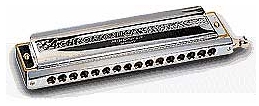
The chromatic lends itself to flashy virtuosity. It lives up to the haromica's nickname - "mouth organ." The chromatic has all the notes in the scale (hence its name) and covers much of the same range as a standard keyboard (64 notes for the 16-hole, "kingsize" chromatic vs. 88 keys on a standard keyboard). You can play sustained chords on the chromatic; you can come up with wailin' split chords that sound a lot like a Hammond B3 in full cry. In the hands of a skilled player, the chrom can handle jazz, blues, soul, rock and classical. The tone of the instrument ranges from sweet to raucous. Listen to Stevie Wonder, followed by George "Harmonica" Smith and you will see what I mean.

I am on the road right now, attending to my real world livlihood. I have tucked my Hering 5264 in my rolling bag. Room # 716 at the Embassy Suites in Birmingham, Alabama was filled with the sound of Mr. G blowing the chromatic last night. No one tried to shoot me, thank goodness. My efforts on the chromatic are still pretty mediocre - I can play the blues in third position (key of D on the C chromatic), but that is about the extent of my skills. I haven't improved very much since I last wrote about the chromatic in May of 2005. I am stuck...

I am between flights now, heading to Fayetteville, Arkansas. I am hoping to find a jam session there - Fayetteville is the home of University of Arkansas, so I might get lucky tonight.

Monday, May 14, 2007

Early Departure - Michael Robinson

I didn't know Michael, but he had a strong reputation as a fine blues and soul guitarist in Chicago. He was alone in his apartment when he died and wasn't discovered for over a week. This aspect of his passing is quite depressing. When your friends or family go missing, check on them, folks.

Here is the obituary from the Gary IN paper:

Michael Robinson, 50, was standout guitarist
(http://www.post-trib.com/news/381260,robinsonobit.article)

May 11, 2007

BY BOB KOSTANCZUK Post-Tribune staff writer


Michael Kevin Robinson was a guitarist who played for standouts in the fields of blues and rhythm and blues.

Robinson, 50, was found dead in his Gary apartment on Saturday. He is believed to have died on Wednesday, May 2, according to his family.

Robinson died of respiratory complications, said his sister, Edith Sheila Robinson-Elane of Chicago.

Known as a polished lead guitarist, Robinson toured extensively with Chicago blues queen Koko Taylor.

"There will never be another Michael Robinson," Taylor said in a prepared statement. "It was a real pleasure to have him as my bandleader and lead guitarist for six years."

Robinson's guitar skills were also utilized by other notables, including Buddy Guy, singer Deniece Williams, the Staple Singers and Earth, Wind & Fire.

"He was a really, really great guitar player," said close friend Ernest Hall of Columbia, Mo. "He was one of the best kept secrets in Gary."

Hall said he graduated with Robinson in 1975 from Emerson High School in Gary.

Robinson toured Europe with the Kinseys -- Gary's first family of blues.

Kenny Kinsey said Robinson was a rhythm guitarist for his clan, which encompassed Lester "Big Daddy" Kinsey and his sons, known as the Kinsey Report.

Now living in Merrillville, Kenny Kinsey remembered Robinson as a musician who studied a respected guitarist.

Robinson leaves behind sons Michael and Edward, and daughter Kawana.

A memorial service is scheduled for 11 a.m. Saturday at St. Luke Baptist Church, 7262 S. Coles Ave., Chicago.

Thursday, May 10, 2007

A Carey Bell Story

I am still focused on Carey Bell. I have had his tunes playing on my iPod all week and am impressed all over again with his adventurous work on the chromatic harmonica and his staccato attack on the diatonic harp. I also picked up the following Carey Bell story, posted to the Harp-L newsgroup by Steve Adams:

The last time I saw Carey about a year or so ago. After he had put on an awesome show, it was obvious he wasn't feeling too great, but he was his usual open, friendly, sunny self. After I had visited with him awhile, I told him I wanted to have my picture taken with him. His reply - "Why would you want to do that?" "Because you're the greatest harp player in the world," I responded (and, to me, he was). He looked at me and resolutely replied - "No, I'm not- but I will be, just you wait and see."

How cool is that? This man who had been an integral part of harp development and history since the fifties still had goals and ambitions for improvement, not to mention modesty.

The world has lost a magical harp player and a truly great man.

Steve Adams.

Tuesday, May 08, 2007

Carey Bell's Obituary

From today's Chicago Tribune:

Carey Bell: 1936 - 2007
Master of blues harmonica


Mississippi-born musician who came to Chicago in 1950s worked with legends such as the Hortons, Muddy Waters and Willie Dixon
By Trevor Jensen
Tribune staff reporter

May 8, 2007

Carey Bell, a Mississippi-born master of the blues harmonica who put a funky twist on lessons learned from legends such as Little Walter and Big Walter Horton, died of heart failure Sunday, May 6, according to Alligator Records.

Mr. Bell, 70, who had diabetes, had been in Kindred Hospital Chicago North for several days before his death, said Bruce Iglauer, president of Alligator, which recorded several of Mr. Bell's albums.

Mr. Bell was a bridge between the post World War II era musicians who created Chicago-style blues and the players of today, Iglauer said. Arriving in Chicago in September 1956 with his godfather, pianist Lovie Lee, Mr. Bell already was an accomplished harmonica player and immersed himself in the local blues scene. He picked up fresh licks from seminal players such as Sonny Boy Williamson II and Little Walter, whom he first saw at the Club Zanzibar on Chicago's West Side.

While playing within a traditional blues style, Mr. Bell's harmonica blew a "whooping flutter and a rapid upper register skitter," that pushed the instrument into fresh territory, said David Whiteis, author of "Chicago Blues: Portraits and Stories."

"Carey took the sounds and tone that was invented by the great players of the '40s and '50s and added a funkier rhythm [and] staccato lines," Iglauer said "He had a huge tone."

As a young player, Mr. Bell was taught to always complete one note before moving on to the next, Iglauer said. To that end, his playing was filled with long, sustained notes that bent and quivered.

"He had his own very individual, very personal style," said Chicago bluesman Billy Branch, who cites Mr. Bell as his main influence. "Carey's pretty much his own, I mean very unique."

Seeking more work in the 1960s, Mr. Bell took up the bass guitar and played with David "Honeyboy" Edwards, Eddie Taylor and Big Walter, according to a biography provided by Alligator. Back on the harp, he recorded for Chicago's Delmark Records, toured and recorded with Muddy Waters and was chosen by Willie Dixon to play with his Chicago Blues All-Stars in the 1970s.

Mr. Bell's virtuosity came through most clearly on the chromatic harmonica, although he was no less adept with the standard blues harp. "I asked him once, 'What do you play when you solo?'" Branch said. "He said, 'You play anything that fits.'"

In 1972 Mr. Bell recorded an album with Big Walter Horton that was Alligator's second release. In 1990 he played on "Harp Attack!" with James Cotton, Junior Wells and Branch. He recorded "Second Nature" in 2004 with his son Lurrie, an accomplished guitarist.

In 1998 Mr. Bell won a W.C. Handy Award for traditional blues male artist of the year.

Mr. Bell was born Carey Bell Harrington in Macon, Miss. He wanted to play saxophone as a boy but family finances limited him to a harmonica. By 13, he was playing paid gigs with his godfather, and at 19 he was off to Chicago, according to Alligator.

Mr. Bell had a low-key stage presence and his playing was more subtle than that of contemporaries such as James Cotton, Whiteis said. He was missing his left front tooth and couldn't play with a false tooth, Iglauer said. So he always appeared onstage with a gap in his grin. "I've hardly ever seen a musician get as much joy out of playing music," Iglauer said.

"He was funny, he'd crack on you," Branch said. "I'd see him and he'd say, 'When you going to learn to play that damn thing?' or, 'You ready to get your head cut" -- getting your "head cut" being musician's lingo for getting blown offstage.

Branch brought his harmonica when he visited Mr. Bell in the hospital Friday night. Mr. Bell was drowsy but perked up when he heard the music, Branch said.

"I did one of his signature licks, and he looked straight at me, like to say, 'You're stealing my stuff again,'" Branch said.

Mr. Bell was married at least twice and is survived by 10 children, Iglauer said. Further family information was not available.

Services were being arranged.

Monday, May 07, 2007

Carey Bell - Correction

This note came from my friend and harmonica freak extreme, "Big Jim" Themelis:

Just to correct your blog Carey Bell had like 9 or 10 solo albums before Alligator. Hope to see you soon. Jim

Sad, Sad Day - Carey Bell Has Sailed Away


I just got the news from Scott Dirks that Carey Bell passed away yesterday - heart failure, probably due to diabetes. Carey was part of the first "post Walter generation" (I am referring to the two Walters - Little Walter Jacobs and Big Walter Horton). Carey was tied in with Junior Wells and James Cotton; only Cotton survives now.

Carey Bell Harrington and I share a birthday - November 14 - but he was born in 1936 (Mr. G is much younger, thank you). He left Macon, Mississippi for Chicago in September 1956. As a young harmonica player, Carey hung out with Little Walter, Rice Miller (Sonny Boy Williamson II) and especially Big Walter Horton. Carey and Big Walter were very tight - Carey taught himself how to play bass guitar so he could play in Big Walter's band. The two harp players also cut a record together in 1972 (on Alligator, the second release by the blues label). After playing bass for several years with folks like Hound Dog Taylor and Johnny Young, Carey switched back to the harmonica exclusively in 1968. He sat in the harmonica chair for Muddy Waters in the early 1970's and ended up on a couple of Muddy's records. He also played harp in Willie Dixon's Chicago Blues All-Stars band in the 1970's. Carey's career as a recorded band leader didn't really kick off until 1995 when he released his first full-length recording as a solo artist ("Deep Down" on Aligator Records).

Carey Bell was a senior member of a great multi-generational blues clan, the Bell/Harrington family. Blues guitarist superstar Eddy "the Chief" Clearwater is Carey's cousin, the great pianist, Lovie Lee, was Carey's godfather. Most of Carey's ten kids play the blues, I think - the best-known is one of my musical heroes, Mr. Lurrie Bell (see my recent entry about Lurrie). Lurrie continues to be recipient of the slings and arrows of bad fortune - his wife, Susan Greenberg, recently passed away, and now his father is gone, too. Carey and Lurrie played together from time to time - Delmark Records recently released a new DVD of a live performance of the father-son duo at Rosa's Lounge in Chicago.

It hurts to lose these harmonica blues giants - Snooky Pryor last year, now Carey. All of the Mississippi Saxophone fraternity is in mourning.

Sunday, May 06, 2007

Magic Slim & the Teardrops at Bill's Blues Bar - 5/5/07


Magic Slim doesn't hit Chicago much these days. He moved to Lincoln, Nebraska a few years ago and is not a regular part of the Chicago scene any more. "Why on earth would anyone trade Chicago for Lincoln, Nebraska?" you may be wondering. Believe it or not, Lincoln is a terrific place. I have been to Lincoln and it is a college town (University of Nebraska) and it is home to one of the finest blues clubs in the world - the Zoo Bar. Because of the Zoo, many bluesmen from around the nation put Lincoln on their itinerary when running cross country tours (Lincoln is right off of Interstate 80, 570 miles from Chicago). Slim decided he liked the town and the club, so he shifted his base.

Magic Slim's "birth name" is Morris Holt. He is one of the last of the Delta-to-Chicago blues guys - born in 1937, moved to Chicago in 1955, came into the blues scene as a leader in 1967. When he was a young man, he was tall and slender - he was given the nickname "Magic Slim" by the legendary Magic Sam (Slim used to play bass in Magic Sam's group). Well, Magic Slim is still tall - I would estimate six foot seven inches - but he isn't slender anymore. He is a big fella - somewhere over 300 pounds, I think. This makes him an imposing presence on the bandstand. He occassionally channels Howlin' Wolf - the size, the feral noises, the whole deal. It is pretty interesting to watch.

I have the good fortune to be acquainted with Jon McDonald, one of the Teardrops. Jon plays rhythm guitar behind Slim and acts as road manager (announces the star, leads the band for a few tunes before Slim gets up to play, sells the CD's during breaks, etc.). Jon is a fabulous guitarist - he played a show with the Mystery Band last summer. He is also a very intelligent person, and deeply into the blues and all of its related musical forms. He, too, is a former Chicagoan - Jon recently headed west and now lives near Palm Springs CA. It was great to see Jon again. He seems very dedicated to Slim.

Magic Slim plays "meat and potatoes" blues - hard-grooving shuffles, blues-flavored funk and slow blues grinders. Most of his tunes are in the keys of A or E. His singing voice is powerful even though he is about 70 years old. Slim's musical range is limited, but within that range, he speaks volumes. I can't think of anyone that is doing a better job of laying down that post-WWII electric Chicago blues. He gets the crowd involved - Bill's Blues was full on Saturday and there was dancing and shouting going on. Magic Slim and the Teardrops is real and pure - a must-see for all people interested in American roots music.

Friday, May 04, 2007

Anthony (Tony) Palmer - The Fret Burner


Anthony Palmer is an astounding guitarist. He has an incredible memory for music, he has blistering technique, he pours all the love, hate, blood and sweat of human existance through his guitar and amp into the world. His nickname (bestowed by Jimmy Burns) is "the Fret Burner."

If there was true justice in the world, Tony would be rich and famous. But he doesn't seem to be the least bit disappointed with the outcome of his efforts. Mr. Palmer is proud to be a sideman; he doesn't lead a band and he doesn't stand up and sing (even though he possesses a fine voice). He supports Jimmy Burns, Katherine Davis, Matt Skoller, Byther Smith and even me, Mr. G. In the past, Tony supported Otis Rush, Joanna Connor, Sugar Blue and Bobby Rush. Tony has said to me, "I want to build a platform for the front guy. I want to lift him up and make things better." This type of unselfish approach isn't common with musicians that have Tony's skills and creativity. So Tony gets a lot of work - a typical week for him could include 6 or even 7 gigs. You can get a great example of Tony Palmer's work by picking up a copy of the Jimmy Burns Band CD/DVD - "Live at B.L.U.E.S." It is a fine piece of work - Jimmy was fabulous, and Tony was in top form.

Tony is a Chicago guy, West Side. He came up with cats like Michael Coleman and Melvin Taylor. He has been on the road for much of his adult life - Europe, Asia, all over the US and Canada. He isn't traveling as much as he used to - his gigs are mostly in the Chicago area. And he has settled in Evanston IL - he is my neighbor, I am proud to say.

Try to get out to see Tony Palmer. He will be playing with Jimmy Burns at the Harlem Avenue Lounge in Berwyn on May 19, and he will be playing with me in the Mystery Band at the Morseland Cafe in Chicago on May 26.

Monday, April 30, 2007

Lurrie Bell at Bill's Blues Bar - 4/28/07


It is always exciting to hear the great guitarist, Lurrie Bell, fronting a band. His pedigree is formidable (son of the great blues harp master, Carey Bell), his life story is about fighting through tremendous difficulties and adversity (addiction, death of his twin children and his wife). He has lived the blues, and his heart is large, large.

But at Bill's Blues last Saturday, the band wasn't "Lurrie and a supporting cast." The band included Carlos Johnson on guitar, Nick Charles on bass and Kenny Smith on drums. These guys are in the top echelon of blues players nationwide. Kenny is the son of Willie "Big Eyes" Smith, Muddy Waters' last drummer. Nick Charles has backed up all the major blues stars, from Howlin' Wolf to Billy Branch. And Carlos Johnson - he plays the old-fashion way, using his thumb and fingers - no picks, man. Here is a snapshot of the Awesome Carlos:


Well, with this line up, the music was intense. Lurrie and Carlos traded off leads. Lurrie was muscular and focused on the blues scale; Carlos was more subtle and had jazz flavors to some of his licks. Carlos is also a very skillful rhythm guitarist - his back-up work amazed me. These four artists turned traditional electric Chicago blues into an intensely beautiful and varied musical form. Oh, it was a peak experience for a blues junkie like me.

And Matthew Skoller showed up, too. Matt is a fine harmonica player who has worked with Lurrie and his sidemen on many occasions - Matt's band is one of the top working blues bands in Chicago (and the world). Matt is also the producer on Lurrie's newest CD, which Lurrie just finished recording last week. I admire Matt - he is fighting the good fight, making a living as a blues harmonica player (which takes a lot of determination and courage). So Matt sat in with Lurrie and the band. Unfortunately, that didn't work out so well. The soundman kept trying to adjust the volume on the house mic Matt was using (he was blowing through the PA system). This annoyed Matt and he finally made a string of angry comments and stomped off the bandstand. I understood his frustration (as a harp player, I have been murdered many times by overly-helpful soundmen). But I think the display of irritation on Matt's part detracted from the joy of the gig. I had to leave while Matt was going through his mini-rant to keep the bad vibes from overwhelming the glorious music that Lurrie and company had laid down. Anger on the bandstand is a real downer for the audience - even if that anger is wholly justified.

Thursday, April 26, 2007

Back to Big D

I was back in Dallas earlier this week, chasing deals. Spring in the Dallas - Fort Worth area is tornado season, and there were many funnel cloud sightings, heavy rains and scads of thunder and lightning during my visit. It is a bit off-putting to hear the tornado warning on the radio as you are driving through heavy rains... "Tornado warning for the Fort Worth area until 4 pm. Take cover immediately. If you cannot find a tornado shelter, find a ditch and lay flat in it until the all clear signal." Hmmm....if I am lying flat in a ditch, is it likely that I will have access to a radio to hear that all-clear signal? I think not.

Tuesday was a busy day, but I brought my harmonicas with me and wanted to play Tuesday night. I found a jam at the Mardi Gras Cafe'. This place is on the ground floor of an office tower right along Interstate 35E. I drove out in the pouring rain to find the joint; finally located it after passing it up three or four times. I dashed through the parking lot in a downpour, pulled open the door to find - an empty club. There were a handful of musicians (mostly African American guys), and one bartender there. The jam band was into classic soul tunes - old Stevie Wonder, the Temps, and so on. The keyboard player switched to drums; another keyboard player stepped up, a very young college kid played bass and the main singer played passable guitar. So I sat in for a few tunes, had a few laughs, and headed back to the hotel. As I reflect on the jam, I think it was pretty cool - no one there except musicians (and damn few of them), lots of space to play, and no competition or silliness on the bandstand. Plus, the players had some skill and grit.

I will be back at the Mardi Gras when I return to Dallas.

Wednesday, April 18, 2007

More on Guns

I made my case yesterday for gun control as a way to deny the means of mass murder to people like Cho Seung-Hui. The outlook for serious gun control laws in the United States is really poor. There are over 200 million guns in private hands in our country. Political reality will probably stop any gun control crusade. So how to prevent the next massacre?

Today's Op-Ed page of the Wall Street Journal has some suggestions:

"Restore cultural taboos that once served as constraints on anti-social behavior." What a great idea! Just how do we do that? How do we get the evil spirits back into Pandora's Box? Be real, man!

"Allowing the government,on the say-so of a panel of psychiatrists,to lock up indefinitely someone judged to be suffering from a dangerous, severe personality disorder." Ummmmm.....pretty tough to implement this without trampling on civil liberties - how can we jail people based on the opinions of some shrinks? It isn't like psychiatry is an exact science, that insane violent outbursts can be forecast for indiviual mentally ill people. I wouldn't want the government and the medical community to have this power.

"Eliminate 'gun-free zones;' train and arm responsible adults (like teachers or retail store managers) so shooters would face immediate retaliation when they attack." Hmmmm. While this idea makes me queasy, it is the best concept presented on the WSJ's Op-Ed page. David Kopel pointed out in his piece that an off-duty police officer in Ogden, Utah stopped a mass murderer (the 18-year old Bosnian Muslim, Sulejman Talovic) in February of this year at the Trolley Square mall (a "gun-free zone"), thus limiting the shooter's body count to 5 dead shoppers. Now, Koppel is a controversial figure and notoriously pro-gun/anti-regulation, but he does have a point. Armed, trained people in the form of air marshalls are deployed to stop hijackings of aircraft. So maybe part of the answer to "too many guns in the hands of insane people" could be be "more guns in the hands of sane people." Extensive training, psychological testing and careful controls could allow this concept to co-exist with tighter controls on general gun sales.

One thing is clear - there are more Cho Seung-Hui's among us. They will strike again.

Tuesday, April 17, 2007

Guns

The insane acts of Cho Sueng-Hui at Virginia Tech would have been hard to prevent. There is a rush to blame the police, or the university officials, but the only guilty party is the shooter. If an individual has the motivation and the means, it is pretty easy to kill a bunch of people in our open society. Cho Sueng-Hui had slipped through the cracks - he was aparently very quiet, his sickness didn't show, he had no criminal record. He was a terrorist with a cause rooted in mental illness.

It was impossible to detect the shooter's motivation; no one can feel guilty about missing this guy's sick mind. But the ease with which he obtained the means of mass murder is something that should make us feel guilty. We have too many dysfunctional people around. We shouldn't be selling guns to anyone who walks into a store and passes a background check. Why do we need all these guns? The mayhem that passes for daily life in this great country is fueled by gunplay. And gun violence is glorified in the popular culture. We get back what we pump out.

If Cho Sueng-Hui had been unable to buy the 9mm Glock and the 22mm Walther, he may still have killed. But the firepower allowed him to kill more efficiently and impulsively. We have to eliminate guns as a legitimate consumer product, place extreme restriction on the sale and posession of these weapons. Eliminating guns won't reduce the number of folks with motivation, but it will make it tougher for those folks to obtain the means.

Friday, April 13, 2007

Thanks, Ray

So Kurt Vonnegut has passed. He is one of those rare people who identified the central dilemma - how to fight the battle to be happy and sane when so many sad, insane events are against you.

The answer for me is always music. And to me, the finest music is Ray Charles singing a great song. I went looking for Ray to find some comfort. Here is what I found.

Thanks, Ray. We miss you, Brother.

Good Bye, Mr. Vonnegut


"Hello, babies. Welcome to Earth. It's hot in the summer and cold in the winter. It's round and wet and crowded. At the outside, babies, you've got about a hundred years here. There's only one rule that I know of, babies -- 'God damn it, you've got to be kind.' "

-- From "God Bless You, Mr. Rosewater," Kurt Vonnegut, 1922-2007

Wednesday, April 04, 2007

Santa Fe


Loretto Chapel, Santa Fe New Mexico


The Evanston IL branch of the G clan headed west to visit the eldest offspring and only son of Mr. G. Ben has settled in Santa Fe, New Mexico with his girlfriend, Bianca. She is a native Santa Fean, and her parents live in the city.

Santa Fe is one of the most unusual places in America. It is not a large city - around 70,000 residents - yet it attracts between 1 and 2 million visitors each year. Oceans of wealth have flooded the city, generated by the tourist tsunami. Whenever this happens to a smaller city, the outcome is mixed. Santa Fe's median home price is over 50% higher than the US average; the median family income is a tad lower than the US average. Property taxes are marching upward. Long-time homeowners of modest means are struggling to pay the taxman. Wealthier homeowners are pressuring for more amenities and neighborhoods are changing for the better in many ways (better schools, parks, etc.), and for the worse in other ways (poorer residents forced out, more fences and gated communities, etc.). There are scads of art galleries, high-end shopping destinations, luxury accomodations and other trappings to encourage well-heeled visitors to part with their cash. The official unemployment rate is low; apocryphal evidence suggests that many folks are under-employed and struggling to cover the costs of living in such a popular town. The population has grown at a slower pace than the number of housing units; many of the new homes are owned by non-residents that visit for relatively brief periods.

Santa Fe is one of the oldest cities in the United States and has a long history. The town is a mix of Native American, Spanish, Mexican, and European-American influences.

In spite of its cachet as a spot for movie stars and the rich & famous, Santa Fe retains an undercurrent of edginess. My son, Ben, has found interesting things to do in the town. From African drumming/dance classes to winter snowshoeing expeditions in the mountains, Santa Fe accommodates Ben's broad range of interests. Ben and Bianca are thrifty, hard-working and resourceful, so they are doing well in spite of the high cost of living in Santa Fe. During our visit to the city, we hung out at Ten Thousand Waves, a terrific Japanese spa in the mountains above Santa Fe. My womenfolk loved it. Ben and I went on an excellent hike in the mountains among the aspen groves and rushing streams swollen with snowmelt.

There is a blues joint in Santa Fe - Willies Blues Bar - but I missed the Monday night blues jam. Santa Fe is famous for the Santa Fe Opera and there is a solid symphony orchestra. Lots of country music and tejano music, but not much blues or jazz. The town has excellent public radio stations that cover a broad range of musical genres.

We will be back to Santa Fe.

Friday, March 30, 2007

Borrowing From Jimmy Burns


Tonight, the Mystery Band will be playing at C.J. Arthur's in Wilmette IL. Wilmette is one of Chicagoland's fancier suburbs; not a location generally associated with blues music. I have borrowed from Jimmy Burns, the great blues vocalist and guitarist for this gig. The Mystery Band will consist of me and Jimmy's sidemen tonight. They are a top-knotch blues band - James Carter on drums, E.G. McDaniels on bass and Anthony Palmer on guitar. It is an honor for an amateur like me to share the bandstand with these stars.

Tommorrow morning, at 8 AM, I must be on a jet headed to New Mexico. So this weekend will be hectic.

Tuesday, March 27, 2007

Kickin' in Cowtown


My day job has taken me to Fort Worth, Texas this week - it carries the "Cowtown" nickname due to its roots. The legendary Chisholm Trail, a major north-south route for cattle drives, passed through Fort Worth until some enterprising citizens of the town established the Fort Worth Stockyards - then the drives ended in Fort Worth. The Stockyards converted Fort Worth into "Cowtown," making it a major hub for the cattle industry (also for farming, ranching, meatpacking and railroads).

The community was established as a military encampment by Major Ripley Arnold in 1849, one of ten forts proposed by Willam Jenkins Worth to protect the Caucasian invaders from the indigenous Plains Indians. The original fort didn't have many engagements with the Indians - one skirmish in four years - so it was abandoned by the military. The beginnings of Cowtown blossomed in the wake of the abandoned military venture. Through the years, this town has grown in the shadow of Dallas - it was major training center for soldiers heading overseas to fight in World War I, it became a boomtown and energy center when the Ranger oil field was discovered 90 miles west of town, and it became a major military aviation center during World War II with the expansion of the Carswell Air Force Base and the building of the famed one-mile long Convair bomber plant. Lockheed-Martin still builds fighter jets in that old plant.

There is scads of money in this community - the Bass family, the Hickses, the Muses, and all the rest. The picture at the top of this entry in the Bass Performance Hall, a top-knotch, and over-the-top, musical venue. The two massive angels attached to the front of the building are blowing horns that jut out some 20 feet from the front of the facade - over the sidewalk and into the street. It is an oddly disturbing sight.

Dallas/Fort Worth beats the snot out of the place I visited last week, Orlando. Texans are very interesting people. Yesterday, I visited with a self-made multimillionaire, "CR," who is currently enjoying his "golden years" (I am guessing he is over 80 years old). This gentleman has his company's reins firmly in his grip. Every discussion with this sly old dog becomes a negotiation. CR is one ornery SOB and I mean this as a compliment. I think he could live another 25 years, and I bet he will retire only when his heart stops beating.

Last night, I had dinner with a group of customers, including "PM." I had not met PM prior to last night - he just joined my customer's company. This fella has a major twang, an extreme nicotine habit, and a powerful thirst for intoxicating beverages. He also uses the "F-word" as a verb, a noun, an adjective, an adverb and a general declarative exclamation. He was hilarious and horrible at the same time.

Earlier today, I met with the CEO of a smallish private equity firm. "JW" is a very successful African-American professional, a Baby Boomer who spent most of his career in municipal government (generally as city manager). JW had scads of interesting stories about his time as City Manager of Dallas. He completed lots of projects, and arguably left Dallas much better off than it was when he started. And his dealings with the major money players in the Dallas/Fort Worth area gave him an open door to a lucrative post-government career.

On top of these three delightful folks, I have had many brief encounters with everyday Texans. From the wait staff to the high-roller in his brand new cowboy hat, everyone is turned up a knotch. It is a energetic place.

A note on music - Dallas/Fort Worth has a pretty strong local music scene, with a number of decent blues players. Hash Brown, the guitarist/harmonica player/vocalist,is one of my favorite musicians in Dallas. Here in Fort Worth, the music is mostly country. You hear that ol' country two-step beat coming from most radios and restaurant sound systems. I have nothing against country music - some of the songs knock me out, and I dig Willie Nelson, Asleep at the Wheel, and Merle Haggard - but I will always prefer blues, jazz and funk.

.

Friday, March 23, 2007

Some Folks Should Not Go to Blues Jams

I hate to be cranky, but I like the players at blues jams to at least know the structure of a 12-bar blues progression. This was not the case for the players at the blues jam on Wednesday night in Orlando.

The evening began badly. The convention I am attending is located on the Disney property. I didn't realize how far Orlando is from the Disney property! So I jumped in a cab and found myself ponying up $55 when we reached our destination. I knew that the jam was trouble before I even walked in the door. The jammers sounded like a middle school garage band. I understand that many jams include musicians that have modest skills, but this jam seemed to specialize in that category of player. There were two people hammering on a keyboard (at the same time!!), a morbidly obese alto saxophonist with great tone but no knowledge of the improvisational blues idiom, a guitarist/singer who so mangled "Key to the Highway" that I didn't recognize it until the third verse, a bass player who could not find a note in the chord beyond the root note and a truly awful harmonica blower (I can't bring myself to call him a "player"). The redeeming feature of the jam band was a very feisty female drummer who kept great time and sang like a baritone version of Janis Joplin. The jammers stumbled about for a bit, then a second guitarist started playing. He equated great guitar playing with lots of volume and lots of distortion via his effects pedal. The crowd in the bar agreed with his assessment and lustily cheered his solos. Everyone was having a great time and everyone was super friendly. I am sure that they are wonderful folks. But I fled without playing. I guess Chicago has spoiled me - I am not willing to play with incompetent players anymore. I dropped another $55 on a taxi back to the hotel and felt like a big dummy.

I hope these folks never quit their day jobs.

Tuesday, March 20, 2007

Off to the Land of the Giant Mouse.......

.......Orlando! Not my favorite place, to be honest, but at least I will be warm. I am going to a convention tomorrow, a gathering of entrepreneurs that are servicing the needs of underserved markets. This is a trip to support my day job. It could be interesting. Or not.

Since I will be there on Wednesday and Thursday nights, I am going to see if I can find a blues jam. There seems to be a few, according to my Google search. Since there are a bunch of convention/Disney oriented gigs in O-Town, I would imagine that there are a bunch of terrific musicians that look for jams on their off-nights. I will throw a bunch of harmonicas into my duffle bag. It is always an adventure to send the bag with harmonicas through airport security. The TSA folks sometimes become pretty alarmed and dig through the bag expecting to find guns and ammo. It is always amusing to watch their faces when the see the harmonicas.

If I make it to a jam in Orlando, I will review it later this week.

Saturday, March 17, 2007

Mystery Band on the Cusp on St. Patrick's Day


I am staying in the house on St. Patrick's Day - there are drunks stumbling around on the streets and many will be behind the wheel of large automobiles before the night is over. It is amateur night, a great night to stay home. And it is chilly. Plus my stomach hurts.

Mr. G and the Mystery Band is reaching an interesting tipping point. I have been booking three gigs a month for the group at a small collection of venues (Bill's Blues Bar in Evanston, C.J. Arthurs in Wilmette, the Morseland Cafe and Duke's Bar in Chicago). There are many other venues that would hire the band if they knew about us and had a decent promo package to review. I am beginning to use the same musicians frequently rather than assembling a group of different people from my Roladex every time a gig comes up. I have written about 8 original songs; I generally perform a few of them at every show now. The folks that attend my shows have asked if we have a CD available (we don't). I have a feeling that the Mystery Band could build a reasonable following and get quite a few more gigs if sufficient effort was expended.

I have been toying with the idea of cutting a CD. I would want to do it right. This means renting a decent studio (I know of many in Chicago) and setting up practice sessions prior to htting the studio.

I find myself hesitating.

There are impediments - I have a day job that is important to me, and I have a wonderful family that might not appreciate it if I spent many more evenings out performing/rehearsing/recording each month. So the band is on the cusp, at the tipping point. It may stay in that precarious position for a long time.

The Mystery Band is all about spontaneity and improvisation. I have been thrilled that so many great, great musicians have been willing to play with an amateur harmonica geek like me. If the band becomes better organized, more professional, starts (ugh) rehearsing, will we still have fun? Because fun is the goal of the Mystery Band - for the players and for the listeners, I hope.

Sunday, March 11, 2007

More on Paul deLay


Here is a shot of Paul playing the chromatic harmonica. He really was a master of the instrument. Unlike many blues harp players (myself included), Paul was not intimidated by the slide.

When he hit the button on the chrom to activate the side, he said he was "pulling the trigger." Yeah man.

Friday, March 09, 2007

More on Paul deLay's Passing

This is from an email I received from Peter Damman, Paul's guitarist and manager:

"Big loss to all of us. But his was a fast and graceful exit from the stage."


Amen, brother.

We Have Lost Paul deLay


I missed the news on Wednesday. Paul deLay was one of the greatest harmonica players in the world, and a terrific vocalist, songwriter and composer. His energy and passion lit up every show he played. He was a mountain of a man, and he got sick and died in a few days - undiagnosed leukemia. He played two long sets on Saturday night, for crying out loud!

I have Paul's CD's, I heard him play live out in Portland, I spoke to him and told him how much I admired his artistry. He was one of my musical heroes. He lived an epic life.

Here is the obit from the Oregonian. This one hurts, people.

From The Oregonian
Paul deLay, local blues legend, dies
Posted by John Foyston March 07, 2007 14:01PM


Paul deLay, the larger-than-life Portland bluesman who redefined the harmonica and its musical potential, died this morning at Providence Portland Medical Center from end-stage leukemia diagnosed just days before. He was 55.

"He was the most inventive harmonica player in the history of the planet," says John Mazzocco, who played bass with deLay for several years in the 1990s. "He was gifted -- he had incredible tone, but more important, he could look at things differently than any other harmonica player. He was the best in the world."

"He was the best harmonica player in the blues world," says bassist Jimmy Lloyd Rea, from Baker City. "His big body -- mind, heart and soul -- was in every note he ever played."

DeLay recorded a dozen albums in his four-decade career, won several music awards and was nominated for a W.C. Handy Award. He and his band toured constantly, and his last show was just last Saturday -- a benefit show at Klamath Fall's Ross Ragland Theater.

"What amazes me is the energy he brought to the show," says guitarist Pete Dammann, who played in deLay's
bands for the past two decades. "He wasn't pirouetting onstage, but he was joking and yakking with the crowd, and he played hard. We did two long sets, and nobody had any idea anything like this was going on."

Neither did deLay. After that show, Dammann says, deLay felt under the weather, presumably from bronchitis he'd suffered on the band's recent jaunt to Mexico for several benefit shows. But doctors found that deLay was suffering from leukemia so advanced that his organs began shutting down and he lapsed into a coma from which he apparently never recovered.

Paul Joseph deLay was born Jan. 31, 1952 in Portland, where he lived all his life. In the early 1970, he and then-drummer Lloyd Jones and guitarist Jim Mesi formed an electric blues band called Brown Sugar and played to eager crowds up and down the West Coast. They laid the foundation for Portland's reputation as one of the country's great blues towns.

Nineteen seventy-six saw the formation of the Paul deLay Blues Band, which toured hard for more than a decade. At the same time, deLay suffered from alcohol and cocaine problems. In January of 1990, deLay was busted for cocaine trafficking and eventually served time in the federal prison in Sheridan. But before that sentence, deLay cleaned up and started writing
and recording his own music with a new band.

While deLay was in prison, his band played on as the No Delay Band, and it was waiting when he got out. They went on to record ground-breaking albums such as "Ocean of Tears" and "Nice and Strong," and Evidence Records released his two post-bust albums -- evidence that whoever said there are no second acts to American lives had never heard of Paul deLay.

Sunday, February 25, 2007

Al Viola - A Musician's Musician


Al Viola passed away last Wednesday. He was a senior member of the skilled guild of studio musicians that powered so many records after World War II. Al could play pretty much anything on the guitar. He was Frank Sinatra's preferred guitarist. He also played on Marvin Gaye's records, and played lots of movie music, including the soundtracks for Blazing Saddles and The Godfather.

Here is a line from his New York Times' obit:

"His last performance was in late January at a jazz supper club in Sherman Oaks, California."

So he lived his 87 years, played his last gig, and died three weeks later. Not a bad exit for a man who dedicated his life to jazz guitar.

Thursday, February 22, 2007

Charlie Musselwhite at the Old Town School of Folk Music

Photo by Rick Trankle/Alex Cuevas

Charlie Musselwhite visited Chicago this past weekend to headline at Buddy Guy's Legends on Saturday night. The local Chicago harmonica nerds, led by harmonica guru Joe Filisko, convinced him to stay over an extra day to visit with the Monday night Chicago Blues Harmonica class at the Old Town School of Folk Music. (that is Joe with Charlie in Rick Trankle's picture above). It was intense - the room is designed to hold 18-20 people, and we had over 50 wildly enthusiastic Musselwhite fans crammed into the classroom. It was a mixed crowd, ranging in age from 16 to 70, male and female (but mostly male), black and white (but mostly white).

Charlie is one of the living blues harmonica gods, up there with James Cotton and Kim Wilson. He is unique because he has "big ears" - yes, he is a blues guy, but he loves Brazilian music and Cuban music, and he has collaborated with musicians from those countries. "Every culture seems to have its music of lament," Charlie told us. "It's all blues to me."

Charlie is also the harp player that Tom Waits calls when he wants harmonica in a tune (check out Musselwhite's work on "Mule Variations"). And Charlie's songwriting seems to get stronger every year.

So I got to sit at Musselwhite's feet (literally - I was on the floor because all the chairs were full). He is a friendly, self-deprecating guy. There is a gentleness to his personality that is very appealing. He has a million stories, and he shared many with us. He also provided some equipment tips. He also shared an interesting fact - he said "I never had a plan, and I still don't. I have just been trying to have fun, and things have worked out. I have had some rough patches, but things have worked out OK with the harmonica."

Charlie's mother was the victim of a homicide in December 2005. The elderly woman was killed in Memphis by a 24-year old neighbor in an apparent home invasion/robbery. Charlie's wife, Henrietta, survived a shark attack in 2000 while vacationing in Maui. So Mr. Musselwhite has had his share of bad events.

He has long been a hero to me, and I know the rest of the folks at OTS last Monday felt the same. Charlie ended the evening by playing "Cristo Redemptor." Beautiful! Then he joined us at a local bar - he drank club soda, having sworn off alcohol 20 years ago. He loosened up - showed off his tattoos.

Photo By Rick Trankle/Alex Cuevas

Even though he is clean and sober these days, the man can still party.

Monday, February 19, 2007

More Great Musicians Crossing Over


I have been traveling and shoveling snow like a madman recently (today, the thaw finally arrived in Chicago). This has kept me away from the blog for a couple of weeks. We have lost a couple of wonderful musicians in the last week or so.

Jazz bassist Eldee Young died of a heart attack on February 12th. He was performing in Thailand, a country that he visited often in recent years. The picture above shows Eldee with Redd Holt - Redd is standing, Eldee is sitting. Eldee was 71 years old and as exuberent as ever.

Young was a member of the Ramsey Lewis Trio during the days of Ramsey's cross-over hits - "The In Crowd","Hang On, Sloopy" and all the rest of those mid-60's soul/jazz records. Ramsey Lewis disbanded the trio in the latter part of the 1960's, Drummer Redd Holt and Eldee stayed together as Young-Holt Unlimited. Eldee and Redd had a big hit in 1968 - a funky instrumental called "Soulful Strut" that has been covered and sampled by a broad range of contemporary musicians (including the British teenage soul kid, Joss Stone). Here is a link to Eldee's obituary in the Chicago Tribune. Eldee was also a terrific singer, totally unheralded but very much a talent. His bass playing is up there with Ray Brown, in my opinion. He will be deeply missed.


Peggy Gilbert was a true pioneer. As a young girl, she decided she wanted to be a jazz saxophonist. This was not a carrer path for women that was actively encouraged in the 1920's and 1930's. She persevered, played, and led various "All-Girl" jazz bands for many decades - she was still an active player after she reached the age of 90!. Peggy died from complications associated with hip replacement surgery. She was 102 years old. Here is a link to the LA Times obituary. Peggy fought the good fight and broke ground for women in jazz.

I am sad that these two slipped away before I could shake their hands and express my respect for them.