Search This Blog

Tuesday, July 16, 2013

The Criminal Justice System


Several years ago, I was called for jury duty.  I was hoping to weasel out of it -  not get called to be interviewed, and if interviewed, rejected as inappropriate for jury service.  Civic duty disrupts daily routines at times, and jury duty is an extreme example of that disruption.  I was even more selfish back then than I am today; I didn't want to be bothered with civic duty.

As luck would have it, I got picked to serve on a jury.   I was selected to hear the case of a guy who allegedly committed criminal sexual assault and rape.  I was selected as an alternate juror - the "13th juror" who stands by, hears the evidence and joins deliberations if one of the original 12 folks fall ill or can't continue for some reason.  If no one falls out of the 12 serving jurors, the alternatives are released when the jury goes to the jury room to deliberate.

I heard the evidence, saw the pictures and formed an opinion.  The defendant seemed guilty to me; his defense was that the sex was consensual but he did not seem to be someone that would generally be popular with women. He also admitted that he was in a possession of a semiautomatic pistol at the time of the alleged assault, which he claimed that he set down on the bed and did not use in a threatening manner. The victim seemed very credible and real to me - she appeared to be struggling with her emotions, and I thought it took a significant amount of courage to confront her alleged assailant in open court..  This was a crime that occurred in one of the toughest, poorest neighborhoods of Chicago.  Both the plaintiff and the defendant were African Americans.  The jury was  diverse - black, white, female , male, Hispanic, Asian.  After listening to hours of testimony, some of it quite graphic and dramatic, the case went to the jury.  I was not needed and they sent me on my merry way.  The bailiff said "Call this number tomorrow after noon if you want to learn the verdict."

Before I left, I heard the judge's instructions to the jury.  He said many things that I don't recall, but one theme stuck in my mind.  He reminded the jury, in very firm fashion, that in order to convict, they must conclude that the defendant's guilt has been proven.

When I called in the next day, the verdict was "not guilty."  I was amazed!!! The defendant seemed way, way guilty to me.  I complained about the outcome to a lawyer friend of mine - he said something that is true, but we often forget.  In our criminal justice system, "Not Guilty" really means "Guilt has not been proven beyond a reasonable doubt."  I was pretty sure that the defendant was guilty, but "pretty sure" is not supposed to be the standard applied by juries during deliberations.

This system is supposed to protect those accused of a crime from being wrongly convicted.  Of course, it doesn't work all the time.  I think the system often lets guilty people off the hook, and it sometimes convicts wrongly despite the "beyond a reasonable doubt" standard.

So here are a few questions:

Why do black folks and white folks accused of the same crimes under similar circumstances end up getting vastly different outcomes from the criminal justice system?

Why did a cop in lily-white Wilmette IL pull me over when I was driving home (legally and carefully) after a gig a few years ago?  Why did he shine his hellaciously bright flashlight into the car to illuminate my passenger - the guitar player in my band, who is African American?  Why did he give me a long look and say, "Oh, uh well we had a report of a crime and uh you matched the description  but uh never mind good night."?  My guitar player laughed at my outrage afterward and said "Welcome to my world. I'm glad you were driving."

Why does anyone suggest that "racism is not a problem anymore?"  I haven't heard any black people say that, ever.

The scientist Rita Levi Montalcini allegedly said, "There is only one race: the human race."  I believe that this obvious truth will be eventually embraced by almost every person on Earth, but the acceptance process is slow, painful and frustrating.

Saturday, July 13, 2013

Replacing the Stolen Cannondale H400


About a year ago, someone got into my garage and took my awesome Cannondale H400.  I whined about it in my blog.  Shortly after I lost my Cannondale, I bought a cheap mongrel bike -  used single-speed bicycle assembled from various parts (Trek frame from the 1980's, custom "bull horn" handlebars, etc.).  If I were so inclined, I could flip the back wheel and convert it into a fixie, but I am old and like to free wheel on occasion.   This is the bike I have been riding for the past year; it is an odd "hipster bike," and I am most definitely not a hipster. The single speed is a harsh mistress - stiff, tough on hills, a one-trick pony for sure. But it is simple and does provide a good workout.  When the going gets tough, one must push harder because there is no way to shift to an easy gear.

I was getting sick of the single speed but didn't want to spend a ton of money on a new bike.  I resigned myself to huffing and puffing on the old mongrel bike when my neighbor had a garage sale.  In the garage was an old Trek hybrid like the one pictured above.  The asking price - $25!!!!  I grabbed it - the front tire alone was worth more than $25.  After tuning it and tweaking it, I now have a decent "older person" bike.  It is easy to ride and feels very comfortable.  I feel lucky to have arrived at the garage sale early and scored this great old hybrid.

And when I ride it, I miss my single speed.  What the heck?

Friday, July 05, 2013

Just a stroll through the neighborhood after Independence Day


My brother once told me that a dog transforms a creepy stalker into a kindly, harmless pet owner.  This is true.  If you are walking your dog, you can dawdle and observe details, including the actions of your neighbors, and everyone smiles and waves.  If you don't have a dog as cover, someone might call 911.

I like to walk my dog around the 'hood and we often end up at Washington School - that is where we headed this morning, the day after Independence Day.   Washington  is housed in a stately building; the school was established 111 years ago.  All four of my children attended this school, so I have many memories of the place. 

This morning, I went past the school and had a look at Mendoza's Garden.  Mr. Mendoza is the head custodian of the school and has a gigantic green thumb.  He led the kids in establishing an outstanding native plants garden, plus a vegetable patch.  School is out, but Mr. Mendoza and his supporters must be on the job because the garden looks fabulous.  The head custodian is often the student's favorite adult in the school; I think Mr. Mendoza deserves all that affection.

Just past Washington School is the Robert Crown Center - a large recreational facility with an in-door ice rink, several softball/baseball diamonds and a  soccer pitch.  I watched some summer camp counselors leading some smallish children through a series of calisthenics - watching first and second graders exercise is a hoot.  The jumping jacks were especially creative.  There were also two middle aged guys doggedly jogging back and forth across the fields.  One was a very white person with no shirt, the other was a well-upholstered Hispanic man.  I admired their determination, and was glad that they were running, and I was not.

I also noticed that a great-great-grandfather of an elm tree had recently been marked with the Green Dot of Death.  In Evanston, we have a problem with Dutch Elm Disease - it has taken down some of our largest and oldest elm trees. When a diseased tree is identified, the city forestry folks dab it with a two inch circle of green paint. At a later date, the Tree Killers arrive and eliminate the quarantined individual.  This particular elm is massive; it stands between the Washington School playground and the Crown Center fields.  This old elm has cast its shade on dozens of generations of schoolchildren..  Whenever I see the Green Dot of Death, I feel pretty bad.

I hit a side street and saw this little guy:


This is the black-capped chickadee, a bright and cheerful bird.  He has that terrific song - two notes, descending in a whole step (A natural to G natural, I think).  This bird is more often heard than seen.

As I approached my house, I saw a fellow dog walker.  I know the dogs because I often walk by their house and they make a hellacious racket if they happen to be in the yard.  One dog is massive - a Newfoundland, a shaggy black bear of a canine with a gentle soul.  The second dog is a yappy little poodle/spaniel mix.  The dog walker was a wickedly fit young man in shorts - no shoes, no shirt.  He had some serious tattoos; didn't get a good look, but I thought I saw a large dragon-type image on his back.

There is an epidemic of rabbits in our area this year.  My small one-eyed dog wanted to go all coyote on their fuzzy little asses, but I wouldn't let him.  I dragged Tai away from the bunnies and went home.

So I really didn't see anything special during my stroll today, but it felt quietly special in spite of that.

Saturday, June 29, 2013

Worry


Worry is a very interesting problem.  There is specific, limited  worry, and free-form, bottomless pit worry.  There is functional, motivating worry and useless, immobilizing, soul-draining worry.  With worry, less is more.

A pessimistic view of the world can be perfectly functional if it isn't too extreme - a "good" worrier sees the downside and acts prudently to prepare for that downside.  A good pessimist sees the flaws in a situation and strives to improve it.

I have a family member who carefully reviews every possible outcome to each  situation and assumes that the most disastrous outcome is the most likely.  This is often referred to as "catastrophic thinking."  If you are expecting the worst possible outcome in every scenario, it becomes difficult to carry on.  Worry morphs into anxiety and inactivity, isolation and depression.

Too much optimism can be also very bad. Optimists tend to have an unrealistically positive view of the world and their own capabilities.  Optimism morphs into grandiosity and manic behavior.  The most optimistic people I have ever known have made some horrifically bad decisions, especially concerning  money and relationships.  Confidence can lead you badly astray.

"Good worry" stiffens the resolve.  It is the type of emotion that leads to the following statement of purpose - "Things are going to get much worse unless I act now!"  A good pessimist doesn't try to fix everything that is possible to fix - only the things that MUST be fixed.  A good pessimist sees all the problems, but is not afraid or demoralized. He/she grinds forward with grim determination, and sometimes things turn out better than expected.

Conversely, a good optimist understands that no matter how hard he/she works, much of life is random.  A good optimist is aware of the downsides and plans for them, but doesn't assume that the downside case is likely to occur.  And if a bad thing happens, a good optimist doesn't personalize it ("Why does this always happen to me?").  They direct their thoughts forward - "Well, I learned something and will apply it to my future."

Training the mind to moderate both worry and confidence is a lifelong pursuit.  Hope I get better at it someday.


Tuesday, June 25, 2013

Rust


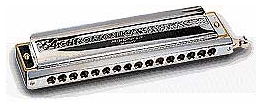
I am a harmonica player of the blues variety.  This is a pursuit that requires a modest amount of talent and a significant amount of discipline.  Practice is important.  Harmonica maintenance is key - these little "toys" are surprisingly complicated and subject to annoying problems.  A simple diatonic ten-hole harmonica has a comb (the body of the instrument that contains the holes that the player blows through), two reed plates (10 reeds each for a total of 20 reeds) and two cover plates (the shiny metal exterior that shapes the sound of the harmonica).  Every part of this instrument can cause problems, but the most frustrating components are  the reeds.  They are tiny brass things, and they get stuck a lot (spit can be like glue to a harmonica reed). Harmonica reeds also go out of tune, come loose, break and mysteriously turn into dead metal.  Replacing or tuning  a reed takes time, effort and the mindset of a jeweler, or a dentist (not to mention a kit of obscure tools).  This is why many harp players are members of the "blow 'em and throw 'em" club.  When the harmonica drops a reed or goes out of tune, you throw it into the "harmonica junk" pile.  Every serious harp player has a bunch of wounded harps in a box or a drawer someplace.  I must have 100 of these sad, busted tin sandwiches in my basement.  I don't like to think about these instruments and the amount of money I spent on them.  Yes, I should dig into the details of harmonica repair, but it is not my desired activity.  I am a player, not a harmonica repairman.

I used to front a blues band.  I was an amateur, a harmonica blues hobbyist, but my band mates were top-notch Chicago pros.  I started the band on Thanksgiving in 2003 and shut it down in early April 2010. During that time, I became pretty comfortable as a band leader.  My harmonica chops improved, and I was careful to keep my instruments in good shape.  We sounded pretty good after a few years.   I haven't played much harmonica since the band shut down.

As I was hanging around the Chicago Blues Festival earlier this month, I ran into Harry Garner (aka Harry da Harp), a harmonica buddy of mine who was leading a "harmonica blow-off" on one of the smaller stages at the fest.  He convinced me to sit in for a tune.

I was caked in rust.

My chromatic harmonica decided to go wonky on me - several reeds jammed.  I felt nervous in front of the large crowd and the adrenaline surge caused me to overplay and over-sing.  To be honest, I stunk.  I have not been exercising the disciplines of practice and harmonica maintenance.  I did the best I could, but it was a sub-standard display.

Now many people wonder why anyone would ever be interested in devoting time and effort to the harmonica. I can't really explain it, except to remember that humans engage in many strange and pointless activities - bowling, karaoke, hoarding, fashion shows, etc....  Honking on a harmonica probably deserves to be included in this group.  The only thing worse than engaging in a strange and pointless activity is doing it poorly.  Everything worth doing requires attention and practice.  Even things that ARE NOT worth doing require attention and practice.

So my self-criticism has begun to motivate me.  I am looking up the guy that used to fix my chromatic harmonica.  If I am going to play the damned thing, it has to function correctly.  I have begun to practice, much to the distress of my little one-eyed dog (he howls and cries in agony as soon as I play a single note).

I may try to make a harmonica comeback.


Friday, May 17, 2013

National Service


My profession allows me to visit with many new people, some of them quite accomplished. Some time ago, I visited with a thirty-something private equity professional in St. Louis. Jay (not his real name) was articulate and very bright, clearly a member of the cognitive elite. This did not make him especially unusual - many folks in the private equity world have the same profile. Jay, however, is different than most. He is a West Point graduate who spent over ten years in the  U.S. Armed Forces, serving as an officer in the Rangers. He was in uniform during the first Gulf Conflict, during 9/11, and during the launch of the Afghanistan and Iraq wars. He saw lots of stuff, I'm sure. I suspect that the stress and trauma associated with the private equity profession doesn't trouble him much after his combat service.

As I was speaking with Jay, I began to reflect on my own brush with the military. I registered for the draft when I turned 18, in 1972. The Vietnam War was winding down; the U.S. did not draft many folks in 1972 and it was clear that the draft was going to disappear soon. So I was able to avoid national service easily, with no drama. I wasn't drafted, and I didn't volunteer.  I was relieved that I didn't have to make any decisions about serving in the military.  I wanted to go to college and attend to my selfish goals.

I feel bad about that now, especially when I meet someone like Jay. I have never been in favor of conscription, but I am in favor of serving.  Military service doesn't "work" for everyone, but some form of national service could (AmeriCorps, Peace Corps, a new environmental clean-up service, etc. etc.). Devoting time and effort to something beyond your narrow self-interest is good for the community, and its good for the human soul, too. But it can be bad for the wallet and bad for family relationships. I let self-interest govern my decision in 1972; it still governs me today. I am not kicking myself too hard about this; I am an imperfect human and can't expect to do everything that might be worthwhile. But when I meet a guy like Jay, I feel a bit ashamed.  He stepped up, and carried us selfish people on his back.

As Memorial Day approaches, consider this - regardless of what one might think regarding the worthiness of America's recent wars and other military adventures, it is important to remember that very capable people are in service on our behalf, and on behalf of the military policies of our government.  Many other very capable people have died on our behalf, and on behalf of the military policies of our government

Sunday, May 12, 2013

Estranged on Mother's Day


Here in the good old USofA, we are awash in flowers, chocolates and brunches on this Mother's Day.  It is a good thing to honor your mother and to thank her for all the wonderful things she has done for her children.  But what if you don't want to see your mother?  What if your mother has created such  pain for you that you have to turn your back and cut her off?

When children cut off a relationship with their mom, there is always a reason.  The mom may not understand, or may not acknowledge the depth of the hurt the child is feeling.  The mom may desperately try to reconcile and repair without success.  There is pain all around.  The only person that can initiate a reconciliation is the person that initiated the estrangement.

I am one of the lucky ones - my mom was the greatest and I hold her memory close since she passed 20 years ago.  We had our bad moments, I guess, but I don't seem to remember that part.

On this Mother's Day, I want to acknowledge that not every mother-child relationship is a source of comfort, that not every wrong has been forgiven, that some children and mothers withdraw from each other in order to establish a zone of safety.  Estrangement is a type of prison, but one that the incarcerated often enters gladly. Even a comfortable prison is a trap and shrinks life's possibilities.

Here is a good piece on estrangement

Wednesday, May 01, 2013

A Good Dog


In January, we adopted a new dog.  His name is Tai, and he only has one eye.  The folks at the Anti-Cruelty Society didn't know what happened to him, but I suspect that another, larger dog attacked him.  Tai has gradually settled into our household.  He isn't very big, but he has a big dog attitude.  He has a focused spirit - beams in on his favorite humans and can pick up on tone of voice, moods, gestures and a surprisingly long list of words.  He is tolerant of his fellow pets in our house.   Oh, and he believes that Life Is A Ball.  When you throw a ball for him, he is fulfilling his purpose in the world. Focus on the ball, be the ball, chase the ball, fetch the ball.  He would rather play ball than eat.

Tai has a small bag of tricks.  He can give "high fives" (but you have to give him a treat afterwards).  He will dance on his hind legs.  But his best trick is the one-eyed stare.  He will sit and watch you, looking for signals.  I feel that he sometimes reads my mind, but of course this is a ridiculous idea.  He is just a little, scruffy, one-eyed dog who is dialed into the human who feeds him.

While dogs probably don't feel "love" the way we humans define that emotion, there is certainly some kind of deep connection between dogs and people.  Of course, dogs don't understand the details of human lives so they are never judgmental.  If you have done something that has brought scorn down on your head, your dog doesn't know about that and will still be glad to see you.  If you come back from the gym smelling ripe and gross, your dog will not complain - he probably prefers you in that condition. 

So I talk a lot to Tai.  He cocks his head at me and trains his remaining eye on my face; he focuses and gives me silent attention (which is quite rare in human society).  After a while, he brings me his ball and seems to say "enough with the blah blah - let's get down to the Meaning of Life - MY BALL!"

Saturday, April 27, 2013

The story from a woman in recovery from bipolar disorder


This article, written by Linda Logan, will be in tomorrow morning's Sunday Magazine section of the New York Times.  This is one of the best first-person narratives I have read about the long road of recovering from bipolar disorder.  The good news is that those suffering from this disease can re-assemble their lives.  The bad news is that the life assembled via recovery is not the same life that was taken by the disorder.  The desire to "get back to where I was before I got sick" is a huge source of grief and frustration to folks with mental illness.

And here is a quote from another mentally ill person struggling with recovery:

"If the truth be known, I fear that I may be abandoned by my family.  I offer my family the same opportunity to accept and love me as I am, rather than seeing me as a blasted hope, whose life has suffered a sad and irreversible loss.  But it is hard to know if that will happen."

It is hard for a person with a mental disorder to accept and recover from their situation.  And even if they succeed, they may lose their family and friends anyway.

By the way, all of this effort to recover must be strong enough to overcome the continuing widespread social stigma and revulsion that "mentally healthy" people direct at people with mental disorders. And let's not forget that only the very rich and the very poor have full access to mental heath care.  Perhaps that will change someday, but that day seems quite a ways off.  And Medicaid cuts brought about by state budget issues will make care less available to poor people.

On any given day, 240,000 people with mental illness are homeless and another 283,000 are in jail receiving little or no treatment for their disorder. In the U.S., Canada and Western Europe, mental illness accounts for 25% of all disability.  By comparison, heart disease and cancer account for 5% and 3% respectively.

This is an epidemic that people don't talk about or think about.  And when many people recognize mental illness in a person they see on the street, they avert their eyes or cross the street and avoid that individual.

This is a bias that is still perfectly acceptable in our culture.

Sunday, April 21, 2013

Rickwood Field, Birmingham AL


I was in Birmingham on business a couple of weeks ago.  I stayed at an old hotel downtown, the Redmont, that still had lots of charm but needed some serious TLC.  The hotel opened in 1925, and the features of the building reflected that era - marble staircases, hardwood floors and tiny elevators that moved verrrry slowly. The price was right, and the attentive staff made up for the slight seediness of the decor.

I finished my business and was checking out; the weather in Chicago forced a delay in my flight home.  Since I had some time to kill, I asked the woman at the front desk, "What would you recommend for someone who has a couple of extra hours in Birmingham?" She smiled and said "Rickwood Field."

Rickwood Field is the oldest professional baseball stadium still operating in the world.  The field was conceptualized and built by Harvey "Rick" Woodward - the name is a combination of Mr. Woodward's nickname and the first syllable of his last name.  Rickwood Field opened in August of 1910, two years before Fenway in Boston and four years before Wrigley in Chicago.  Rickwood was the home of the Birmingham Barons, the AA-level minor league affiliate of the Chicago White Sox (they now play in Regions Field in downtown Birmingham, but do return for the Rickwood Classic, a single game in May that has become a must-see event for baseball history buffs). Rickwood was also the home of the Birmingham Black Barons, one of the top teams in the Negro Leagues.  The Black Barons produced Sachel Paige, Willie Mays and many other stars of the league. The story of the Negro Leagues is well-known; the barn-storming, hand-to-mouth lifestyle was forced upon them by Jim Crow and the deep racism of the United States in the late 19th through mid-20th Centuries. (I always liked Kansas City Monarch star and Cubs coach  Buck O'Neil's comments on these years, and on Ty Cobb, one of the worst racists in professional baseball in that era).  So many of the great names of baseball played at Rickwood - Babe Ruth, Honus Wagner, Cool Papa Bell, Jackie Robinson, Hank Aaron, Rollie Fingers and, yes, Ty Cobb.  Rickwood Field has been used as a backdrop for many baseball movies, including the current Jackie Robinson movie, "42."

I drove over to the ball park, and it was open for visitors - free of charge (a request for a $1 donation to offset the cost of printing brochures was the only mention of money that I saw).  I was the only visitor, and the only other person there was the groundskeeper.  He was cordial, but busy preparing the field for a high school game that night.  I was welcomed and told to look around to my heart's content.

A well-tended baseball field is a beautiful thing. A baseball diamond is an open geometric pattern; I always imagine the first and third baselines extending past the outfield wall into a theoretical infinite distance. Baseball is one of the least violent team sports (although it is a dangerous sport).  Physical contact is not the central part of the game; the game is about skill and focus.  I could sense that many intense baseball games had unfolded on that Alabama field.  Rickwood pulled at me the same way the Wrigley pulls at me.  The vintage painted ads on the walls of the ballpark (installed by Warner Brothers for the 1994 movie, "Cobb") add to the "time warp" feeling.  It was hushed and quiet, with only the sound of the groundskeepers broom in the batters box breaking the silence.

If you love baseball, or even just like it, Rickwood Field should be on your "must see" list.

Monday, April 15, 2013

Mr. G's Top 10 Musical Sounds


1.      Bonnie Raitt’s voice -Bonnie must be the perfect woman because she has the  perfect voice.  She finds all the depths of human experience and it pours out her mouth.   She respects and salutes her sources - the great blues poets of the 20th Century and the R&B pioneers.  And she seems to like harmonica players - they play on a lot of her records.

2.      Stevie Wonder’s chromatic harmonica  - They say that the harmonica is a perfect instrument for a blind person since you don't need to see anything to play it.  Everybody knows the sound of Stevie Wonder's harmonica. All it takes is just a few notes - his exuberance and technical mastery, the glissandi and melismatic approach to the instrument is unique.

3.      Tower of Power’s horn section - These guys are as tightest and funkiest horn section that has ever existed.  High-end trumpets, bari sax honking out the bottom, trombones and saxes filling out the middle - sounds like  single instrument.  Nothing is more hair-raising that the TOP horns in full cry.

4.      Gary Valente’s trombone - Raucous, braying, insistent and heart-breaking - Valente nails it every time.  His work with Carla Bley will live forever.

5.   The Count Basie band - This sounds weird, but the Basie band is tightly connected to the Tower of Power horn section.  Basie invented the concept of a group of talented instrumentalists playing as one.  Nothing swings harder than the Basie band.

6.      Anthony Palmer’s guitar - He may not be terribly famous, but Tony has fantastic technique and a unique voice on his instrument.  He has absorbed and re-assembled so many fantastic sounds.  And he is my neighbor and former band mate.  It was an honor to work with him.

7.      Miles Davis’ trumpet - Miles was the king of expressing the unexpressible in an economic, perfect series of musical phrases.  His trumpet sound was wistful and yearning.  Listen to the live version of "Stella By Starlight," and try not to weep.

8.      Jimmy Smith’s Hammond B-3 organ - THE GROOVE!!! The B-3 is the singing keyboard.  It is also an instrument for over-achievers, with bass pedals, multiple stops and techniques   Jimmy Smith created a marvelous sound, - soul jazz by an organ trio (B-3,drums and guitar).  

9.      Tito Puetes’ timbales - He generated excitement and joy for everyone when he started banging on those drums.  He was an unbelievably fine showman.  Pull up one of his videos on YouTube and see if you can sit still.

10.  Rahsaan Roland Kirk’s clarinet - R. Kirk played many instruments (often 2 or three at the same time).  His work ranged from interesting to "fall-down and worship him" material.  But I have to say that my favorite Rahsaan Roland Kirk sound is his clarinet.  Check out Blue Rol on the Verve album, "Now please don't you cry, beautiful Edith."  his circular breathing and intense tone on this jazzy blues tune is enough to cause your brain to explode

That's all, folks.

Sunday, March 17, 2013

Dexter


I sometimes get a little stuck - maybe a family member isn't doing well, or I suffer a financial setback or the accumulated stress of single parenthood drags me down.  When that happens, I pull the Dexter Gordon playlist out of my iPod.  Dexter fixes bad moods, you see.

He was a very tall man - 6 feet, 6 inches tall.  He did not scuffle as a kid - his father was a prominent African American physician in Los Angeles who looked after patients such as Duke Ellington and Lionel Hampton.  Dexter started playing when he was 13 years old; by the time he was 17, he was in Lionel Hampton's band.

Dexter is my favorite tenor saxophonist.  He never over-played.  He had the instrument completely under control and had all the technique in the world, but he never flaunted it.  His tone was large and round, he hung behind the beat by a few micro-seconds; this somehow made everything he played more emotional and deep.  He had a tendency to slide up to higher notes; he used vibrato sparingly, but  perfectly - it always enhanced his art and never created a distraction. He could swing so hard, and he had conquered all the intricacies of be-bop. But his ballads would rip the soul out of your body.   He was a major influence on John Coltrane, but I don't think 'Trane matched Dexter's lyrical magic.  He was a natural - threw down an Oscar-worthy performance as Dale Turner in "'Round Midnight" in 1986.  Here is version of "Body and Soul" from that film.

When I listen to Dex, I feel a space opening up in my chest, pressure and gloom dissipates.  I can't explain it.    He was a poet of the jazz saxophone.

Dexter Gordon died of kidney failure in Philadelphia 23 years ago.  He was 67.  He was playing almost to the end.  At his memorial service, there were no eulogies or prayers, just great music from a group of Dexter's fellow jazz musicians, led by the great trombonist and Dexter Gordon collaborator Slide Hampton.  This is what Dexter requested.

This past February 27 was the 90th anniversary of Dexter Gordon's birth.  The world is a better place because he lived and picked up the saxophone.


Sunday, February 24, 2013

Be Still, My Heart


It was a sunny mid-day during my freshman year in college.  I was lugging my books as I walked between classes.  I was in pretty good spirits as I recall - no serious stress or anxiety was troubling me.  As I walked past the gym, I suddenly felt very strange - like I was finishing a long sprint.  I put my hand on my chest and discovered that my heart was beating at about 4 times its normal pace - 4 beats a second!.  I sat on a bench, and started to sweat and freak out.  After about 30 seconds, my heart stopped racing, settled back into its normal rhythm and I felt fine.  "Weird," I thought.  By the end of the day, I had forgotten about the experience.

But this was the beginning of a lifelong condition.  By the time I reached middle age, the spells of racing heartbeat had become a recurring annoyance.  My heart would start banging away, without any warning, and then the episode would spontaneously resolve.  It didn't happen when I was exercising.  It was completely random.  Sometimes, it would kick off while I was in bed asleep.  I mentioned it to my doctor, but I never had a spell in the presence of a healthcare provider - until the middle of 2001.

I was at the office and my rapid heartbeat kicked off and wouldn't stop.  After about of 30 minutes of sweating and feeling light-headed, I decided to go to the hospital.  I drove myself (probably not a good idea, in hindsight).  I arrived and walked into the cardiac care department.  I told them that my heart was beating really, really fast.  The staff nearly gang-tackled me, shoved me into a wheelchair and rolled me at high speeds to the ER.  I was shifted to a bed, hooked up with the usual tubes and wires, etc.  The resident looked at me, listened to my heart and said "Ah - PSVT.  I can fix this easy"  They dripped something called adenosine through the IV and my heart down-shifted to a normal pace immediately.  I thought "Well, that was easy."  But the fast acting/fast dissipating medication went out of my bloodstream and the ticker took off at high speed again.  This led to lots of folks freaking out.  They gave me a dose of something stronger and that did the trick - my spell was over.  I spent several hours in the ER while folks monitored me (Borrring).  But I was fine.

PSVT stands for paroxsymal supraventricular tachycardia.  "Paroxsymal" means that onset and termination are abrupt and random events.  "Supraventricular tachycardia" describes the exciting experience of a 200 BPM pulse.  PSVT is basically a short circuit of the heart's electrical system which causes a very rapid heartbeat.  It isn't dangerous if the heart is otherwise healthy, but if can be alarming to the sufferer.  It is also hard to function when your heart is going lickety-split.  I think that if a PSVT episode were to go on for a very long time, the heart muscle could weaken and the heart could fail.

I have learned how to deal with this annoyance.  My doctor put me on a light dose of atenolol, a beta blocker that protects the heart and slows stuff down in general.  Since I have been on atenolol, my resting pulse hovers between 49-58 BPM.  My blood pressure readings are also excellent.  This might be partly due to my semi-regular exercise, but the drug definitely is a factor.   I also learned how to stop a PSVT episode using a bunch of techniques called vagal maneuvers.  Vagal maneuvers include coughing, holding the breath and tensing all the muscles in the abdomen - this stimulates the vagal nerve which can slow your heart rate.

It is possible to fix PSVT via a surgical procedure called ablation - basically a technique that breaks the abnormal electrical channel and ends the possibility of a short circuit.  There is some amount of risk associated with this procedure, so I have chosen to live with my oddball heart.

It is quite interesting to have a quirk like this, that can pop up at any time and force me to take a "timeout."


Thursday, February 14, 2013

Fight the Power - Or Not


I got lucky today.  I was able to lunch with an old friend, and we had a great conversation.  We used to work together at a medium-sized corporation.  It was a decent place, with the typical challenges - aggressive people, on the make, trying to advance their careers and so on.  We joined right in, with gusto.  But since it was a medium-sized company, it was kinda comfy.  People might be out to get you, but you knew them all personally and had some understanding of their motivations.  And many of our fellow professionals were kind and generous.  It was a pretty darn decent place, I realize now.  When my old friend and I worked there, we didn't fully appreciate its positive qualities.  Well, at least I didn't.

So I left about 17 years ago, and embarked on a career journey that ended up in a 3-man business.  I totally love my gig as a principal in a small firm, even though it is a bumpy, white-knuckling experience at times.  My old friend also left the mothership at about the same time and went on a different journey.  He landed at  Gargantuan MegaCorp. right before the financial crisis and recession hit. The huge company sailed through the crisis nicely, and my friend kept his job and its associated cash flow.  But, of course, a price is paid by anyone who works in a large organization.

Here is what happens in a large enterprise, no matter if it is a for-profit corporation, a governmental entity or a non-profit organization:  Individuals have insights, try to guide their bureaucracies to make a wise decision, and they get crushed.  The decision-making infrastructure can't accommodate individual initiative, and the best and the brightest face a disheartening choice - either salute and march down the wrong path or puff out your chest and put your badge on the table.  If you have a family, a mortgage payment, looming college tuition bills, etc. - well it is tough to lay that badge down, even when you desperately want to say "Take this job and shove it."  It is energizing to holler "Fight the Power,"  but it isn't much fun to come home and tell the family that you got fired for "insubordination."

So my old friend is trying to fit into a decent slot at Gargantuan MegaCorp.  He works hard and represents his organization honorably.  He is a brilliant fella with a kind heart.  He is a family man with 2 kids under the age of 10.  And he has gritted his teeth a few times when his very correct recommendations were rejected for reasons of expediency or organization politics.

In these United States, we tend to celebrate entrepreneurs and "rugged individuals" that bust out through sheer force of will.  I submit that the honest, hard-working types that are striving to convince major organizations to do the right thing are also heroes.  And  every once in a while, one of these anonymous organization soldiers convince their Leviathan to change for the better.

Tuesday, February 12, 2013

Donaldson Toussaint L’Ouverture Byrd II (aka Donald Byrd) - we lose another great one


Donald Byrd was an extremely great hard bop trumpeter.  A brilliant man, he studied hard to become a professor and taught jazz at major universities.  He wrote and performed Cristo Redentor, a jazz standard that has been covered by dozens of great artists, including blues harmonica player Charlie Musselwhite. But he really grabbed me when he "crossed over" to funk in the 1970's and launched the Blackbyrds with a bunch of youngsters.  "Do It, Fluid" was my favorite party tune when I was a young man. I remember that LP well - there was a reproduction of Van Gogh's "Wheatfield with Crows" on the cover.  I wore that damn record out.

Donald Byrd changed the game and he is revered by many people (including quite a few hip hop artists, who have sampled the hell out of his music).  Here is the New York Times obit.

The giants fall.  Will others fill the void?

Monday, February 11, 2013

A Brother's Birthday


Here is a picture of the last remaining members of the California branch of the Gillock family.  My brother (on the right) and I are shuffling into geezerhood now.  He is ahead of me by 8 years.  He is ahead of me in many ways - he is sorta retired, I am still working.  His kids are grown and gone, I still have 2 at home.  He is a successful husband; I am a 2-time loser in that role.  My brother John has always been awesome.  Today is his birthday, so here is the obligatory shout - out:  HAPPY BIRTHDAY, JOHN!!!!!.

John and I grew up in a classic 1950's/1960's family unit.  For quite a few years, dad worked, mom stayed home and the two kids did all those classic kid things - Cub Scouts, attend the local school, hang with the kids in the 'hood, etc.  But our dad had some mental health challenges - he eventually went on disability - and mom got her teaching credentials and went to work.  I stopped looking up to my father and started looking up to my brother instead.

Siblings often fall into the love/hate trap.  I was an annoying kid.  John didn't really want to hang out with me much when we both lived at home - the age difference was sufficiently large that we occupied separate realities.  And as I entered the school system, I kept running into a consistent response from teachers that knew my brother: "Oh, you are John Gillock's brother?  Well, I hope you are as marvelous as he is."  God, I hated that attitude.  It was especially aggravating to know that the teachers were right, my brother was marvelous, and I would always come up short when compared to him.  So I was annoying, but he was insufferable due to his marvelousness.

He was the star in high school - dashingly handsome, on the swim team, class president, outstanding grades, college scholarship offers, Eagle Scout -- well, you get the picture.

He went off to college and something interesting happened - we became closer.  I paid a lot of attention to him.  He was a man of strong opinions and integrity.  He fought tooth and nail with my parents over the Vietnam conflict; he hated the war on moral grounds and worked hard to stay out of it. Years later, my mother told me that she realized that John had been right about Vietnam.

My brother became a teacher, like our mother.  He worked in New Orleans, rural Washington state, Saudi Arabia, Bangladesh, Abu Dhabi and Portland OR.  He has changed and molded many young people.  He is a master teacher.

John is a skilled outdoorsman who can quickly pitch a tent in the rain at midnight.  He is a dedicated hiker, and still hits the trail whenever he can in spite of the effects of Parkinsons Disease.  Yes, John is fighting this nasty affliction, but he has accepted it with grace and calmness.  And he isn't letting the disease define him in any way.

John took care of our mother when she was dying of cancer.  He has been incredibly kind and supportive as I have gone through some struggles over the past year or so.  And when I try to thank him, he just says, "This is what brothers are for."

I have had a lot of good luck, but one of the luckiest things in my life is having John as my brother.

Sunday, February 03, 2013

Anxiety disorders


I am re-blogging something from Tumblr.  This piece is one of the best things I have read about anxiety disorders, written by an individual recovering from this disease.  Two of the most important people in my life are struggling with anxiety disorder.  I apologize to both of them for not always understanding what is wrong.  This piece has helped me figure out what to do.

DECODING ANXIETY DISORDER

Things that we are trying to do all the time:

1.  BE SAFE.

Things we can't help but do all the time:

1.    Second guess ourselves
2.    Behave impulsively and reactively
3.    Take everything personally
4.    worry
5.    worry
6.    worry
7.    have difficulty accepting complements
8.    have difficulty reciprocating friendly gestures
9.    have difficulty finding the courage to respond
10.  have difficulty not being suspicious of others' intentions
11.  make a huge deal out of the smallest thing.

Things you should keep in mind:

1.    we're scared of everything
2.    pretty much all the time
3.    it's an actual disorder
4.    it manifests as impulsive behavior
5.    you can't fix us with words
6.    telling us "worrying is silly" won't make us stop worrying
7.    it'll only make us feel silly
8.    and then we'll worry even more
9.    "oh god, am I worrying too much?  what if they call me silly again?"
10.   like that
11.   also, we wear a lot of armor
12.   cold, heavy affection-proof armor with spikes
13.   we constructed this armor as children
14.   we're fairly certain that you will never be able to pry it apart
15.   but there is a nice person under there, we promise.

Things you can do for a friend with an anxiety disorder:

1.    stick around
2.    ask them if they are comfortable in a place or a situation
3.    be willing to change the place or situation if not
4.    activities that help them take their minds off things are good!
5.    talk to them even when they might not talk back
6.    (they're probably too afraid to say the wrong thing)
7.    try not to take their reactions (or lack thereof) personally
8.    (the way they express themselves is distorted and bent by their constant fear)
9.    (and they know this)
10.   give them time to respond to you
11.   they will obsess over how they are being interpreted
12.   they will anticipate being judged
13.   it took me four hours just to type this much
14.   even though I sound casual
15.   that's because I have an anxiety disorder

Things you shouldn't do:

1.    tell us not to worry
2.    tell us we'll be fine
3.    mistake praise for comfort
4.    ask us if we are "getting help"
5.    force us to be social
6.    force us to do things that trigger us
7.    "face your fears" doesn't always work
8.    because -- remember -- scared of everything
9.    in fact, it would be more accurate to say that we are scared of the fear itself.

Emergency action procedure for panic attacks:

1.    be calm
2.    be patient
3.    don't be condescending
4.    remind us that we are not "crazy"
5.    sit with us
6.    ask us to tighten and relax our muscles one by one
7.    remind us that we are breathing
8.    engage us in a discussion (if we can talk we can breathe)
9.    if we are having trouble breathing, try getting us to exhale slowly
10.  or breathe through our nose
11.  or have us put our hands on our stomach to feel each breath
12.  ask us what needs to change in our environment to help us feel safe
12.  help us change it
13.  usually, just knowing we have someone on our side willing to fight our scary monsters with us is enough
       to calm us down

If you have an anxiety disorder:

1.    it's okay
2.    even if you worry that it's not okay
3.    it's still okay.  it's okay to be scared.  it's okay to be scared of being scared
4.    you are not crazy.   you are not a freak.
5.    I know there is a person under all that armor
6.   and I know you feel isolated because of it.
7.   I won't make you take it off
8.   but know that you are not alone.

Here is the link to the original Tumblr post: Here it is.

Friday, February 01, 2013

RIP, Sugarfoot


You can learn a lot from studying the masters, and today's music is built on the foundations of the past.  Real funk fans are still studying the output of key groups from the 1970's - Kool and the Gang, Tower of Power, Parliament/Funkadelic, Earth Wind & Fire and, of course, the Ohio Players.  When I was playing trombone in the Mystic Knights band during my college years, "Skin Tight" by the Ohio Players was one tune we covered on every gig.  It always got the crowd dancing.  And "Funky Worm," with its totally weird Moog synthesizer licks, is still being sampled by heaps of hip-hop artists.  The Ohio Players hit the airwaves with "Fire," "Love Rollercoaster" and "O-H-I-O,"  all crazed funk explosions.  I loved the fact that these fellas were from Dayton OH, not generally thought of as a hot-bed of acid funk.  The OPs could play!

Well, the leader of the wild and crazy OPs has shuffled off this mortal coil.  Leroy "Sugarfoot" Bonner sported a massive 'fro back in the mid-70's (you couldn't even see his eyes through the 'doo).  He was fond of  the double-necked electric guitar. He could sing his ass off.   I think Sugarfoot ranks with George Clinton; maybe they came from a different planet.

Sugar was 69 years old and lost his battle with cancer.  We won't see the likes of him again. Rest in peace, man.

Saturday, January 05, 2013

Five Interesting Facts to Ponder in the New Year


  1. AIG is infamous for receiving $180 billion of Federal bailout money during the financial crisis in 2008 and 2009.  I have read that the final sale of the U.S. Government's interest in AIG generated a $22 billion gain for taxpayers.  I wonder what the internal rate of return is on this investment?  We hate bailouts, but this one turned out pretty well financially. In fact the whole TARP fiasco isn't looking like a terrible burden at this point.  It is too early to know if all the TARP money will get paid back, but a lot of it has.  The big risk is that the government will listen to the whiney banks and cancel "in the money" warrants that it received with its TARP investments instead of harvesting gains.  Don't cave in to the banks, Uncle Sam!
  2. The U.S. birth rate dropped by 8% between 2007 and 2011.  We are at 63.2 births per 1,000 women of child-bearing age, down from 122.7 in 1957 at the peak of the Baby Boom.  The average woman gives birth to 1.9 kids over her lifetime now and that number is declining.  It takes 2.1 kids per woman to maintain our population. The recent decline is allegedly due to the recession and perhaps that is true.  This demographic trend, if maintained, has massive implications.  A shrinking, aging populace will have higher needs and less productivity.  Think about what this means......
  3. Barely half of the adults in the United States are married - this is the lowest percentage ever.  In 1960, 72% of adults were married; now its 51%.  It looks like marriage is playing a less central role in the social/cultural life of the United States - indeed, the group of folks that are most eager to get married appears to be same sex couples!  Think about what this means.....
  4. I have read that the United States Government is borrowing 46 cents of every dollar it is spending.  Think about what this means.....
  5. Forty-three years ago, China invited a U.S. table tennis team to visit the country, launching "ping-pong diplomacy."  China has become a major economic force and is deeply entwined with the United States (lending much of the 46 cents of every dollar that the U.S. Government borrows to fund its spending).  Is there another seemingly small step in progress that could also mark the beginning of a huge change?

Monday, December 31, 2012

New Year's Capitulations


After almost five decades of making New Year's resolutions, I have decided to take a different approach this year.  I am going to make some "New Year's Capitulations."  A "capitulation" is the opposite of a "resolution."  These are the goals that I am going to officially give up, surrender, and  cease worrying about/hating myself for not achieving.  This might sound like a depressing exercise, but it isn't.  My theory here is if there are fewer things to worry about, I might actually worry less.  Hey, it's worth a try...

So here we go:
  1.  Stop trying to lose that last 10 pounds of excess weight:  My body likes that little blanket of fat. No matter what I do, it sticks to me.  The only time I lost it was when I prepped for my colonoscopy. I am just going to learn to love my chub.
  2. Forget about becoming fluent in a foreign language:  I lost my chance to gain this skill in a natural way when I failed to pursue the goal in my school days days or during my time living overseas.  It takes work, focus and determination. Hell, I am 58 years old!  Those are limited resources at this stage in my life.  Punt.
  3. No hit records for you, buddy:  I used to think that my silly song-writing and blues band shenanigans could actually lead to a song that broke into the public consciousness and made money!  HAHAHAHAHAHAHAHAHAHA!!!!!  What a delusion!  So I will just goof around with music for my own amusement.  Let other, more talented people strive for musical fame; I am giving up.
  4. No sub-4 hour marathon; in fact, no more marathons, period:  I managed to stumble through the Chicago marathon in 4 hours 20 minutes back in 1992.  I thought I was the next Alberto Salazar.  I set the goal for breaking 4 hours, then gradually improving my performance until I was at the front of the pack in my age group.  Well, I never ran another marathon and my knees scream at me if I run more than 2 miles.  Time to officially stop thinking about this unimportant, unattainable goal.
  5. No CEO job:  I was the CEO of a small company for a short time and it was the worst experience of my working life.  In spite of that, I kept thinking that being the top banana is a worthy goal.  It ain't gonna happen, and that's a good thing, because I am a lousy CEO.
  6. Give up on the idea of having a successful marriage:  I have spent most of my adult life married, to two different women.  It seemed like these marriages started out pretty well, but after a while my spouses started to detest me. I am currently unraveling my second marriage.   I am still in favor of marriage, but I don't seem to be cut out for it.  I will stick to friendships from now on.
  7. Inner peace? Fuhgedabowdit!!:  I have no idea what "inner peace" means, exactly, but my interior life is a bubbling pot of weirdness.  Meditation or cups of tea or large quantities of adult beverages have no impact on this. Time to face it - turmoil will be in my heart forever.
Dropping these seven items still leaves me plenty of stuff to pursue.  I hope that I will move a little more nimbly by dropping some baggage.  

Happy New Year!!