Search This Blog

Monday, September 23, 2013

6th Annual Chicago Blues Harp Bash Featuring Johnny Sansone


I have retreated from the harmonica community over the past few years due to a spike in family needs and work commitments.  I still try to "visit" from time to time.  Since devotion to the harmonica is a decidedly peculiar passion, all devotees tend to bond immediately to each other and treat each other with kindness and empathy. It is the friendliest community of musicians I have found - not much ego and few "cutting contests" amongst harmonica players.  Of course, it is a somewhat nerdy community, because only nerds spend countless hours studying the output of deceased  blues harmonica players.

One of the leaders of this community is a fellow from Joliet IL, Joe Filisko.  Joe is a fantastic harmonica player with ferocious curiosity - he wants to know all about the tin sandwich, he seeks out the music of obscure players that died decades ago and he travels the world playing and teaching at festivals.  He has probably taught more aspiring harmonica players than anyone on the planet.  I am one of his former students, and I am very lucky to have fallen under his tutelage. He is generous with his knowledge and patient when dealing with  incompetent harmonica players.  He also customizes harmonicas (converting store-bought mass-produced pieces of junk into marvelous, high-end musical instruments).  Every serious harmonica player dreams of owning a Filisko harmonica; most never achieve that dream.  Filisko harmonicas are not, as Joe says, "for the general public,"  and he believes that most harmonica players are members of "the general public."

Six years ago, Joe realized that some of his student were serious performers.  He launched a harp bash featuring a handful of local Chicago harmonica folks (mostly his students) and one serious professional "ringer."  The "ringers" at past bashes have included Billy Boy Arnold, Jim Liban, Jerry Portnoy, Sugar Ray  Norcia, and Gary Smith.  If these names mean nothing to you, then you are not a blues harmonica aficionado.

This past Sunday evening, the 6th Annual Chicago Blues Harmonica Bash was held at the Old Town School of Folk Music.  The featured "ringer" was Johnny Sansone.
Sansone is based in New Orleans although he was born and raised in New Jersey.  There are tons of gigs in and around N.O. so Johnny doesn't get to Chicago much these days (he did spend time backing some of the Chicago greats when he was younger - Jimmy Rogers, Robert Junior Lockwood and others).  Sansone is part of the tight New Orleans music scene - hangs with Tab Benoit, Dr. John, Cyril Neville and a host of others.  He is featured at the New Orleans Jazz and Heritage Festival.  He is a formidable songwriter, and he plays accordion to boot!

Johnny Sansone closed out the night, playing a mix of originals ("The Lord is Waiting and the Devil Is, Too," "Once It Gets Started") and blues standards ("I'm Just a Bad Boy," "She's Nineteen years Old," "Raining in My Heart").  His harmonica work is technically adept and aggressive.  His tonal choice is edgier than the traditional "fat" Chicago blues harp tone.  He is closer to Paul DeLay; not quite as close to Big Walter Horton.  It is a great, large, passionate sound.  The sound matches Johnny's physical presence.  On stage, Sansone is like a more menacing version of Baloo from Disney's "The Jungle Book."  He commands the stage, and the whole room.  This is not a man to trifle with, no sir.  He played his ass off, and told some amusing stories, too. 

Near the end of his set, Sansone called out Jim Liban, another harp master who was in the audience.  Johnny asked him to come up and play; Jim demurred, saying "I left my harps in Milwuakee."  Joe Filisko quickly produced a full set of Filisko Customs, and Liban came forward.  The combination of Sansone and Liban was a harmonica summit that generated slack-jawed amazement and screaming ecstasy from the harp players in the audience. Liban is a Jedi master of the blues harp, the Yoda of the Mississippi saxophone.  All other professional blues harp players are Liban fans.  He cranked it so hard that Sansone began to complain, "Liban is kicking my ass!"

The Bash performers prior to Sansone's set did not disappoint.  Scott Dirks is a highly skilled harmonicist, author, educator and advocate for the blues harmonica.  He brings deep love and respect for the genre (not to mention chops and decades of playing experience).  Tall Paul Sabel is a member of the younger generation (under 45 years old) of blues harmonica players, and he is definitely an "up and comer" amongst the harp blowers in Chicago.  Grant Kessler and Kirk Manley are long-time Filisko students and local performers that have many gigs under their belts - both have achieved the "big tone harp" sound the Filisko strives to teach his minions.

But the biggest kick came from the opening act, Zoe Savage.  Ms. Savage began taking lessons from Joe Filisko when she was 10 years old.  She has studied hard, played in the advanced Chicago blues harp classes at the Old Town School and is now a formidable performer - and she is also teaching harmonica classes at OTS.  It is unusual to see a woman in her early 20's channeling Little Walter Jacobs, but Ms. Savage can handle the L.W. licks, the tone and the vocals.  This is a young blues harp player who might be famous some day.  It is very gratifying to old fossils like me to see a young person like Zoe come forward and respect this music.

The band that backed all of the harp players was a trio led by Shoji Naito, an excellent traditional blues guitarist.  Shoji is also a skilled harmonica player, so he knew how to support all of the performers that walked the stage last night.

This annual event is always interesting and full of surprises.  Let's hope that Joe Filisko and his crew keep it up.

Sunday, September 08, 2013

James Cotton at SPACE in Evanston IL


First of all, I have to thank the founders of SPACE - the Society for the Preservation for Arts and Culture in Evanston.  Stuart Rosenberg, Craig Golden, Dave Specter and Steve Schwartz.  The combination of Union Pizzeria and SPACE has created a destination dining and entertainment landmark within walking distance of my house.  This is the best thing to happen to the Evanston entertainment scene since Bill's Blues closed - maybe since Amazingrace closed.  I can also have a couple of beers and walk it off after the show on my way home - what's not to like?

James Cotton came to SPACE for the first time last night - that is a picture of him in action last night at the top of this post.  Mr. Cotton is now 78 years old - a contemporary of Buddy Guy, part of the "second great blues generation" that came up to Chicago from the Delta in the 1950's.  Mr. Cotton learned his craft with Sonny Boy Williamson, Howlin' Wolf and Muddy Waters.  He cut his first records at Sun Records in Memphis when he was 15 years old.  In 1954, Muddy Waters heard him in Memphis and hired him to replace Junior Wells, who had abruptly quit Muddy's band.  So Mr. Cotton ended up in Chicago.

James Cotton was a cross-over blues artist.  He became "Mr. Superharp" and played big rock venues in the late 1960's through the 1970's.  Mr. Cotton served as mentor for many aspiring harmonica players; his furious licks and showmanship were much imitated, but never duplicated, by a gang of younger folks.  I have copped Cotton's licks myself, listening to his records over and over with my harp at my lips.  He is a titan of the tin sandwich.  I was excited to see him in my town - Mr. Cotton played Bill's Blues around 2004 or so, but he doesn't play the suburbs of Chicago much.

Mr. Cotton's voice is gone, but he still is a crazed monster on the harmonica.  His joy and enthusiasm have survived his voice.  He plays seated now (like B.B. King and other aging giants of the blues), but he runs the band and projects charisma and showmanship.  When a blues singer loses his voice yet still projects heart and power, you know you are in the presence of greatness.

The tunes that the band played were pretty predictable - "That's All Right" by Jimmy Rogers, "Honest I Do" by Jimmy Reed," "Rocket 88," which was a big hit for Cotton, and other chestnuts.  The beauty of blues music is in the depth, not the "newness," of the music.   Mr. Cotton brings that depth.

The sound man was having trouble getting the balance right between the harmonica, the vocals and the guitar/bass/drum unit.  Volume crept up through the evening until it became a crushing wall of pain by the end of the set.  SPACE is a mid-sized venue.  I don't understand why folks don't respect the size of the joint and amplify/mix accordingly.  This is not meant as a criticism of the sound man, by the way - sound engineers have the most thankless job on the planet, and their skills are underappreciated.  Everyone has an opinion about the sound, and the sound engineer has to listen first to the venue management and the artists.  I know that a sound engineer often gets many conflicting instructions.  And artists often do unpredictable things in a performance; a good mix can turn bad in a heartbeat due to those surprises.

My friend Tom Holland has been Mr. Cotton's guitar player for almost 10 years now.  Not only is this a great gig that offers ample opportunity for exposure and education, it has provided Tom with multiple "reps" so his chops are sharp as a razor these days.  Tom is very confident on stage, and carried the band as the only guitarist - and no keyboard player, either.  I have played a number of gigs with Tom back when I had my own little blues band, and I am really happy for him.  It is great to see a young guy carry the torch and grow as an artist.

Harp man Matt Skoller and guitarist Lurrie Bell opened for the Cotton band.  They warmed up the crowd and returned to the stage at the end of Mr. Cotton's set to jam.  James Cotton knew Lurrie and his dad, stand-out harmonica star Cary Bell, from the Chicago days.  And Mr. Cotton served as mentor to Matt Skoller.  Topping out the evening was Dave Specter taking the stage to play on "Black Night," the old Charles Brown standard that has been covered by everyone from Dr. John to Bobby Blue Bland.  It was good to see the SPACE founder cutting loose.

Since Mr. Cotton can't sing anymore, Darrell Nulisch sat next to him and filled that role.  Darrell has a solid, soulful voice and can mine the tunes for the emotion within them.  He is also a great harp player, so there were three harmonica guys (Cotton, Skoller and Nulisch) blowing on the stage at one point -   not something you see very often, and for good reason. I love the harmonica, but three guys showboating at the high-end of the harp at the same time can be very painful to the sensitive listener.  But, hey, it was still an awesome celebration of Cotton and his legacy.  And these three guys are all killer harp blowers, now doubt about it.

The festivities wound to a close at a respectable hour (11-ish) and I walked off my Guinness on the way home.  Thank you, SPACE!


Thursday, September 05, 2013

Tattoos

I am an "old school" curmudgeon. I believe that it is OK to have a tattoo if you are a Maori warrior, a sailor, a biker or a hooker. If you are a clerical employee riding an elevator in a highrise, a tattoo might not be a great idea.

I hopped in my elevator the other morning and was joined by a thirty-something woman in a scoop-top skirt. She had a long script phrase tattoo-ed around her collarbone region. It was not a work of art - it had the look of hasty graffiti. I am guessing that her choice of neckline was intended to allow this body art to be examined by the general public. This wasn't an opportunity that I seized - the last thing I want to do is stare at a female stranger's neckline in order to read her sloppy tattoo. I ended up feeling very awkward in the elevator and stared intently at my shoelaces until I reached my floor.

I have loved ones that sport tattoos. I understand that I am an inflexible grump that doesn't understand the significance and beauty of permanently marking your skin through a procedure that would be called "torture" if the CIA did it to suspected terrorists. I know that tattoos are in the mainstream now; I am a fossil not to embrace them. My loved ones have added my insensitive comments regarding tattoos to my long list of "invalidating behaviors." 

But tattoos are a form of permanent clothing, and styles change.  I will hang on to my bad attitude on this issue. So there.


Thursday, August 29, 2013

Delmark 60th Anniversay Show @ SPACE in Evanston


I went to the Delmark 60th anniversary show on Friday, August 23.  It was a serious gathering of Chicago's blues community (which includes the die-hard fans).  Delmark is the record label founded and managed by Bob Koester.  Bob has kept this label going and it is now the oldest independent jazz/blues record company in the country.  Bob is over 80 years young, and he was at the show last Friday.  He spoke to the crowd at some length.  He is a spry old fella.

Delmark assembled a crowd of its artists - at least nine headliners led bands during the evening ("young bucks" Toronzo Cannon, Mike Wheeler and Dave Spector; "veterans" Linsey Alexander, Byther Smith, Jimmy Burns, Taildragger - pictured above, Lurrie Bell and Sharon Lewis).  This led to short sets and a long show.  In addition to the "stars," a small army of sidemen held forth, including major heavyweights such as E.G. McDaniel on bass, Kenny Smith on drums and Martin Lang on harmonica.  There were some outstanding moments - Byther Smith uncorked a great set, for example.  But all the artists were trumped by Eddie C. Campbell, recovering from a stroke he suffered during a winter tour to Europe, in his wheelchair in the audience, singing Little Walter's "Last Night" and playing the harmonica while Lurrie Bell and the band dug deep to support the old bluesman.  It was an intense experience, and the audience responded with a full-throated roar.

And the audience was full of musicians from the Chicago blues community - I counted at least a dozen folks that could have been on the bandstand with the headliners.

I am a fool for blues music, but even I was cooked by the time the 9th artist stumbled up on stage.  The same sidemen backed several artists with no break and they were getting really tired.  I finally left at the beginning of the last set.  The energy level had fallen, the crowd had thinned and the show fell on its face at the finish line.

Having said that, it did feel like "the old days" to have a sizable venue crammed with knowledgeable, enthusiastic blues fans.  Thanks to Delmark and SPACE for putting on this show.

Note to Delmark - your next big show should be limited to four headlining artists over a 2-3 hour period.  Always leave the audience begging for more, right?

Monday, August 26, 2013

First wet, then dry - the not so hot, not so long summer

Elmore Leonard  passed away recently.  The number one rule on his list, "10 Rules of Writing" is "Never open a book with weather."  Well, I am writing a stinking blog post, not a book, so I am going to talk about the weather.  RIP, Mr. Leonard - at least you didn't live to see this post.  Of course, you wouldn't see this post even if you were alive and well.

Here in Chicago, we had the wettest six months on record (since 1882) from January 1, 2013 through June 30, 2013.  We had 28.46 inches of rain, which is more than Chicago received for the entire year in 2012.  Then on July 1, some Cosmic Hand turned off the Big Sprinkler.  We have had 3.24 inches of rain from July 1 through August 21, the least amount of rain to have fallen over that time in 69 years.  The vegetation is browning out, the guys out in the Corn Belt are grousing a bit.  And now we are expecting the temps to ascend to the 90's again - we had a cool stretch, but that is probably over.  It feels like summer started late and now is cranking up trying to make up for last time.

The weather always grabs our attention because we experience it everyday and we can't control it. 

Warning - metaphor approaching! 

Have you ever had something that was impacting you every waking second, gnawing on your psyche, something you were adjusting to, trying to prepare for but couldn't really change in any way?  We wander around with personal weather in our heads.

You can't change the way someone else thinks and behaves, really.  You can't control any of random events that wash over you every day.  Through preparation and attitude, you can avoid some of frustrations caused by lack of control, but many outcomes are not in our hands.  We hate that, and most of us can't accept it.

Tuesday, August 06, 2013

Good bye, George Duke - and thank you, thank you very much


Today I got the news - George Duke died at the age or 67, which is too young, too young.  George Duke changed me.  Here is the story.

I was 13 years old, in eighth grade at John Muir Junior High School in San Leandro, California.  George was about 22 years old at that time, one year out of college,  with some great gigs under his belt (Don Ellis Orchestra, Carmen McCrae, Jon Hendricks, Anita O'Day, Bud Shanks, Clark Terry, and on and on).  I was a mediocre trombone player who was recruited to be in the junior high jazz band - a world was opening to me (Charles Mingus, Don Ellis, Miles Davis, Count Basie, Duke Ellington, J.J Johnson and many more), but my interest was mild at best.  In late 1967, I learned that the George Duke Trio was going to play a free concert at my junior high school after the new year.  And, sure enough, on Saturday, January 13. 1968, George Duke and his two colleagues showed up in the multi-purpose room at my junior high.  I was front and center.  After 15 minutes, I was amazed, eyes as big as pie plates, jaw hanging open.  The talent and stunning beauty of the music created by these three young adults shook and changed me.  George was still playing quite a bit of mainstream jazz back then, but he did drop a couple of contemporary tunes on us ("Last Train to Clarksdale" was one of the funkier tunes he did that night, I think).  I resolved that night to practice my trombone every day (fat lot of good it did me).  More importantly, George Duke's performance that night caused me to love jazz, blues, R&B and funk - that love has sustained me through my life's turbulence.

George grew up in Marin City, the one poor, black town in ritzy Marin County California.  His mom took him to see Duke Ellington when he was four years old, and he demanded to play piano and he started lessons.  He went to high school in Mill Valley - Mount Tamalpais High School - one of the few black kids there.  He played many instruments, including trombone (he majored in trombone performance in college). 

George went on to be a founding member of the funk fraternity.  Check out "Dukey Stick" from 1978!! He tapped the deep soul of the African American musical tradition by playing piano in gospel churches. He toured with the jazz-rock violinist, Jean-Luc Ponty, in 1969.  George joined the Frank Zappa band in the early 1970's.  He was tapped by Cannonball Adderly in 1971 to fill the keyboard chair in the that pioneering soul/jazz group. In the mid-70's, George launched his solo career in earnest, but  he still played on Michael Jackson and Phil Collins  records, and also worked with Quincy Jones. George was a major factor in the development of jazz fusion, playing with bassist Stanley Clarke and drummer  Billy Cobham.  He played with Miles Davis!  He loved Brazilian music and played with Airto Moreira and Flora Purim. He became a much sought-after record producer.  He was frequently sampled by the current generation of musical artists, including Kanye West, Common, Ice Cube,  Daft Punk and even Vanilla Ice!

So, good bye George, and thank you for making me a better person.

Saturday, August 03, 2013

The Real Man Tenor Sax Player


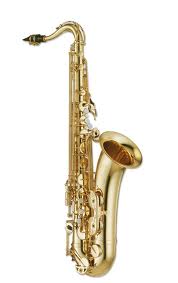
The tenor saxophone has had many days in the sun, but not so much lately.  The jazz giants - Coltrane, Dexter, Prez, Sonny Rollins, Ben Webster and the rest - gave way to the R&B giants - Junior Walker, King Curtis, Clarence "Big Man" Clemmons, Lenny Pickett.  It is tough to come up with a monster tenor player who is part of the popular music culture of the United States right now; there is no hip hop tenor sax star (although there should be). 

But there was one real man tenor sax player that tied the jazz guys to the R&B guys.  He was on top of the popular culture for a while. He was the Real Man tenor sax player. His name was Jean Baptiste Illinois Jacquet.

He is most famous for playing the classic tenor solo on Lionel Hampton's "Flyin' Home.  Every tenor player has to learn that solo note for note.  Illinois was all of 19 years old the day he played that solo, and he had never recorded prior to that day - but he had been playing professionally for 4 years by then!  He was a full-grown man, and had the full-throated roar that became THE sax sound of the late 20th century.

While Flyin' Home is awesome, I think Jacquet's solo on the Philharmonic Blues Part II is even more amazing.  Here is the YouTube link.  Check out Illinois' shift to the upper register at the 5 minute mark.  I think Illinois was the first tenor sax player to spend lots of time in the "squeal zone" of the instrument.

We need a successor to Illinois Jacquet to enthrall us with the tenor sax again.

Thursday, August 01, 2013

Jazz in Naptown - Inspiring and depressing, at the same time


Indianapolis is one of those cities that isn't very famous.  Yes, they have the Colts and the Pacers and the Indy 500 which gives the Hoosier city visibility in the sports world.  But most people outside of Indiana don't know about the musical history of the city.  Both Freddie Hubbard (the great jazz trumpeter) and J.J. Johnson (the man who invented bebop trombone technique) are Naptown guys. Albert Von Tilzer also hailed from Indianapolis - he wrote " Take Me Out to the Ball Game."

I was in Indianapolis in mid-July on business, and had to spend the night.  After my meetings and business functions were completed, I went for a walk through the Broad Ripple Village neighborhood, a very pleasant artsy area with the usual amusements - brew pub, fine dining, dance clubs, art galleries etc.  I heard music in the distance so I wandered toward the sound.  As I got nearer, I recognized John Coltrane's "Giant Steps," being ripped out at a breakneck pace by a very fine tenor saxophonist and a backing group.  On the second floor porch of a bar and grill called "10-01 Food and Drink," Jared Thompson and a 2-man rhythm section were killing it.  Jared is known in the Indy jazz scene, but not well known elsewhere.  He is a towering talent on the tenor; has the technical aspects of hard bop sax nailed and is a wildly creative and sophisticated improviser.  His backing band was a keyboard player (who handled the bass chores via a separate bass keyboard) and a very cool drummer playing a mini-kit (snare, ride, high-hat and bass drum).  Jared led his team through a tour of mainstream jazz, circa 1950 - 1980.  I requested "Naima" (my favorite Coltrane ballad);  Jared smiled and unspooled a lovely version the tune.   They were tucked away in the corner of the porch.  I felt like I had discovered a treasure.  Oh, and there was no cover charge - I just sat there sipping my Diet Coke and blissed out.  I was inspired.

Of course, I was the only person paying attention.

The patrons at 10-01 were busy eating, drinking, talking, laughing, texting, fiddling with smart phones and ignoring the beautiful music that was being created in the sultry Indiana summer evening.  I wanted to shout at everyone to shut up and listen!!!  But I didn't.  This is America, and people have the right to attend to their own amusement when dining out (as long as it doesn't hurt anyone else).  So my inspiration was tempered with a little depression. How could people ignore what these supremely gifted musicians created for their benefit?

I applauded loudly; a couple of people joined in, Jared smiled and the set ended. He was reserved; walked away without talking.

It is crazy hard to be a jazz musician in the country that invented jazz.

Friday, July 19, 2013

RIP Laurie Frink, Awesome Trumpeter and Teacher


Laurie Frink died last Saturday.  I saw her obit in the New York Times yesterday.    I had heard about Laurie through a couple brass players in New York that I used to know, but I never had the honor of meeting her. Ms. Frink was an amazing woman and a real guru for jazz trumpet players.  As an old trombonist, I understand the special bond that can happen between a brass teacher and his/her students.  The great brass teacher takes the student on a journey of joy, pain, discipline and contemplation.

Laurie Frink played in some of the hottest large jazz ensembles in the world - the Maria Schneider Orchestra, The John Hollenbeck Large Ensemble and Ryan Truesdell's Gill Evans project.  She also played in the Mel Lewis Orchestra and  Benny Goodman's big band.

Laurie came to New York from a tiny town in Nebraska - she is one of those classic stories of a small town artist coming to the Big Apple and making a mark.  She died young - only 61.  Cancer took her.

I will break out my bass trombone tonight and play some long tones in honor of Laurie Frink.

Tuesday, July 16, 2013

The Criminal Justice System


Several years ago, I was called for jury duty.  I was hoping to weasel out of it -  not get called to be interviewed, and if interviewed, rejected as inappropriate for jury service.  Civic duty disrupts daily routines at times, and jury duty is an extreme example of that disruption.  I was even more selfish back then than I am today; I didn't want to be bothered with civic duty.

As luck would have it, I got picked to serve on a jury.   I was selected to hear the case of a guy who allegedly committed criminal sexual assault and rape.  I was selected as an alternate juror - the "13th juror" who stands by, hears the evidence and joins deliberations if one of the original 12 folks fall ill or can't continue for some reason.  If no one falls out of the 12 serving jurors, the alternatives are released when the jury goes to the jury room to deliberate.

I heard the evidence, saw the pictures and formed an opinion.  The defendant seemed guilty to me; his defense was that the sex was consensual but he did not seem to be someone that would generally be popular with women. He also admitted that he was in a possession of a semiautomatic pistol at the time of the alleged assault, which he claimed that he set down on the bed and did not use in a threatening manner. The victim seemed very credible and real to me - she appeared to be struggling with her emotions, and I thought it took a significant amount of courage to confront her alleged assailant in open court..  This was a crime that occurred in one of the toughest, poorest neighborhoods of Chicago.  Both the plaintiff and the defendant were African Americans.  The jury was  diverse - black, white, female , male, Hispanic, Asian.  After listening to hours of testimony, some of it quite graphic and dramatic, the case went to the jury.  I was not needed and they sent me on my merry way.  The bailiff said "Call this number tomorrow after noon if you want to learn the verdict."

Before I left, I heard the judge's instructions to the jury.  He said many things that I don't recall, but one theme stuck in my mind.  He reminded the jury, in very firm fashion, that in order to convict, they must conclude that the defendant's guilt has been proven.

When I called in the next day, the verdict was "not guilty."  I was amazed!!! The defendant seemed way, way guilty to me.  I complained about the outcome to a lawyer friend of mine - he said something that is true, but we often forget.  In our criminal justice system, "Not Guilty" really means "Guilt has not been proven beyond a reasonable doubt."  I was pretty sure that the defendant was guilty, but "pretty sure" is not supposed to be the standard applied by juries during deliberations.

This system is supposed to protect those accused of a crime from being wrongly convicted.  Of course, it doesn't work all the time.  I think the system often lets guilty people off the hook, and it sometimes convicts wrongly despite the "beyond a reasonable doubt" standard.

So here are a few questions:

Why do black folks and white folks accused of the same crimes under similar circumstances end up getting vastly different outcomes from the criminal justice system?

Why did a cop in lily-white Wilmette IL pull me over when I was driving home (legally and carefully) after a gig a few years ago?  Why did he shine his hellaciously bright flashlight into the car to illuminate my passenger - the guitar player in my band, who is African American?  Why did he give me a long look and say, "Oh, uh well we had a report of a crime and uh you matched the description  but uh never mind good night."?  My guitar player laughed at my outrage afterward and said "Welcome to my world. I'm glad you were driving."

Why does anyone suggest that "racism is not a problem anymore?"  I haven't heard any black people say that, ever.

The scientist Rita Levi Montalcini allegedly said, "There is only one race: the human race."  I believe that this obvious truth will be eventually embraced by almost every person on Earth, but the acceptance process is slow, painful and frustrating.

Saturday, July 13, 2013

Replacing the Stolen Cannondale H400


About a year ago, someone got into my garage and took my awesome Cannondale H400.  I whined about it in my blog.  Shortly after I lost my Cannondale, I bought a cheap mongrel bike -  used single-speed bicycle assembled from various parts (Trek frame from the 1980's, custom "bull horn" handlebars, etc.).  If I were so inclined, I could flip the back wheel and convert it into a fixie, but I am old and like to free wheel on occasion.   This is the bike I have been riding for the past year; it is an odd "hipster bike," and I am most definitely not a hipster. The single speed is a harsh mistress - stiff, tough on hills, a one-trick pony for sure. But it is simple and does provide a good workout.  When the going gets tough, one must push harder because there is no way to shift to an easy gear.

I was getting sick of the single speed but didn't want to spend a ton of money on a new bike.  I resigned myself to huffing and puffing on the old mongrel bike when my neighbor had a garage sale.  In the garage was an old Trek hybrid like the one pictured above.  The asking price - $25!!!!  I grabbed it - the front tire alone was worth more than $25.  After tuning it and tweaking it, I now have a decent "older person" bike.  It is easy to ride and feels very comfortable.  I feel lucky to have arrived at the garage sale early and scored this great old hybrid.

And when I ride it, I miss my single speed.  What the heck?

Friday, July 05, 2013

Just a stroll through the neighborhood after Independence Day


My brother once told me that a dog transforms a creepy stalker into a kindly, harmless pet owner.  This is true.  If you are walking your dog, you can dawdle and observe details, including the actions of your neighbors, and everyone smiles and waves.  If you don't have a dog as cover, someone might call 911.

I like to walk my dog around the 'hood and we often end up at Washington School - that is where we headed this morning, the day after Independence Day.   Washington  is housed in a stately building; the school was established 111 years ago.  All four of my children attended this school, so I have many memories of the place. 

This morning, I went past the school and had a look at Mendoza's Garden.  Mr. Mendoza is the head custodian of the school and has a gigantic green thumb.  He led the kids in establishing an outstanding native plants garden, plus a vegetable patch.  School is out, but Mr. Mendoza and his supporters must be on the job because the garden looks fabulous.  The head custodian is often the student's favorite adult in the school; I think Mr. Mendoza deserves all that affection.

Just past Washington School is the Robert Crown Center - a large recreational facility with an in-door ice rink, several softball/baseball diamonds and a  soccer pitch.  I watched some summer camp counselors leading some smallish children through a series of calisthenics - watching first and second graders exercise is a hoot.  The jumping jacks were especially creative.  There were also two middle aged guys doggedly jogging back and forth across the fields.  One was a very white person with no shirt, the other was a well-upholstered Hispanic man.  I admired their determination, and was glad that they were running, and I was not.

I also noticed that a great-great-grandfather of an elm tree had recently been marked with the Green Dot of Death.  In Evanston, we have a problem with Dutch Elm Disease - it has taken down some of our largest and oldest elm trees. When a diseased tree is identified, the city forestry folks dab it with a two inch circle of green paint. At a later date, the Tree Killers arrive and eliminate the quarantined individual.  This particular elm is massive; it stands between the Washington School playground and the Crown Center fields.  This old elm has cast its shade on dozens of generations of schoolchildren..  Whenever I see the Green Dot of Death, I feel pretty bad.

I hit a side street and saw this little guy:


This is the black-capped chickadee, a bright and cheerful bird.  He has that terrific song - two notes, descending in a whole step (A natural to G natural, I think).  This bird is more often heard than seen.

As I approached my house, I saw a fellow dog walker.  I know the dogs because I often walk by their house and they make a hellacious racket if they happen to be in the yard.  One dog is massive - a Newfoundland, a shaggy black bear of a canine with a gentle soul.  The second dog is a yappy little poodle/spaniel mix.  The dog walker was a wickedly fit young man in shorts - no shoes, no shirt.  He had some serious tattoos; didn't get a good look, but I thought I saw a large dragon-type image on his back.

There is an epidemic of rabbits in our area this year.  My small one-eyed dog wanted to go all coyote on their fuzzy little asses, but I wouldn't let him.  I dragged Tai away from the bunnies and went home.

So I really didn't see anything special during my stroll today, but it felt quietly special in spite of that.

Saturday, June 29, 2013

Worry


Worry is a very interesting problem.  There is specific, limited  worry, and free-form, bottomless pit worry.  There is functional, motivating worry and useless, immobilizing, soul-draining worry.  With worry, less is more.

A pessimistic view of the world can be perfectly functional if it isn't too extreme - a "good" worrier sees the downside and acts prudently to prepare for that downside.  A good pessimist sees the flaws in a situation and strives to improve it.

I have a family member who carefully reviews every possible outcome to each  situation and assumes that the most disastrous outcome is the most likely.  This is often referred to as "catastrophic thinking."  If you are expecting the worst possible outcome in every scenario, it becomes difficult to carry on.  Worry morphs into anxiety and inactivity, isolation and depression.

Too much optimism can be also very bad. Optimists tend to have an unrealistically positive view of the world and their own capabilities.  Optimism morphs into grandiosity and manic behavior.  The most optimistic people I have ever known have made some horrifically bad decisions, especially concerning  money and relationships.  Confidence can lead you badly astray.

"Good worry" stiffens the resolve.  It is the type of emotion that leads to the following statement of purpose - "Things are going to get much worse unless I act now!"  A good pessimist doesn't try to fix everything that is possible to fix - only the things that MUST be fixed.  A good pessimist sees all the problems, but is not afraid or demoralized. He/she grinds forward with grim determination, and sometimes things turn out better than expected.

Conversely, a good optimist understands that no matter how hard he/she works, much of life is random.  A good optimist is aware of the downsides and plans for them, but doesn't assume that the downside case is likely to occur.  And if a bad thing happens, a good optimist doesn't personalize it ("Why does this always happen to me?").  They direct their thoughts forward - "Well, I learned something and will apply it to my future."

Training the mind to moderate both worry and confidence is a lifelong pursuit.  Hope I get better at it someday.


Tuesday, June 25, 2013

Rust


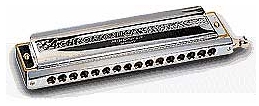
I am a harmonica player of the blues variety.  This is a pursuit that requires a modest amount of talent and a significant amount of discipline.  Practice is important.  Harmonica maintenance is key - these little "toys" are surprisingly complicated and subject to annoying problems.  A simple diatonic ten-hole harmonica has a comb (the body of the instrument that contains the holes that the player blows through), two reed plates (10 reeds each for a total of 20 reeds) and two cover plates (the shiny metal exterior that shapes the sound of the harmonica).  Every part of this instrument can cause problems, but the most frustrating components are  the reeds.  They are tiny brass things, and they get stuck a lot (spit can be like glue to a harmonica reed). Harmonica reeds also go out of tune, come loose, break and mysteriously turn into dead metal.  Replacing or tuning  a reed takes time, effort and the mindset of a jeweler, or a dentist (not to mention a kit of obscure tools).  This is why many harp players are members of the "blow 'em and throw 'em" club.  When the harmonica drops a reed or goes out of tune, you throw it into the "harmonica junk" pile.  Every serious harp player has a bunch of wounded harps in a box or a drawer someplace.  I must have 100 of these sad, busted tin sandwiches in my basement.  I don't like to think about these instruments and the amount of money I spent on them.  Yes, I should dig into the details of harmonica repair, but it is not my desired activity.  I am a player, not a harmonica repairman.

I used to front a blues band.  I was an amateur, a harmonica blues hobbyist, but my band mates were top-notch Chicago pros.  I started the band on Thanksgiving in 2003 and shut it down in early April 2010. During that time, I became pretty comfortable as a band leader.  My harmonica chops improved, and I was careful to keep my instruments in good shape.  We sounded pretty good after a few years.   I haven't played much harmonica since the band shut down.

As I was hanging around the Chicago Blues Festival earlier this month, I ran into Harry Garner (aka Harry da Harp), a harmonica buddy of mine who was leading a "harmonica blow-off" on one of the smaller stages at the fest.  He convinced me to sit in for a tune.

I was caked in rust.

My chromatic harmonica decided to go wonky on me - several reeds jammed.  I felt nervous in front of the large crowd and the adrenaline surge caused me to overplay and over-sing.  To be honest, I stunk.  I have not been exercising the disciplines of practice and harmonica maintenance.  I did the best I could, but it was a sub-standard display.

Now many people wonder why anyone would ever be interested in devoting time and effort to the harmonica. I can't really explain it, except to remember that humans engage in many strange and pointless activities - bowling, karaoke, hoarding, fashion shows, etc....  Honking on a harmonica probably deserves to be included in this group.  The only thing worse than engaging in a strange and pointless activity is doing it poorly.  Everything worth doing requires attention and practice.  Even things that ARE NOT worth doing require attention and practice.

So my self-criticism has begun to motivate me.  I am looking up the guy that used to fix my chromatic harmonica.  If I am going to play the damned thing, it has to function correctly.  I have begun to practice, much to the distress of my little one-eyed dog (he howls and cries in agony as soon as I play a single note).

I may try to make a harmonica comeback.


Friday, May 17, 2013

National Service


My profession allows me to visit with many new people, some of them quite accomplished. Some time ago, I visited with a thirty-something private equity professional in St. Louis. Jay (not his real name) was articulate and very bright, clearly a member of the cognitive elite. This did not make him especially unusual - many folks in the private equity world have the same profile. Jay, however, is different than most. He is a West Point graduate who spent over ten years in the  U.S. Armed Forces, serving as an officer in the Rangers. He was in uniform during the first Gulf Conflict, during 9/11, and during the launch of the Afghanistan and Iraq wars. He saw lots of stuff, I'm sure. I suspect that the stress and trauma associated with the private equity profession doesn't trouble him much after his combat service.

As I was speaking with Jay, I began to reflect on my own brush with the military. I registered for the draft when I turned 18, in 1972. The Vietnam War was winding down; the U.S. did not draft many folks in 1972 and it was clear that the draft was going to disappear soon. So I was able to avoid national service easily, with no drama. I wasn't drafted, and I didn't volunteer.  I was relieved that I didn't have to make any decisions about serving in the military.  I wanted to go to college and attend to my selfish goals.

I feel bad about that now, especially when I meet someone like Jay. I have never been in favor of conscription, but I am in favor of serving.  Military service doesn't "work" for everyone, but some form of national service could (AmeriCorps, Peace Corps, a new environmental clean-up service, etc. etc.). Devoting time and effort to something beyond your narrow self-interest is good for the community, and its good for the human soul, too. But it can be bad for the wallet and bad for family relationships. I let self-interest govern my decision in 1972; it still governs me today. I am not kicking myself too hard about this; I am an imperfect human and can't expect to do everything that might be worthwhile. But when I meet a guy like Jay, I feel a bit ashamed.  He stepped up, and carried us selfish people on his back.

As Memorial Day approaches, consider this - regardless of what one might think regarding the worthiness of America's recent wars and other military adventures, it is important to remember that very capable people are in service on our behalf, and on behalf of the military policies of our government.  Many other very capable people have died on our behalf, and on behalf of the military policies of our government

Sunday, May 12, 2013

Estranged on Mother's Day


Here in the good old USofA, we are awash in flowers, chocolates and brunches on this Mother's Day.  It is a good thing to honor your mother and to thank her for all the wonderful things she has done for her children.  But what if you don't want to see your mother?  What if your mother has created such  pain for you that you have to turn your back and cut her off?

When children cut off a relationship with their mom, there is always a reason.  The mom may not understand, or may not acknowledge the depth of the hurt the child is feeling.  The mom may desperately try to reconcile and repair without success.  There is pain all around.  The only person that can initiate a reconciliation is the person that initiated the estrangement.

I am one of the lucky ones - my mom was the greatest and I hold her memory close since she passed 20 years ago.  We had our bad moments, I guess, but I don't seem to remember that part.

On this Mother's Day, I want to acknowledge that not every mother-child relationship is a source of comfort, that not every wrong has been forgiven, that some children and mothers withdraw from each other in order to establish a zone of safety.  Estrangement is a type of prison, but one that the incarcerated often enters gladly. Even a comfortable prison is a trap and shrinks life's possibilities.

Here is a good piece on estrangement

Wednesday, May 01, 2013

A Good Dog


In January, we adopted a new dog.  His name is Tai, and he only has one eye.  The folks at the Anti-Cruelty Society didn't know what happened to him, but I suspect that another, larger dog attacked him.  Tai has gradually settled into our household.  He isn't very big, but he has a big dog attitude.  He has a focused spirit - beams in on his favorite humans and can pick up on tone of voice, moods, gestures and a surprisingly long list of words.  He is tolerant of his fellow pets in our house.   Oh, and he believes that Life Is A Ball.  When you throw a ball for him, he is fulfilling his purpose in the world. Focus on the ball, be the ball, chase the ball, fetch the ball.  He would rather play ball than eat.

Tai has a small bag of tricks.  He can give "high fives" (but you have to give him a treat afterwards).  He will dance on his hind legs.  But his best trick is the one-eyed stare.  He will sit and watch you, looking for signals.  I feel that he sometimes reads my mind, but of course this is a ridiculous idea.  He is just a little, scruffy, one-eyed dog who is dialed into the human who feeds him.

While dogs probably don't feel "love" the way we humans define that emotion, there is certainly some kind of deep connection between dogs and people.  Of course, dogs don't understand the details of human lives so they are never judgmental.  If you have done something that has brought scorn down on your head, your dog doesn't know about that and will still be glad to see you.  If you come back from the gym smelling ripe and gross, your dog will not complain - he probably prefers you in that condition. 

So I talk a lot to Tai.  He cocks his head at me and trains his remaining eye on my face; he focuses and gives me silent attention (which is quite rare in human society).  After a while, he brings me his ball and seems to say "enough with the blah blah - let's get down to the Meaning of Life - MY BALL!"

Saturday, April 27, 2013

The story from a woman in recovery from bipolar disorder


This article, written by Linda Logan, will be in tomorrow morning's Sunday Magazine section of the New York Times.  This is one of the best first-person narratives I have read about the long road of recovering from bipolar disorder.  The good news is that those suffering from this disease can re-assemble their lives.  The bad news is that the life assembled via recovery is not the same life that was taken by the disorder.  The desire to "get back to where I was before I got sick" is a huge source of grief and frustration to folks with mental illness.

And here is a quote from another mentally ill person struggling with recovery:

"If the truth be known, I fear that I may be abandoned by my family.  I offer my family the same opportunity to accept and love me as I am, rather than seeing me as a blasted hope, whose life has suffered a sad and irreversible loss.  But it is hard to know if that will happen."

It is hard for a person with a mental disorder to accept and recover from their situation.  And even if they succeed, they may lose their family and friends anyway.

By the way, all of this effort to recover must be strong enough to overcome the continuing widespread social stigma and revulsion that "mentally healthy" people direct at people with mental disorders. And let's not forget that only the very rich and the very poor have full access to mental heath care.  Perhaps that will change someday, but that day seems quite a ways off.  And Medicaid cuts brought about by state budget issues will make care less available to poor people.

On any given day, 240,000 people with mental illness are homeless and another 283,000 are in jail receiving little or no treatment for their disorder. In the U.S., Canada and Western Europe, mental illness accounts for 25% of all disability.  By comparison, heart disease and cancer account for 5% and 3% respectively.

This is an epidemic that people don't talk about or think about.  And when many people recognize mental illness in a person they see on the street, they avert their eyes or cross the street and avoid that individual.

This is a bias that is still perfectly acceptable in our culture.

Sunday, April 21, 2013

Rickwood Field, Birmingham AL


I was in Birmingham on business a couple of weeks ago.  I stayed at an old hotel downtown, the Redmont, that still had lots of charm but needed some serious TLC.  The hotel opened in 1925, and the features of the building reflected that era - marble staircases, hardwood floors and tiny elevators that moved verrrry slowly. The price was right, and the attentive staff made up for the slight seediness of the decor.

I finished my business and was checking out; the weather in Chicago forced a delay in my flight home.  Since I had some time to kill, I asked the woman at the front desk, "What would you recommend for someone who has a couple of extra hours in Birmingham?" She smiled and said "Rickwood Field."

Rickwood Field is the oldest professional baseball stadium still operating in the world.  The field was conceptualized and built by Harvey "Rick" Woodward - the name is a combination of Mr. Woodward's nickname and the first syllable of his last name.  Rickwood Field opened in August of 1910, two years before Fenway in Boston and four years before Wrigley in Chicago.  Rickwood was the home of the Birmingham Barons, the AA-level minor league affiliate of the Chicago White Sox (they now play in Regions Field in downtown Birmingham, but do return for the Rickwood Classic, a single game in May that has become a must-see event for baseball history buffs). Rickwood was also the home of the Birmingham Black Barons, one of the top teams in the Negro Leagues.  The Black Barons produced Sachel Paige, Willie Mays and many other stars of the league. The story of the Negro Leagues is well-known; the barn-storming, hand-to-mouth lifestyle was forced upon them by Jim Crow and the deep racism of the United States in the late 19th through mid-20th Centuries. (I always liked Kansas City Monarch star and Cubs coach  Buck O'Neil's comments on these years, and on Ty Cobb, one of the worst racists in professional baseball in that era).  So many of the great names of baseball played at Rickwood - Babe Ruth, Honus Wagner, Cool Papa Bell, Jackie Robinson, Hank Aaron, Rollie Fingers and, yes, Ty Cobb.  Rickwood Field has been used as a backdrop for many baseball movies, including the current Jackie Robinson movie, "42."

I drove over to the ball park, and it was open for visitors - free of charge (a request for a $1 donation to offset the cost of printing brochures was the only mention of money that I saw).  I was the only visitor, and the only other person there was the groundskeeper.  He was cordial, but busy preparing the field for a high school game that night.  I was welcomed and told to look around to my heart's content.

A well-tended baseball field is a beautiful thing. A baseball diamond is an open geometric pattern; I always imagine the first and third baselines extending past the outfield wall into a theoretical infinite distance. Baseball is one of the least violent team sports (although it is a dangerous sport).  Physical contact is not the central part of the game; the game is about skill and focus.  I could sense that many intense baseball games had unfolded on that Alabama field.  Rickwood pulled at me the same way the Wrigley pulls at me.  The vintage painted ads on the walls of the ballpark (installed by Warner Brothers for the 1994 movie, "Cobb") add to the "time warp" feeling.  It was hushed and quiet, with only the sound of the groundskeepers broom in the batters box breaking the silence.

If you love baseball, or even just like it, Rickwood Field should be on your "must see" list.

Monday, April 15, 2013

Mr. G's Top 10 Musical Sounds


1.      Bonnie Raitt’s voice -Bonnie must be the perfect woman because she has the  perfect voice.  She finds all the depths of human experience and it pours out her mouth.   She respects and salutes her sources - the great blues poets of the 20th Century and the R&B pioneers.  And she seems to like harmonica players - they play on a lot of her records.

2.      Stevie Wonder’s chromatic harmonica  - They say that the harmonica is a perfect instrument for a blind person since you don't need to see anything to play it.  Everybody knows the sound of Stevie Wonder's harmonica. All it takes is just a few notes - his exuberance and technical mastery, the glissandi and melismatic approach to the instrument is unique.

3.      Tower of Power’s horn section - These guys are as tightest and funkiest horn section that has ever existed.  High-end trumpets, bari sax honking out the bottom, trombones and saxes filling out the middle - sounds like  single instrument.  Nothing is more hair-raising that the TOP horns in full cry.

4.      Gary Valente’s trombone - Raucous, braying, insistent and heart-breaking - Valente nails it every time.  His work with Carla Bley will live forever.

5.   The Count Basie band - This sounds weird, but the Basie band is tightly connected to the Tower of Power horn section.  Basie invented the concept of a group of talented instrumentalists playing as one.  Nothing swings harder than the Basie band.

6.      Anthony Palmer’s guitar - He may not be terribly famous, but Tony has fantastic technique and a unique voice on his instrument.  He has absorbed and re-assembled so many fantastic sounds.  And he is my neighbor and former band mate.  It was an honor to work with him.

7.      Miles Davis’ trumpet - Miles was the king of expressing the unexpressible in an economic, perfect series of musical phrases.  His trumpet sound was wistful and yearning.  Listen to the live version of "Stella By Starlight," and try not to weep.

8.      Jimmy Smith’s Hammond B-3 organ - THE GROOVE!!! The B-3 is the singing keyboard.  It is also an instrument for over-achievers, with bass pedals, multiple stops and techniques   Jimmy Smith created a marvelous sound, - soul jazz by an organ trio (B-3,drums and guitar).  

9.      Tito Puetes’ timbales - He generated excitement and joy for everyone when he started banging on those drums.  He was an unbelievably fine showman.  Pull up one of his videos on YouTube and see if you can sit still.

10.  Rahsaan Roland Kirk’s clarinet - R. Kirk played many instruments (often 2 or three at the same time).  His work ranged from interesting to "fall-down and worship him" material.  But I have to say that my favorite Rahsaan Roland Kirk sound is his clarinet.  Check out Blue Rol on the Verve album, "Now please don't you cry, beautiful Edith."  his circular breathing and intense tone on this jazzy blues tune is enough to cause your brain to explode

That's all, folks.