Search This Blog

Sunday, March 20, 2011

From Hotel to Intermediate Care Facility


I live a couple of blocks from an old hotel. It used to be called the Ridgeview, because it was within sight of Ridge Avenue in Evanston. The old Ridgeview is pictured above - this comes from an old postcard, postmarked April 4, 1962. The Ridgeview Hotel was built in1924, one of several "apartment hotels" that popped up in Evanston in the 1920's. These facilities were competing for the semi-transient resident that planned on staying in town for a few weeks to a few months. The units in these hotels had kitchenettes. The Ridgeview was sold in 1965 and received some extensive re-modeling. In 1971, it was sold again and converted from a hotel to a 430-bed long-term care facility for disabled adults receiving state assistance. It is still in use as a intermediate-term care facility and it serves mentally ill adults. Most of these folks are Medicaid patients.

There is a large park right across from the entrance of the Albany Care facility - Grey Park. When the weather is decent, the park is full of Albany Care residents, most of them enjoying tobacco products. This has generated a bit of controversy in the neighborhood (see this article for background). The residents also spend quite a lot of time in the neighborhood, walking around and hanging out. Since most of them are quite poor, they will sometimes ask pedestrians for some money. Their maladies can lead to some unusual public displays - shouting, nudity, public elimination of wastes, etc. The Albany Care building is a few blocks away from the main public transportation hub in the neighborhood, so there is an interesting dance that occurs between the commuters and the Albany Care residents. As one would expect, the interactions are not always positive.

Here is what I admire about the Albany Care folks - they are fearless! I see one fellow several times a week - he always wants to shake hands and he smiles at everyone. He also wants everyone to give him a dollar - hey, it never hurts to ask, I guess. Some people cross the street to avoid this guy. Others steam by and ignore him. Others engage with him and seem comfortable.

There are many other examples - there is the guy with the long gray hair that stands outside the Sher-Main Grill, chain smoking cigarillos and muttering "Have a good day, have a good day" to everyone he sees. Many others are trying hard not to be conspicuous; their eyes bulge out, like someone is choking them.

These people are my neighbors. I struggle with my gut instinct, which is to look away from them and march through their turf without acknowledging their existence, let alone our shared humanity. I have had times when I didn't feel 100% mentally stable, so I should have more empathy for the Albany Care folks. But I don't.

This is something I need to work on. Religious folks often say, "There but for the grace of God, goes me." This is a noble thought, but I can't embrace it. Belief in God's grace is similar to believing in a shaman's ability to beseech the spirits to send rain during a drought. These "faith" statements don't convince me - sorry about that.

What does engage me are unanswered questions - what is afflicting each resident of Albany Care? How did they end up there? How likely is it that they will get well and leave to join society? What sort of treatment do they receive from the staff? And so on.

It is always a challenge to stay mentally strong. Some folks are ill and can't tackle that challenge. I will work on developing empathy for my Albany Care neighbors...


Thursday, March 17, 2011

St. Patrick's Day, New York, 2011


Night has fallen in Manhattan as St. Patrick's Day winds down. Weirdness is in the air. I saw a very tall man, wearing just a thong, his body painted green. Two guys in kilts were kissing at the corner of 46th Street and 8th Ave. I saw cackling harpies sitting on the curb drinking green beer out of plastic cups. There were black people dressed like leprechuans. Little old ladies in lime green trench coats. Homeless people sporting "Kiss Me - I'm Irish" buttons on their tattered jackets. I saw a shirtless woman with strategically-placed shamrocks. I listened to an ancient Chinese man croaking "When Irish Eyes are Smiling." I followed a drunk girl wearing a green plastic derby as she stumbled down 8th Avenue, stopping to hug the cops. I saw a wicked thin socialite, striding purposefully down the street at 10:45 PM, wearing cheap green beads, her six-year-old daughter in tow. In this world of uncertainty and heartache, New Yorkers and touristas are misbehaving and blowing off steam. Many of these people will be nursing 4-star hangovers in the morning.

God bless us all, and good night.


Sunday, March 13, 2011

Michael Yeo Yew Heong


From 1984 through 1987, I lived and worked in Singapore. It was a challenging time - the island nation was going through its first economic downturn since WWII and the business I was leading was experiencing difficulties. I was pretty young, and the job in Singapore was my first management gig. In many ways, I was clueless, and that cluelessness on the job migrated into my personal life as well. I needed backup in the worst way.

Michael Yeo Yew Heong applied for an opening in our Singapore office and I had the backup I desparately needed.

When you first saw Michael, you are immediately taken by his physical presence. His height, for one thing, set him apart in Singapore. There are not a great many tall Singaporeans, folks over six feet in height tend to be expatriates on a work assignment. Michael was 6 ft 5 in and his shoulders were very broad. He moved like a tall man in a short world, perhaps overly conscious of his unusual status. Michael's schoolmates teased him - called him a "Northern Barbarian" in reference to the physically imposing inhabitants of China's northern regions which prompted the Qin Dynasty to finish construction of the Great Wall . Michael embraced the "Northern Barbarian" tag, and laughed at himself frequently.

Michael was a highly competent executive. He had great intuition and strong cognitive skills. He was dependable and dedicated. His ability to solve problems impressed me. But all of those traits, though admirable, were not the aspects of Michael's personality that made him special.

Michael was kind.

He had a raucous sense of humor.

He had a talent for sharing wisdom in a casual, off-hand way that can impact the recipient for a long time. I still ruminate over some of the things that Michael said to me in the mid-eighties in Singapore.

Michael fully inhabitied his life. He enjoyed socializing with friends; we enjoyed many Tiger Beers together after work. He was an enthusiastic scuba diver. He was a deeply committed husband and father.

I left Singapore in 1987; Michael moved up into the leadership slot that I vacated. We didn't talk much after that - Chicago is a long way from Singapore - but I kept up with him via email, sporadically. He took a new job in 2001 and was handling business activites in China for his new employer.

Last week, I realized that it had been well over a year since I had connected with Michael, so I dropped him an email on Thursday. Due to the 14 hour time difference between Chicago and Singapore, I didn't expect to hear back from him immediately. My dog barked at 1 AM on Friday morning and I woke up. After dealing with the mutt, I saw that the email light was blinking on my Blackberry. I checked it - there was an email from Singapore, but not from Michael. One of his colleagues from work had intercepted my message and answered it. He told me that Michael died on December 5, 2010, while snorkeling in the Philippines.

I am trying to wrap my head around this. Michael would have celebrated his 58th birthday on March 15. He had stayed fit. He was a regualar scuba diver and therefore was a strong swimmer. This is a very improbable way for Michael to leave.

Michael Yeo wasn't a famous person, just an outstanding person. He stood by me during a difficult time. I let the relationship atrophy. Now I am feeling the deep regret that comes when you realize that you have no time to repair a friendship that has been neglected.

I went to a local joint, the Hop Haus, yesterday to take a look at their beer list. Sure enough, they had Tiger Beer from Singapore on the list. I ordered one and drank it, remembering my big-hearted friend, Michael Yeo.

Friday, March 04, 2011

Strangers on a Train

I am a regular Metra rider, ususally on inbound train #320 leaving my local stop at straight-up 8:00 AM, arriving Ogilvie Transportation Center in Chicago's Loop at 8:26AM. I was on it this morning, heading to the office for a Friday full of conference calls and persuasion. I usually read my paper or listen to the iPod, but today I decided to sit quietly and look around me. I concluded something - commuting is a very odd activity.

Across the aisle from me is a man that I have noticed many times in the past. He is a tall, substantial guy, not overweight or anything, but solid. He could be 40 years old, or he could be 50. His face is unlined and his hair is thick and dark blonde. He always wears jeans and boots. In the winter, he wears a pullover sweater. In his hands, an iPhone or an iPad. The expression on his face never changes - he seems implacably calm.

To my right on the long bench is a clenched fist of a man, short and paunchy, in a pin-striped suit. His thinning hair glistens with some sort of styling gel. He has turned his back to me and pulled away to the far edge of the seat so he won't accidently catch my eye or brush his body against mine. His eyes are focused on the novel scrolling across his e-reader.

To my left is a mid-thirties blonde woman who pays close attention to her appearance. She is staring into a compact mirror, adjusting her lipstick. This process takes a surprisingly long time. She finally snaps the compact shut, slips it into a big-ass purse, sighs, leans back and closes her eyes.

Down the aisle comes the aging conductor, bellowing "Tickets!! Display all tickets!! Main Street, Rogers Park, Ravenswood tickets!!!" He is short and round. He has a gray beard quite similar to my own. His voice shatters the peace; his timbre is nasal and unpleasant; it makes my ears ring. It is incredibly irritating.

Every seat is filled and people are standing in the aisle by the time we reach our destination. The passengers generally don't converse with each other. They don't even acknowlege each other, although they have been riding in the same train car together for quite a while (sometimes for years). We can't greet each other by name, we don't introduce ourselves, we are physically close but emotionally distant.

The train stops with a jerk, the doors hiss open; we file out and rush to our high-rise offices. In eight or nine hours, we will reverse the direction of our travels and head back to our suburban bedrooms. Then we get up the next day and repeat the process. And the day after that, and the day after that, and so on until we lose our jobs or retire or die.

Doesn't this seem odd? What if someone broke into song? What if someone told the loud conductor to shut up? Would chaos ensue? Would the facade crumble?

Anyway, I should start winding down my day so I can catch......my train.


Monday, February 28, 2011

Persistence

I felt a twinge in my knee last night and when I woke up this morning, it was still there. I decided to skip my workout to let my knee settle down. The last day of February was a little rough in Chicago - the rain that fell overnight turned to ice when the temperatures dropped around 2 AM. My neighborhood was a huge skating rink. I left the house for my morning commute, moving gingerly and feeling grumpy.

I made it to my local Metra stop and headed up the ice-covered, hazardous stairs. I looked up the stairs and saw a woman really struggling to climb to the top. She was of short stature, and it was clear that she was suffering from some sort of chronic condition - perhaps multiple sclerosis. She had a hard time lifting her feet to climb the stairs, and she was hauling herself up by pulling on the handrail. I offered to help her; she thanked me and asked me to carry her bag. She made it to the top of the stairs, we exchanged a few pleasantries and we headed off to face our futures.

I remembered that I have seen this woman a few times as I scurried to my train. She never caught my attention before. My busy-ness and self-involvement prevented me from truly seeing her. As I rode the train into work this morning, I felt awe and shame.

I was in awe of this woman's persistence. She is working while battling a condition that a non-afflicted person can't really understand. She was pushing through her infirmities to do what needed to be done. I think that she must be one of those exceptional people - a true optimist, who overcomes her challenges with hopefulness. Just an everyday hero, getting on with life.

And then I felt ashamed. I am one of the luckiest people on earth. It is deeply wrong for me not to feel gratitude and thankfulness every waking moment. A twinge in my knee and ice on the sidewalk - trivial matters!! I am not worthy to be the bag-carrier of the woman stuggling to climb the icy stairs. I owe her both an apology and thanks for opening my eyes to see past my own privileged existence.

Reggie Watts


I was ranting recently about the things that make me anxious; now I am going to talk about joy. Reggie Watts makes me feel joyful.

Just look at this guy! He has the wild hair going on, the multi-culti vibe, a hint of a smirk. When I look at him, I can't help but smile. He makes me glad to be part of the human race.

But his fun appearance is not the story. This fella is a towering talent. I first picked up on his mad musical skills when I ran into a Seattle band called "Maktub." (Digression: "Maktub" means "It is written" in Arabic). I heard Maktub's second album, "Kronos," in 2003 I think. I instantly became a fan, largely due to Reggie's awesome voice and improvisational abilities. He started doing stuff that didn't involve his Maktub bandmates, specifically solo excursions using a stereo digital multitack "loop" recorder. He decided to be his own band, using his voice to lay down percussion and "instrumental" tracks, then singing on top of those tracks. Check out one of his improvisations by clicking HERE. He also got into comedy and ultimately caught the attention of Conan O'Brien. Check out this piece that Reggie did for the Conan folks a while back.

So Reggie may be Bobby McFerrin's successor in the world of crazy vocalization. He may just be a very talented silly guy. I sure am glad to know about him.

Tuesday, February 15, 2011

Free-Floating Anxiety


Here are things that are making me anxious today:


1. Tigers: I saw a billboard today that reminded me that there are only 3,200 tigers left in the wild. That doesn't sound like very many, people. In the early part of the 20th century, there were over 100,000 tigers. Tigers were voted "World's Most Popular Animal" by the viewers of the Animal Planet cable station, narrowly beating out the dog. So the world's most popular animal is on the verge of going "bye-bye." This makes me ANXIOUS.

2. U.S. National Debt: The total debt issued by the U.S. Government is about $14.2 trillion and will hit $15 trillion later this year if Congress raises the debt ceiling (and they will). Oh. My. God. $15 trillion of debt outstanding is equal to $48,100 for every citizen in the U.S. Enough money to buy 36,855,036,855 tickets to see Lady Gaga perform! It is impossible to imagine this much money, and don't we have to pay it back? This makes me ANXIOUS.

3. Iran: The news is full of reports about the latest demonstrations in Tehran and the latest brutal crack-down by the Iranian government and their goons. It is heart-breaking. I have known a few Iranians, and they are very cool folks; they really should be living in freedom. I don't think that the success of the Egyptians in chasing Mubarek out of town will be duplicated in Iran in the immediate future - Iran is hard-core, they could care less about what the world thinks of them. Ahmadinejad is a very scary guy and he is backed by people that are even more extreme. Public executions seem to be a form of entertainment for the Iranian government. If Iran gets nuclear weapons, I think a nuclear exchange becomes pretty likely. This makes me ANXIOUS.

4. Black Ice: It has been 2 weeks since Chicago's big blizzard and all of our snow is melting as temps head above freezing. But it gets cold at night, causing the melted snow to re-freeze. On roads and sidewalks, the result can be invisible - "black ice." I slipped in my driveway when I stepped on some black ice and almost did a face-plant (managed to stay upright by flailing my arms around and grabbing the doorhandle of my car). Black ice makes me ANXIOUS.

5. Unemployment: I am among the fortunate folks that kept working through the recession. I know people that have not been so lucky. The official unemployment rate in the U.S. has been 9% or higher since April 2009. But the official unemployment rate is vastly understated. If you add "discouraged workers" (folks that want jobs but quit looking due to lousy prospects) and the underemployed (folks with part time jobs that want full-time jobs), the rate is at least 20%. Oh, and don't forget all those college grads that are working fast food jobs - they are underemployed, too. And the 55 year old former head of human resources for a mid-sized company that is working at Starbucks to get health benefits - he's underemployed, too. I am a father; two of my kids are working (Praise Be!) and two are still in school. I worry about their employment prospects. Real unemployment numbers make me ANXIOUS.

Well, that is enough free-floating anxiety for now. Have a nice day.


Tuesday, February 01, 2011

The Day Before Groundhog Day


Tomorrow marks the 125th anniversary of Groundhog Day. Since my mother's side of the family came from western Pennsylvania, less than an hour's drive from Punxsutawney, I grew up with pictures of the Groundhog Day ceremony in my house. I knew all about Punxsutawney Phil before Bill Murray made the movie. Before Murray's "Groundhog Day" movie, February 2 was simply a holiday based on an old legend about a rodent's weather-forecasting ability. The movie changed the meaning of the holiday in our popular culture. The phrase "Groundhog Day" has come to represent the act of going through a phenomenon over and over and over until one spiritually transcends it.

Here in Chicago, we get that "Groundhog Day" feeling about this time of year. Starting sometime in December, the skies turn grey and often stay that color for weeks on end. We get blasted with snow and cold. The days are short and so are the tempers of our fellow citizens. It does sometimes feel like we are living the same winter day, over and over and over. Save us, Punxsutawney Phil!!

But tomorrow, my friends, will be different.

According to the U.S. Weather Service and the chattering herd of media hypesters, Chicago is to be hit with a great-grandmother of a blizzard, starting this afternoon and extending into the wee hours of Groundhog Day. Breathless disaster junkies are claiming that this could be "the big one" with snowfall exceeding the infamous "Blizzard of '67." Winds will howl, leading to white-out conditions. THE CITY COULD SHUT DOWN!!!! PANIC AND CHAOS COULD ENSUE!!!!! RUN AWAY RUN AWAY TO ARUBA!!!!! (Except O'Hare will be closed).

Excuse me, but a big snowstorm in Chicago in early February simply isn't a newsworthy event. We are Chicagoans. We have four-wheel drive vehicles, several hundred thousand tons of road salt in storage, and drink antifreeze in the winter. Snowstorm? Feh!

In the immortal (immoral?) words of the 43rd POTUS, "Bring it on!"'

Saturday, January 15, 2011

An Instrument I Wish I Could Play


While in high school and college, I spent quite a bit of time sitting in the trombone section of the jazz band, honking on the bass trombone. It was quite satisfying to blow low tones and anchor the brass section. And I had several opportunities to play in unison with my brother low-register specialist, the baritone saxophonist. This is how I fell in love with the bari sax.

A good bari player can really throw down a bass line. He/she can make it pop in the low register, rumble and growl, adding bottom to jazz, funk and rock music. A virtuoso baritone saxophonist can blow like Coltrane and Bird, but in the bass tone zone. There is a soulfullness to the sound of a bari - gruff, yet warm and it grabs me every damn time I hear it. And bari sax players tend to be a tad on the geeky side, which I really like. They aren't the movie stars of the music world.

I have a list of bari players that just knock me out -
  • Gerry Mulligan: Gerry left us in 1996, and he was one of the greatest bari players in history. His tone was different - lighter and cooler than the typical rollicking baritone sax sound. He was bari guy on the Miles Davis "Birth of Cool" record. He played with Duke, Monk, Louis Armstrong, Chet Baker and Dave Brubeck. He put the bari in the jazz spotlight. Here is a clip of Gerry playing a wonderful old standard, "Satin Doll."

  • Harry Carney: Mr. Carney was probably the first major performer on the baritone sax. He played Conn saxophones with a very large-chambered mouthpiece, which produced a huge, rich tone that most bari players try to replicate to this day. Carney ran away from home at the age of 17 to join Duke Ellington's orchestra! Wow! And he was one of the first practicioners of "circular breathing," a technique that allows a hornplayer to hold a note indefinitely. Check out this youtube clip and you will hear Harry's artistry and experience the incredible tension and release that the cicular breathing technique can create.

  • Pepper Adams: Pepper was the "anti-Mulligan." Gerry was light and cool; Pepper was sharp and hot. They used to call him "the Knife" in honor of his attack and cutting tone. Pepper was a "hard bopper" and recorded with Mingus, Coltrane, Donald Byrd and a long list of other greats. He died of lung cancer at the age of 56 (which happens to be my age....). He played with a joyous ferocity that few musicians have ever attained. Here is a clip - wonderful stuff!

  • Ronnie Cuber: This guy is still alive and kicking ass! He can do it all - harp bop, soul, funk and every damn thing. In addition to playing with stars like Joey DeFrancesco (Hammond B3 organ superstar), Randy Brecker, Maynard Ferguson, and Lee Konitz, Ronnie has also played with a bunch of pop stars seeking that magical bari sound, including Paul Simon and Chaka Khan. I love this guy - he looks like a paunchy accountant, but he is one of the funkiest horn men alive today! Check out this clip...

  • Stephen (the Funky Doctor) Kupka: Doc has anchored the Tower of Power horn section for almost four decades! Imagine that! He introduced an entire generation to the robust bass honk af a well-played bari sax. He was a soulful, nerdy white kid back inthe 1970's; he is a distinguished-looking senior playa now. I still can't get enough of this guy - he has anchored TOP and defined its sound since its inception. Doc is a section player - not a soloist. And that is cool - here he is with TOP on the Letterman show some time back.

  • Dana Colley: Dana is a bari guy that nearly achieved rock superstardom. He was a member of the odd-ball power trio, Morphine, in the 1989-1999 period. The instrumentation was electric bass, drums and baritone saxophone. This band was led and driven by the late, great Mark Sandman (bass and vocals); Mark died of a heart attack on stage in 1999. Dana played some amazing bari and opened a new frontier of the baritone sax as a frontline voice in a rock/pop context. The music was incedible, rumbling with funky darkness down in the bass register. Even Sandman's voice was a baritone-bass instrument. Here is a particularly mesmerizing tune by Morphine, recorded in a small club - wicked!!!

I could add many more names to this list. Here in Chicago, we have a few local Baritone Sax Studs - Bob Centano is the guy that leaps to mind immediately. Bob plays the entire range of woodwind instruments, but seems to spend most of his time on the bari. He is no spring chicken - well into his retirement years. Bob worked in the Federal courts - clerking for Federal judges was his "day job" for many years. He is back to being a full-time musician in retirement. He also leads a big band around the Chicago area, and it is an excellent ensemble. Bob's playing is deeply soulful and full of surprises.

I am always amazed when a talented musican plays a big, intimidating instrument like the baritone sax and generates such marvelous sounds. I wish I could play that damned bari sax!

Monday, January 10, 2011

More Randomness


I just finished reading a good book that was published in the late 1990's, "A Beautiful Mind." As you might recall, this was the story of John Nash, the genius mathematician who was also suffered from paranoid schizophrenia (the movie version of the book starred Russell Crowe). Dr. Nash miraculously was able to recover from this debilitating condition, and committed no violent acts while he was struggling with the malady. Young Jared Loughner of Tuscon AZ was unable to control his diseased brain, and he committed mass murder and grieviously wounded Rep. Gabrielle Giffords.

Nineteen people were shot; six died. The confluence of random events that brought these people together are boggling to consider. One generally doesn't worry about being murdered when heading out to an outdoor event hosted by one's local congressperson. It is a very rare occurence.


What triggered this mentally ill person? Was it his internal hell, the screaming of incoherent delusions? Was it the environmental noise, the political invective floating about our communities? Loughner's motivation was his disease - any other theory seems silly to me.

Remember Seung-Hui Cho, the Virginia Polytechnic Institutie shooter who killed 32 people? Loughner and Cho have very similar mental disorders. There are many people walking about with undiagnosed or misdiagnosed mental illnesses. They can't be shoved into a locked psychiatric unit against their will unless some legal authority declares them to be a threat to themselves or others. That is not an easy path to tread; most family members don't have the heart to take the action necessary to send their loved one to a locked unit.

When you cross the street, you risk being hit by a bus - if you randomly fail to look before you step off the curb, it can happen. When you go to any public event, you risk being shot by a parnoid schizophrenic who randomly decides to show up and start firing. These are not big risks, but they exist. If all guns were outlawed, would that reduce the risk of a mentally ill person killing lots of people? Probably (although illegal guns would certainly be available no matter what laws are passed). But it appears that the citizens of the United States prefer to bear the slight risk of random killing rather than accept the elimination of the right to bear arms.

You can't identify all the people who have the potential for committing psychotic acts prior to their psychotic actions. Our country wants its guns. This combination of facts means that psychotic people will own guns, and will occassionally blow away a bunch of people. But, hey, its not THAT big of a risk, right? And it is a random event. So grieve for those lost and those injured, deal with the perpetrator of these evil acts, but realize that eliminating a low-liklihood fatal risk entails costs that our country is unwilling to bear.


Wednesday, January 05, 2011

Chicago Blues Fest Might Cost You This Year


This is a shot of me and Piano Willie at the 2005 Chicago Blues Festival (photo by my friend Alex Cuevas aka Big Alex). This event has been the largest free blues event in the world (I think) for many years. I just caught a press report that the City of Chicago is thinking about out-sourcing the management of all of its free festivals (including the music events and Taste of Chicago). Here is a link to the Sun-Times article on this situation.

Remember what happened to parking fees when the parking meters were privatized in Chicago? Well, the same deal will be struck on the festivals. No more free blues, folks - at least $10/day for the Blues Fest (and the Jazz Fest will charge admission, too). The city's finances are so messed up that it is willing to kill off some of the things that contribute to Chicago's civic excellence. The Blues Fest is still a bargain at $10/day, but of course the attendence will drop significantly. The size of the event would therefore have to be cut, the number of big-name acts would decline and a spiral would begin. I suspect that it would be the beginning of the end for the Chicago Blues Festival - it would eventually shrink away to nothingness. I hope I am wrong and that privatization will improve the Blues Fest. SummerFest in Milwaukee charges admission and it does well. But Summer Fest is huge and covers all types of music - it isn't a niche event like the Blues Fest and the Jazz Fest.

Of course, the lame duck Daley administration is moving so slow that the entire festival season is at risk. No acts have been booked yet, so I hear. Without privitization, there may be no festivals at all.

These festivals lose about $7MM/year. It would be nice if the foundations in the Chicago area would fill the gap so this civic treasure could be maintained. If it goes private, I fear that the Chicago Blues Fest will end up dead.

Monday, January 03, 2011

Society for the Preservation and Advancement of the Harmonica

We humans like to flock together in groups that are organized by passionate interests. Bowling leagues, book groups, trade associations, fan clubs - the list is very long. One such sub-group is the Society for the Preservation andAdvancement of the Harmonica, or SPAH. Every instrument has at least one organized group of passionate players/admirers. There is the International Trombone Association, the Guitar Foundation of America and, of course, the Ukelele Guild of Hawai'i ("UGH" for short). I have not hung out with the members of all those groups. I have hung out with the members of SPAH, because I chew on the dang tin sandwich (translation - I play the harmonica).

So the members of SPAH roughly break into three groups:

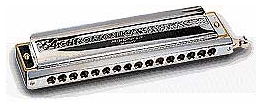
1. The Traditionalists: These folks are trying to keep a dying musical tradition alive - the harmonica group. The basic traditional harmonica group is a trio - a chromatic harmonica player that carries the melody, a chord player that provides "rhythm" harmony backing for the lead (using a three-foot long instrument), and a bass player that honks on the harmonica equivalent of a tuba. If you are old enough, you might remember the Harmonicats - that is the musical style that the Traditonalists treasure. It is damn hard to play this type of harmonica music. It harkens back to the vaudeville era - harmonica bands were big in the 1920's and 1930's. As you might imagine, the Traditionalists tend to be a bit older than the average SPAH member.
2. The Blues Crowd: I fall in this group. Playing mostly diatonic harmonicas (small 10-hole instruments), these folks worship Little Walter Jacobs, Big Walter Horton, Sonny Boy Williamson II, George "Harmonica" Smith, Kim Wilson, Junior Wells and the rest of the folks that made the harmonica sound part of the American pop soundtrack.
3. The Monsters: These are the folks that have become true masters of the harmonica and all of its possibilities. Most of them play jazz, but there are also classical monsters and Irish music monsters. Howard Levy, Toots Thielmans, James Conway are three players that come to mind that fall into this category. Howard Levy is a terrifying player - he must have sold his soul to the Devil to get the wicked talent that he displays on the diatonic harmonica.

SPAH has one major blow-out every year - the annual convention. The 2010 event was in Minneapolis; 2011 will be in Virginia Beach. I have only attended one of these events. They are really quite remarkable. The top players hang out with the beginners and teach, provide tips and encouragement. This would be like the Major League Baseball All-Star Team hanging with the softball team sponsored by Joe's Bar & Grill, providing companionship and coaching. People tend to stay up all night for three nights straight, blowing harmonicas and acting strange. It is a gloriously joyful event.

Check out some harmonica music when you have a chance. Stevie Wonder is a great entry point. Dig into Kim Wilson of the Fabulous Thunderbirds. Chase down Howard Levy. You will be amazed.

Saturday, January 01, 2011

2011

I suppose one of the signs of aging is length of one's New Year's celebration. This year, we were actively enjoying the last day of 2010 with great music (a performance of Beethoven's 9th) and self-care activities (family luncheon, sauna, massage, hot tub soaking). We were done before dinner time. I was mysteriously afflicted with a wicked headache, so I had to lay down for a bit until it went away. I arose at 10 PM, enjoyed a bit more family time with my wonderful wife and 2 youngest daughters, shared a champagne toast with my wife, and went back to bed. No inebriation, no noisemakers, no dancing, no party for this aging Boomer. I woke up at 5AM on this first day of 2011. It is very quiet here.

Those of us born in the mid-1950's are in the fat part of the Baby Boom demographic bulge. Our older brothers and sisters, born in 1946, will turn 65 this year, so 2011 will be the first year in which Boomers start to move into the "old age" category. This has been a large, messy, wonderful, terrible generation. I took a gander at the New York Times this morning and found this article on aging Boomers. It is fair to say that we are more egotistical and self-indulgent than past generations of Americans. As the Times said this morning. "The self-aware, or self-absorbed, feel less self-fulfilled, and thus are racked with self-pity."

When I am feeling especially important, or especially discouraged, I find it useful to consider the immensity of geologic time. The earth was formed around 4.6 billion years ago; the oldest stuff discovered on our planet are zircon crystals, found in Australia, that scientists estimate are 4.4 billion years old. Single-celled life forms emerged 2.5 billion years ago; it took another 2 billion years for shelled mollusks to show up in the fossil record. Arachnids ventured onto dry land about 430 million years ago; amphibians followed them 60 million years later. In the Permian period, 248 million years ago, the Earth experienced its largest mass extinction ever - 95% of marine species and 70% of land animals were wiped out (the suspected cause was rapid climate fluctuation). Dinosurs died off 65 million years ago; hominids descended from the trees 6-8 million years ago. Modern humans appeared in east Africa about 190,000 years ago and began venturing across the globe about 70,00 years ago.

So we humans are a blip, a successful species that hasn't been around for very long in the grand scheme of things. The joys, ambitions, fears, dreams and disappointment of an individual human are quite insignificant when measured against the scope of our planet's life. We are simply creatures that live and die. Our big brains force us to think too much about the details of it all.

So 2011 will unfold, a blink in goelogic time, and we humans will focus on the daily crush of events and thoughts. Let's try to focus on one over-arching concept - it is a joy and a privilege to be alive.

Happy New Year.


Monday, December 27, 2010

Thinking About Songs


Song-writing is often referred to as a craft, not an art. That makes sense to me. There are rules that you can apply to constructing a song, and a good song is usually a brief collection of words, carefully chosen. Songs have verses and choruses. They often have two contrasting sections, the theme and the bridge. They have "hooks" that repeat and grab the listener's attention. All these components can be studied and, with effort, mastered. I have also heard that there are many more sad songs than happy songs - sadness generally contains more drama and conflict than happiness, and thus provides greater opportunities to grab and hold the listener's interest.

If you sit down and read song lyrics, they often are not terribly impressive. The rhymes can be obvious and a bit banal, the thematic material can be weak. Most song lyrics don't qualify as great poetry. But if those lyrics are combined with a well written melody and a talented singer, a magical transformation can occur.

Since this is the holiday season, we have been hearing for the past several weeks, over and over, some incredibly banal lyrics - Christmas songs! OK, some songs get a pass due to their long history and connection to the Christmas story ("Oh Come All Ye Faithful," "We Three Kings," et al) but others are incredibly bad ("Jingle Bells," "Frosty the Snowman," and the horrific "Rudolf the Red Nosed Reindeer!"). But even in this wasteland of terrible lyrics and simplistic tunes, there are some gems. In 1944, Judy Garland sang "Have Yourself a Merry Little Christmas" in the film version of "Meet me in St. Louis." Here is a video of that performance. This is a GREAT song - this version contains the original melancholy line "until then we'll have to muddle through somehow." "Merry Little Christmas" struck a chord with the Greatest Generation - they were fighting in WWII when this version of the song came out; it articulated the longing for home and hope for a more peaceful future.

Hugh Martin wrote the lyrics for "Have Yourself a Merry Little Christmas." His original version was even more downbeat than the version that Judy Garland recorded. Here is the alleged original draft:

Have yourself a Merry Little Christmas, it may be your last
Next year we may all be living in the past
Have yourself a Merry Little Christmas, pop that champagne cork
Next year we will all be living in New York
No good times like the olden days, happy golden days of yore
Faithful friends who were dear to us will be near to us no more
But at lease we all will be together, if the Fates allow
Until then we'll have to muddle through somehow
And have yourself a Merry Little Christmas now

So this song contains all the components of greatness - intense lyrics, relevent to the time and the audience, yet universally appealing to anyone who has been separated from looved ones during the holiday season. Great craft is at work here - notice the internal rhymes in the two-line bridge ("olden days...golden days," "dear to us...near to us"). And the melody is both memorable and beautiful - it contains slow arpeggios and artful modulations that take it outside the "Jingle Bell" zone of stupidity.

Hugh Martin is a member of the Songwriters Hall of Fame. It is easy to understand why.

Sunday, December 26, 2010

Boxing Day 2010


On the day after Christmas, we are getting dumped on here in Chicago. We have big snowcakes on our yard furniture outside the window (full disclosure - the picture above is a random Chicago snow photo grab from a Google search, not my backyard).

This is Boxing Day, the traditional day for tipping service folks and giving money to the poor in Commonwealth countries. It is also known in some religous circles as St. Stephen's Day, or the Feast of Stephen - Stephen being the first Christian martyr. You might remember the words of the Christmas carol:

Good King Wencelaus went out
On the Feast of Stephen
When the snow lay round about
Cool and crisp and even.

We don't pay much attention to Boxing Day in the USofA. December 26 is "Exchange the Presents and Hit the Sales Day." But in this time of economic weakness, high unemployment and other tribulations, hitting the "alms box" with a little cash is more important than usual. Food banks are my preferred charity this year. This is a good day to make a deposit.

I just finished thumbing theourgh the Sunday New York Times; December 26th is also the day for the NYT's "Year in Pictures" section. From the deep tragedy of the Haitian earthquake to the giddy elation of the San Francisco Giants World Series championship, the images were well-chosen. Everyone has memories of the personal high points and low points of the year. Whatever your personal reality might be right now, the best path is the one that leads forward. For me, on this Boxing Day, my first step on my path forward is to resume my close personal realtionship with my snow shovel.

Tuesday, December 21, 2010

I know this guy...

I know this guy who can take a $25 harmonica, disassemble it, apply amazing focused skill upon it and transform it into a high-quality instrument - the harmonica version of a Martin guitar. He is completely booked by professional harmonica players; you can't hire him to build a harmonica if you aren't already a client.

I know this guy who is an unbelievably talented electric guitarist - blues, jazz, R&B, soul, funk, country - you name it, he can play it. He is a deeply intelligent and well-educated person. If you are lucky enough to convince him to play in your band, your band will sound 200% better. But he absolutely abuses his health; very overweight, diabetic and almost unable to walk these days.

I know this guy who will tell you that he was married for "29 years, 11 months and 21 days" when all hell broke loose. His wife read "Eat Pray Love" and that was that. It was not a nice divorce.

I know this guy who is a gifted business executive. He worked far fewer hours than most people in his industry - so smart, he could get it all done quick. He called out a borderline psychotic CEO regarding dodgy business practices and he received a massive severence payment (the CEO launched him; his contract paid out). He received options in his next employer, a very sleepy insurance conglomerate, instead of a cash bonus; a big European company bought the sleepy conglomerate and the options generated yet another massive payment. His good luck never seems to end. He is retired now, at the age of 54.

I know this guy who is a wicked fit, tall, military man, a captain in the Illinois National Guard, who has done two tours in Iraq and two tours in Afganistan. His hobby - raising miniature dachsunds.

I know a lot of unusual guys.

Friday, December 17, 2010

A very Bad Day For the Harmonica Community


Robin Rogers and Chris Michalek both passed away within a 24 hour period. I never met either of them, but I admired them greatly. Since I sing a bit and play harmonica, I can recognize great singers and harmonica players. Robin Rogers was a marvelous, traditional blues harp player with a gorgeous voice - a true blues singer. She has been fighting cancer for a long while and was told that her time on this earth was soon to end. She faced that truth bravely. Listen to this interview, if you dare. My heart broke when I heard it.

Chris Michalek did not have advance notice. He collapsed and died yesterday. I assume that he was a victim of heart failure. Chris was one of the top diatonic harmonica players on the planet. He was a master of blues, jazz, rock, funk -- you name it. He had nailed the overblows and overdraws that frustrate lesser players (like me). He knew how to properly amplify the instrument to turn it into a massive musical presence, driving the band. Here is a YouTube Video of Chris playing some awesome jazz.

Chris hadn't reached his 40th year. Robin hadn't reached her 54th year. Those of us who love harmonica blues and jazz are bereft. It hurts to lose hugely talented people.

Tuesday, December 07, 2010

Musical Ditch-Digging: Potbelly at Adams and Wacker, Chicago IL


The ultimate musical ditch-digging gig in Chicago is playing at a Potbelly restaurant. Potbelly is a chain of sub shops with a cutesy decor and "quasi-cool" demeanor. One of the touches - live music in most stores, usually a singer-guitar banger. Most of the folks that take these gigs are young, mediocre wannabees. For the past few months, I have been buying my lunch at the Potbelly shop at Adams and Wacker. It is a 2 story joint, and the musican's nook is on the second floor balcony. When I came in for my turkey sandwich today, I was startled - I heard good music from pouring out of the poor soul that was in that tiny nook on the balcony!!

Imagine this - you have a passion for music. You are a young, attractive female. You have a lovely voice, somewhere in the alto/soprano range. You are a decent acoustic guitar player and do a great job of backing up your own vocals. You have been breaking your ass writing songs and hoping to get attention from somebody, anybody. And you are playing a 3 hour solo gig for peanuts on the second floor of a sandwich shop and NO ONE is listening!!! Yes, my friends, this is called Musical Ditch Digging.

The artist at my local Potbelly was Starina Catchatoorian. I heard her play a few tunes, including a very emotional and sincere cover of the Beatles tune, "You've Got To Hide Your Love Away." This is a talented musician. She said that she was a bit tired because she was up until 3AM last night recording songs.

So if you like female singer-songwriters, check out Starina. Here is a link to some of her music. Think good thoughts about this striving, talented person.


Saturday, December 04, 2010

The voice of Ron santo


The Tribune put together an MP3 containing snips of Cubs broadcasts. Ron Santo and Pat Hughes were a great team. And just listen to the humanity in Ron's voice! Chick here for the link.


Is it OK to grieve over someone you never met?

Friday, December 03, 2010

Losses, and the Cold


The cold air has moved into E-Town and the rest of the Chicagoland region. When the calendar reaches December 1, the serious chill hits. Tonight, we should see six inches of snow. I still have a few things to do to prepare for winter - turn off the pipes leading to the outdoor faucets, that sort of thing. The warmth and the birdsong and the flowers in Amanda's garden are lost, for a while.

I sat with an old colleague of mine recently, drinking coffee. I hadn't seen this guy in 20 years or so. I remember him as a big, handsome, fit Alpha Male. He is 65 now and fighting through his second go-round with cancer (he beat prostate cancer, now on to melanoma). The real estate investment firm he works for has delivered losses to investors over the past couple of years. He is moving reluctantly into retirement. He is still handsome, but he has a haunted look around his eyes these days.

And today we received the news of Ron Santo's passing. For Chicagoans with any interest in baseball, Ron was a brother, a fellow fan that wore his emotions on his sleeve. I feel like I have lost a family member, which is ridiculous - I never met the man. But I listened to him broadcast Cubs games all summer long for many years. It was a strange connection; impersonal yet intense. Ron Santo fought diabetes his entire adult life, lost his legs to the disease, yet he kept moving ahead and achieving great things while staying connected to everyday people. In Chicago, we grieve for our loss in this cold season.

The season will turn, the Christmas and New Year holidays will distract us, the flowers will bloom again. But for now, at the front-end of a long winter, it looks like a cold, cold world.